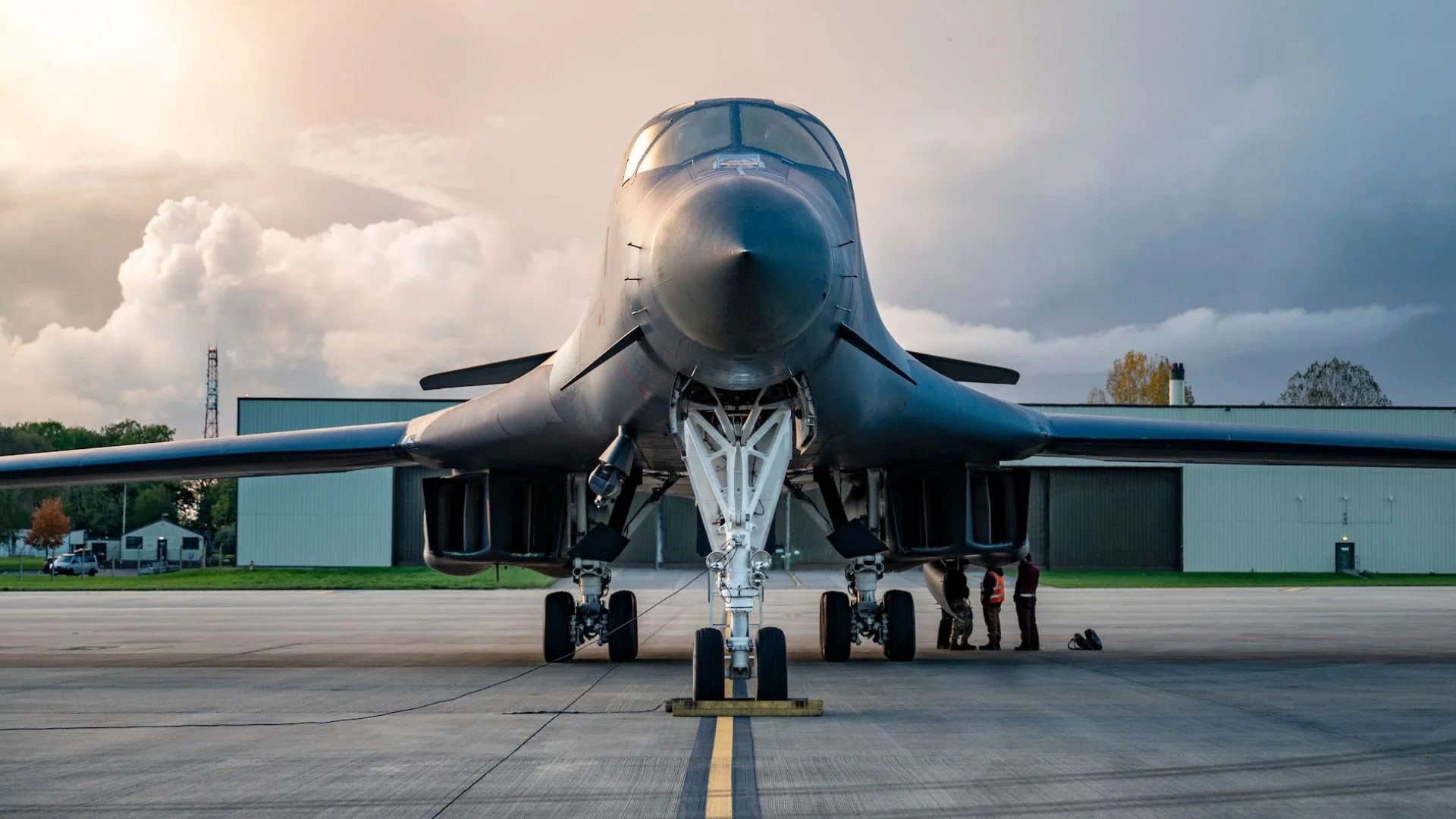
The US Air Force has returned a retired B-1B Lancer bomber to active service after nearly two years of restoration and maintenance work.
The aircraft, once stored in the Arizona desert, has now rejoined operational duty under a new name, Apocalypse II.
Its return comes as the Air Force extends the life of the B-1B fleet and increases investments in long-range strike capabilities.
B-1B Apocalypse II Returns To Operational Duty
The bomber involved is B-1B serial number 86-0115, previously known as Rage. The aircraft recently departed Tinker Air Force Base in Oklahoma after completing a large-scale regeneration and depot maintenance process. The work restored the bomber to full combat-ready condition.
READ ALSO: Butterfly Wings Inspire Earthquake-Resistant Buildings That Bend, Not Break
The aircraft had been placed in storage in 2021 at the 309th Aerospace Maintenance and Regeneration Group, commonly called AMARG, at Davis-Monthan Air Force Base in Arizona. AMARG is widely known as the boneyard because it stores retired military aircraft in the dry desert climate. The Air Force originally retired the jet as part of a plan to reduce the B-1B fleet from 62 to 45 aircraft.
At that time, the Air Force aimed to improve readiness rates while freeing up funding for the future B-21 Raider stealth bomber program. However, later operational demands prompted the service to reactivate some aircraft. The return of 86-0115 reflects the Air Force’s renewed focus on keeping the B-1B relevant for future missions.
The aircraft spent time in Type 2000 storage. This storage category keeps aircraft in a condition that allows them to return to service more easily if needed later. Only four retired B-1Bs were placed into this recoverable storage condition.
The restoration effort involved more than 200 airmen and civilian workers from the 567th Aircraft Maintenance Squadron. Teams worked long shifts to complete structural repairs and replace more than 500 components. The process also included system overhauls and detailed inspections across the aircraft.
WATCH ALSO: Elon Musk’s Neuralink Robot Makes Brain-Computer Connection Possible
Before returning to operational service, the bomber underwent multiple functional test flights over Oklahoma. During those flights, the aircraft flew in an unpainted, bare-metal condition while crews checked its systems and performance. After successful evaluations, the aircraft received final paint and mission-ready certification.
The restored bomber has now arrived at Dyess Air Force Base in Texas. It rejoined the 7th Bomb Wing and received the new name Apocalypse II, along with updated nose art. The aircraft also serves as the wing’s flagship bomber.
Why The US Air Force Needed Another B-1B
The Air Force said the regenerated bomber replaces another B-1B, serial 86-0126, which is undergoing extensive structural repairs with Boeing in California. Officials determined that restoring a stored aircraft would be faster and less risky than continuing the complex repair program. The decision also reduced costs while helping the service maintain required fleet numbers.
Congress currently requires the Air Force to maintain a fleet of 45 operational B-1B bombers. The return of Apocalypse II allows the service to meet that requirement once again. Fleet numbers have become increasingly important as bomber demand continues to rise worldwide.
This is not the first time the Air Force has pulled bombers out of storage. In recent years, the service also restored B-52 bombers named Ghost Rider and Wise Guy after accidents destroyed active aircraft. Those projects showed that older bombers can still return to frontline service with extensive maintenance and upgrades.
Another B-1B, Lancelot, also recently began its own return from storage. That aircraft was brought to Tinker Air Force Base after another bomber suffered severe damage from an engine fire during maintenance. These restoration projects highlight the value of the remaining bomber fleet.
The B-1B Lancer first entered service during the Cold War. The aircraft features variable-sweep wings that allow it to fly efficiently at both high and low speeds. It remains one of the Air Force’s largest payload-carrying bombers and can transport large amounts of conventional weapons over long distances.
READ ALSO: NATO Eyes Cheap Drone Interceptors as Ukraine Challenges US Defense Market Strategy
Although the B-1B was once expected to retire around 2030, the Air Force now plans to keep the bomber flying until at least 2037. One major reason is its unmatched ability to carry heavy weapon loads. The bomber continues to support missions that require long-range strike capability and flexible weapons options.
B-1B Upgrades
The Air Force is also expanding the bomber’s role in advanced weapons testing. Earlier this week, new images showed a B-1B carrying the AGM-183 Air-Launched Rapid Response Weapon (ARRW). ARRW is a hypersonic missile designed to travel at extremely high speeds while striking distant targets quickly.
The Air Force is now studying an improved version of ARRW as well as a separate air-launched ballistic missile program. The B-1B is expected to play an important role in both efforts because of its large payload capacity. Its size and speed make it useful for carrying next-generation long-range weapons.
Budget documents for Fiscal Year 2027 show the Air Force plans to spend $342 million upgrading the remaining B-1B fleet between 2027 and 2031. The upgrades aim to improve the aircraft’s combat effectiveness and extend operational life through at least 2037. Planned work includes modernization efforts to keep the bomber relevant in future combat environments.
WATCH ALSO: Poland and Portugal Gain New Space Capabilities After ICEYE Launch
The bomber fleet has also been heavily operationalized in recent years. Missions linked to Operation Epic Fury and other global deployments have increased pressure on the aircraft and maintenance crews. Returning additional bombers to service helps distribute that workload across the fleet.
The arrival of Apocalypse II comes at a time when the Air Force is balancing upgrades to older aircraft with future modernization programs. While the B-21 Raider remains the long-term replacement plan, the B-1B still fills critical operational gaps today. Restoring retired bombers gives the Air Force added flexibility during a period of rising global military activity.
The successful return of Apocalypse II also demonstrates how the Air Force can extend the life of aging aircraft through deep maintenance and regeneration programs. That capability may become increasingly important as military fleets worldwide face growing operational demands. However, the restored B-1B has returned to active duty with a renewed role in America’s long-range strike force.