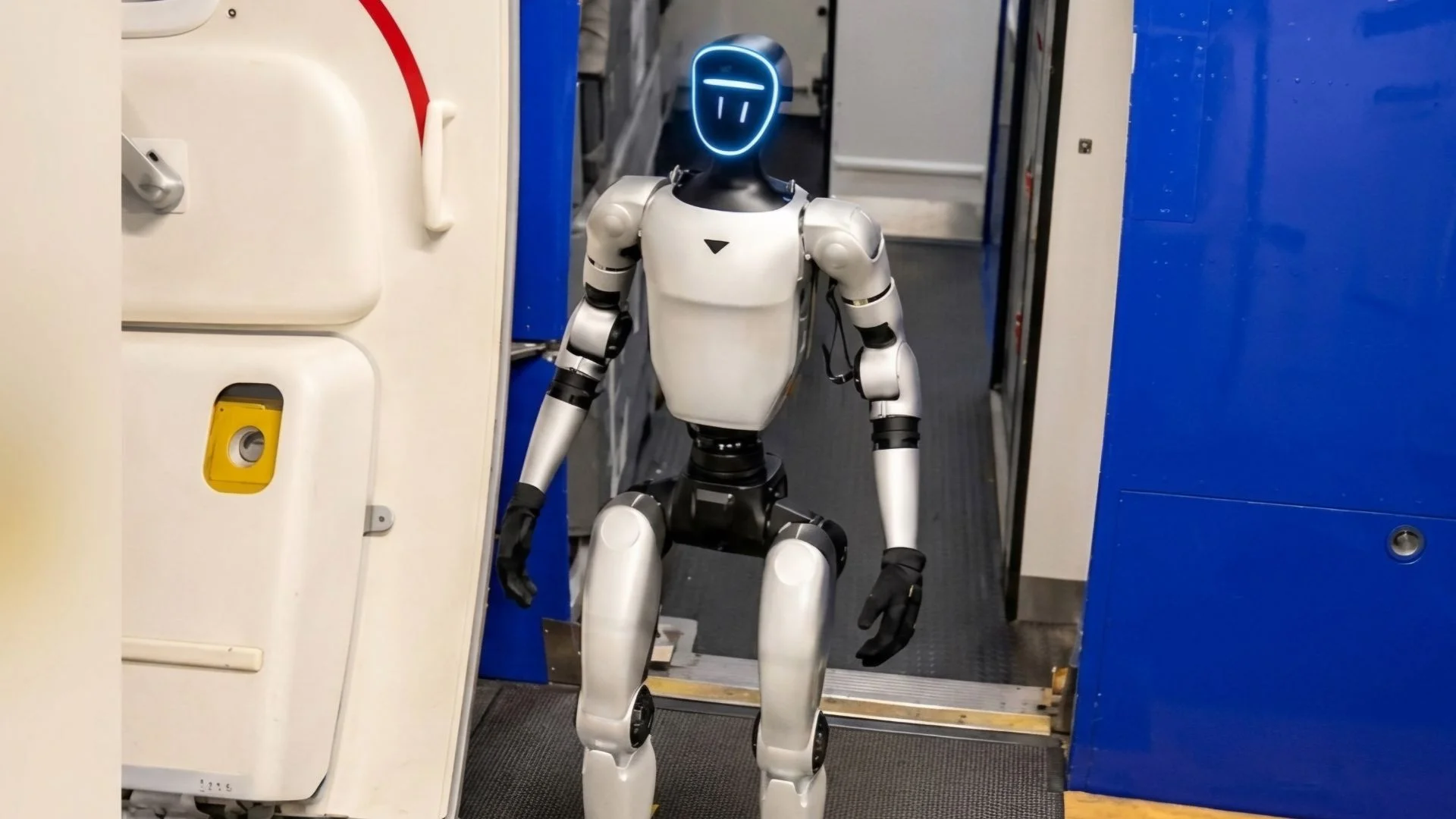
A Southwest Airlines flight traveling from Oakland to San Diego arrived more than an hour late after the robot triggered a series of checks.
Bebop, weighing about 70 pounds, was traveling with a team from Elite Event Robotics. The delay occurred on Thursday as staff assessed whether the robot met onboard safety requirements.
Before boarding, Bebop attracted attention by briefly entertaining passengers at the airport. The demonstration helped pass the time but also piqued curiosity among both travelers and airline staff. Soon after, the focus shifted from entertainment to safety concerns.
READ ALSO: Robots Finally Crack Curved Objects Like Bananas, Cups: What Changed This Time?
Airline personnel began asking detailed questions about the robot’s internal systems. They specifically focused on the types and sizes of batteries used to power the Bebop. These questions led to further inspections and eventually delayed the aircraft’s departure.
According to representatives from Elite Event Robotics, the situation became more complex once Bebop was already seated. Staff continued to investigate the robot’s battery specifications while the flight status showed ongoing runway delays. The team monitored updates as the delay extended.
WATCH ALSO: This Microsoft AI Could Change Cancer Treatment Forever
Southwest Airlines later confirmed that the issue centered on the robot’s lithium battery. The battery exceeded the airline’s maximum allowable size for items carried onboard. As a result, the battery was confiscated before the flight could proceed.
Lithium batteries are commonly used in electronics because they store large amounts of energy in a compact size. However, they can pose safety risks if damaged or improperly handled. In rare cases, they may overheat and cause fires, which are difficult to control inside an aircraft.
Airlines follow strict guidelines for battery transport to reduce such risks. Batteries with a capacity of less than 100 watt-hours are generally allowed in carry-on luggage without approval. Larger batteries, especially those exceeding 160 watt-hours, are typically prohibited in passenger cabins.
READ ALSO: RHIB Fleet Surge: US Navy’s $650M Deal for 474 Boats to Control Coastal Waters
The removal of Bebop’s battery required coordination between airline staff, ground crew, and security teams. This process further delayed the process as officials ensured compliance with safety rules. Only after resolving the issue could the flight continue to its destination.
Despite the setback, the robot’s operators plan to continue using air travel for future events. They are arranging to ship compliant batteries separately to meet aviation regulations. The team confirmed that Bebop is expected to appear at another scheduled event in Chicago.
WATCH ALSO: From Ice to Innovation: US Coast Guard Deploys Drones in Antarctic Mission
The incident reflects a broader challenge as advanced machines become more common in daily life. Transport systems must adapt to accommodate new technologies without compromising safety. As robotics continues to evolve, clearer guidelines and better coordination may help prevent similar disruptions in the future.