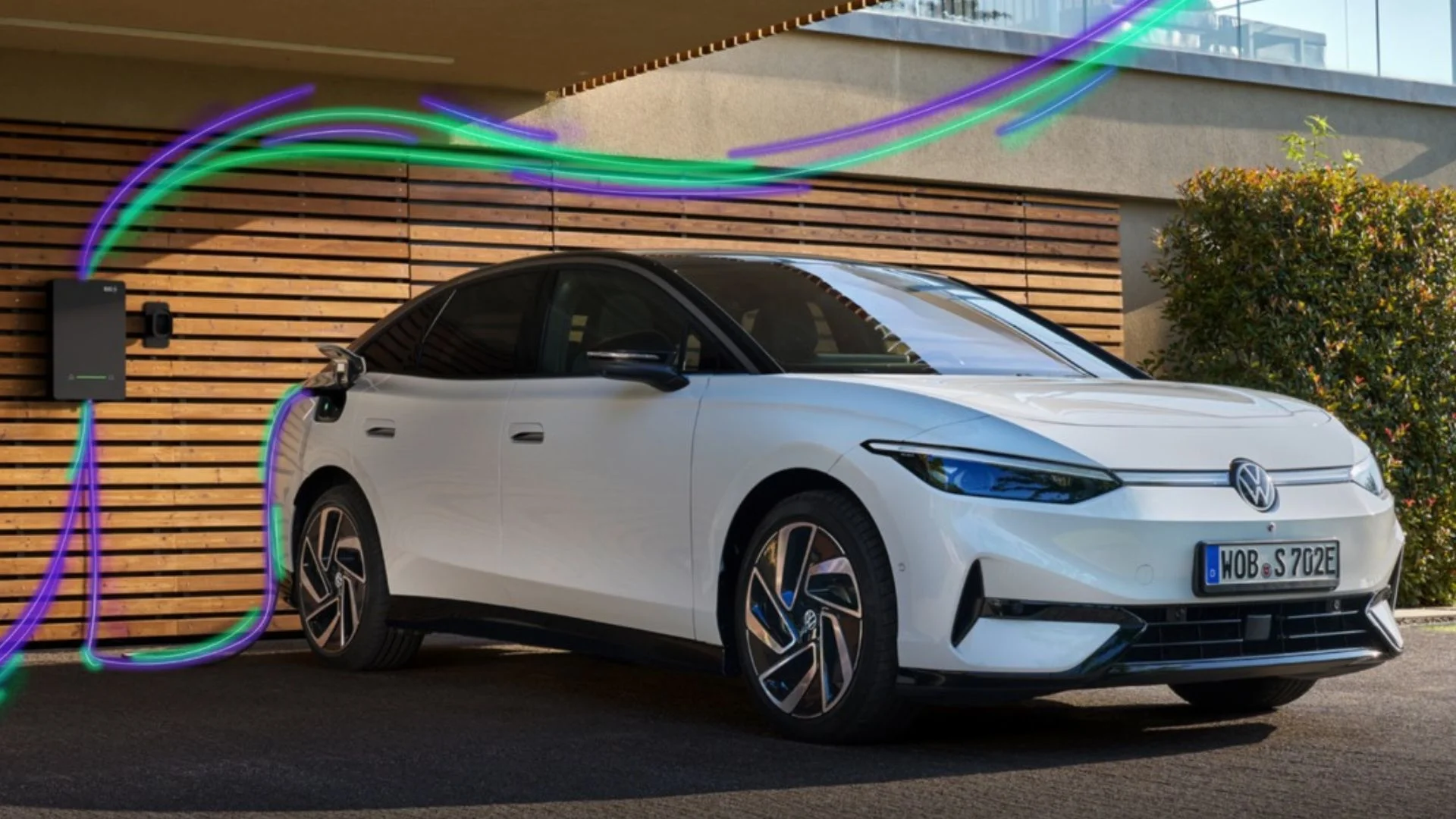
Volkswagen is preparing to change how electric vehicles are used at home. The company, along with its energy brand Elli, is getting ready to launch a new Vehicle-to-Grid (V2G) system for customers in Germany.
The full rollout is planned for the fourth quarter of 2026, with pre-registration opening in June.
This new system goes beyond simple charging. It allows electric cars to send power back into the grid. That means vehicles will not only consume electricity but also act as mobile energy storage units.
Volkswagen is building this as a complete package. Customers will get everything in one system: an electric vehicle, a smart app, a dynamic electricity tariff, a smart meter, a bidirectional charger, and installation support. The smart meter setup is already available, which will speed up the transition once the service launches.
READ ALSO: This Raytheon Camera Sees Heat Changes First, Targets Can’t Stay Hidden
Martin Sander from Volkswagen explains that electric mobility must make financial sense for users. He adds that V2G will reduce charging costs and, over time, may even make charging almost free. He also highlights that Volkswagen’s ID models have been ready for bidirectional charging since 2023, helping bring this idea into daily use.
The financial benefits are a major focus. Customers can lower their energy bills by adjusting when and how they charge their cars. They can also earn money by supplying unused battery power back to the grid. Estimates suggest users could make between €700 and €900 per year in ideal conditions.
In the early stage, customers will receive fixed payments for making their battery capacity available. These payments will not depend on market performance. Instead, they will be based on how flexible users are with their charging habits. This makes the system simple and predictable.
Over time, the system aims to turn electric vehicles into active players in the energy market. Instead of being just a cost, EVs could become a source of income. At the same time, users benefit from a fully connected system in which every part works smoothly together.
WATCH ALSO: Rolls-Royce tests world’s first high-speed marine engine powered by methanol
The broader goal is even bigger. Volkswagen sees EVs as part of a larger energy network. Cars will store extra electricity, especially from renewable sources like wind and solar. When demand rises, that stored energy can be sent back into the grid.
This approach could have a large impact across Europe. Studies suggest it could save up to €22 billion in energy system costs each year by 2040. In Germany alone, around 9,500 GWh of renewable energy was recently wasted due to a lack of storage. That amount could power about three million electric cars for a full year.
The technology behind this system is based on Volkswagen’s MEB platform. Around one million vehicles in Europe are already capable of bidirectional charging. With the upcoming ID. Software 6 update, even more models and battery types will support this feature.
Volkswagen also says battery life will not be significantly affected. The company uses strong high-voltage battery systems with built-in protection to ensure durability.
READ ALSO: Tufts University Creates Color-Changing Paint That Measures Impact Force Without Sensors
Elli plays a key role in this entire setup. The company is evolving into a full energy manager. It connects the car, the home, and the energy market. It also handles electricity trading through platforms like EPEX Spot, operating around the clock.
Giovanni Palazzo, CEO of Elli, says the real value of V2G comes from connecting all parts of the system. He explains that Elli was created to act as the bridge between vehicles and the energy market. He adds that the company is now moving toward building a ‘Managed Battery Network,’ in which millions of EV batteries work together as a single large energy system.
Smart meters are a key part of this plan. They provide detailed, real-time energy data, which is necessary for V2G to work properly. Elli helps customers connect with major metering providers for installation. Once ordered, the smart meter is expected to be installed within eight to ten weeks.
After setup, users can start using the V2G tariff and join the system. This smooth onboarding process is designed to remove barriers and speed up adoption.
Volkswagen’s approach stands out because it offers everything in one ecosystem. Instead of relying on separate providers, the company keeps control of the full experience. This allows better integration and a simpler user journey.
WATCH ALSO: Explore Raytheon’s giant facility where it develops powerful naval radar SPY-6
With this move, Volkswagen is not just selling electric cars. It is building a new energy model where vehicles, homes, and power grids work together. For customers, it means lower costs and new earning potential. For the energy system, it brings flexibility and better use of renewable power.
The shift has already begun. By 2026, electric cars may no longer be just vehicles; they will become an essential part of how energy flows every day.