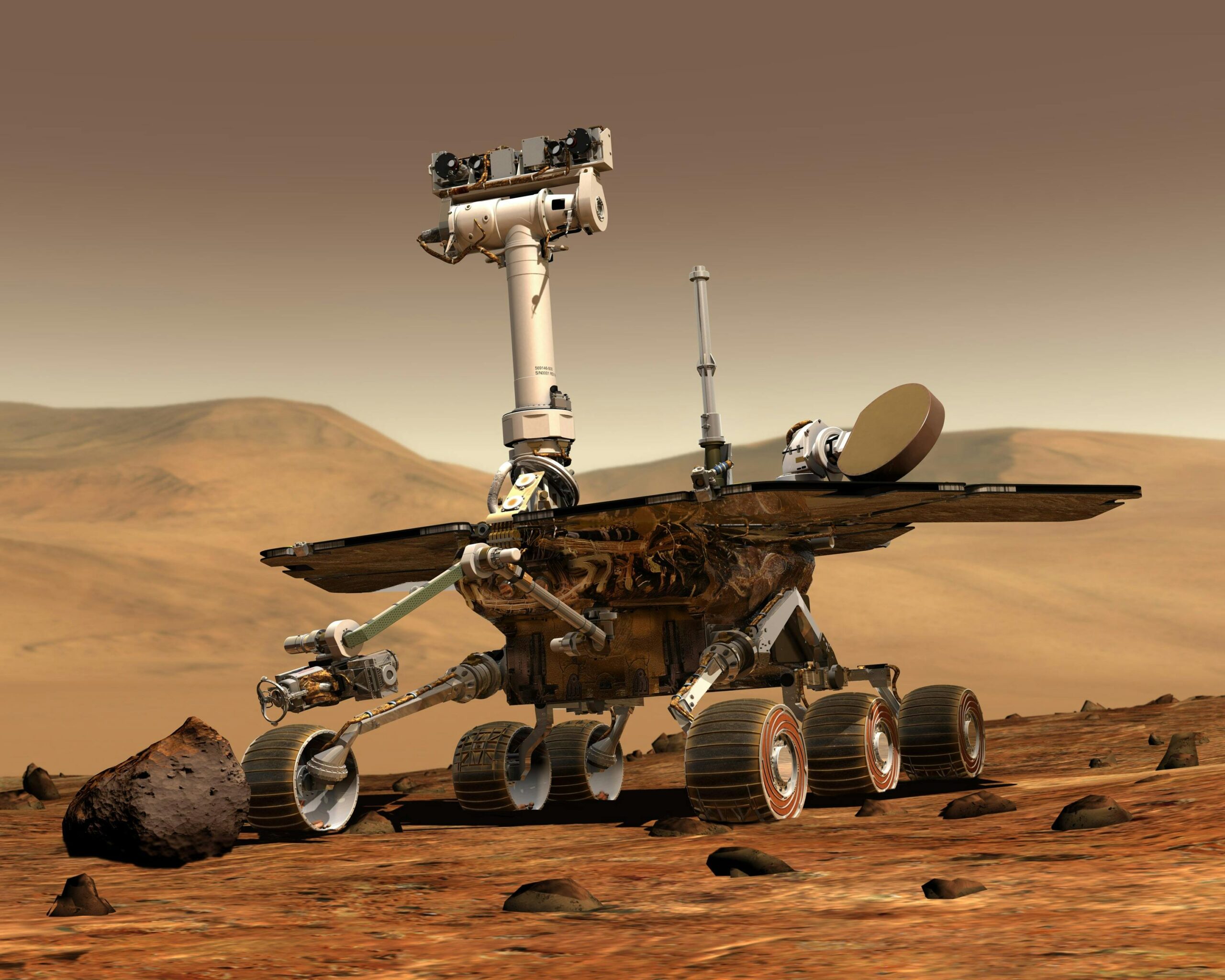
NASA’s Perseverance rover, which landed in Jezero Crater on Mars in 2021 to investigate evidence of ancient life, made its maiden drives on Mars entirely using artificial intelligence-laid-out routes.
Led by NASA’s Jet Propulsion Laboratory (JPL) in Southern California, the Perseverance Rover travelled across Martian terrain on its own on December 8 and 10.
For the first time, generative AI helped plan where the six-wheeled rover should drive on Mars — a task usually handled by human rover drivers on Earth. The AI created “waypoints,” or fixed navigation points, using the same images and data that human planners normally study.
According to NASA Administrator Jared Isaacman, the test shows how space exploration is changing.
“This demonstration shows how far our capabilities have advanced and broadens how we will explore other worlds,” he said. “Autonomous technologies like this help missions work more efficiently, deal with difficult terrain, and collect more science data as we go farther from Earth.”
READ ALSO: https://modernmechanics24.com/post/china-fossil-cross-equator-pangaea/
The AI system used vision-language models to study surface images and terrain data from NASA’s Mars Reconnaissance Orbiter. It identified safe and unsafe areas such as rocks, sand ripples, and boulder fields, and then created a continuous driving path for the rover.
The project was carried out at JPL’s Rover Operations Center in collaboration with AI company Anthropic, using its Claude AI models.
As Mars is about 140 million miles away from Earth, commands sent to the rover take a long time to arrive. This makes real-time control impossible. For nearly three decades, human planners have carefully mapped rover paths in advance, usually limiting each drive to short distances to avoid hazards.
During this test, Perseverance followed AI-generated routes on mission days 1,707 and 1,709.
WATCH ALSO: https://modernmechanics24.com/post/elon-musk-space-internet-ghana/
Generative AI analyzed the high-resolution orbital images from the HiRISE (High Resolution Imaging Science Experiment) camera on NASA’s Mars Reconnaissance Orbiter. It also used terrain-slope data from digital elevation models. After identifying key terrain features like bedrock, outcrops, dangerous boulder fields, and sand ripples, it created a continuous path with waypoints.
On December 8, the rover drove 689 feet (210 meters). On December 10, it drove another 807 feet (246 meters).
Before sending the commands to Mars, engineers checked them using a “digital twin” — a virtual copy of Perseverance. This process verified more than 500,000 technical variables to ensure the drive would be safe.
Vandi Verma, a roboticist at JPL, said AI could transform how rovers explore planets.
READ ALSO: https://modernmechanics24.com/post/us-war-games-mimic-shahed-136-drones/
“We see strong promise in generative AI for perception, navigation, and planning,” she said. “We are moving toward a future where rovers can safely handle kilometer-long drives with much less work for human operators.”
Matt Wallace, manager of JPL’s Exploration Systems Office, said this technology has even bigger goals.
“We imagine intelligent systems not just on Earth, but also inside rovers, helicopters, and drones,” he said. “This is the kind of technology we need to support a permanent human presence on the Moon and take the US to Mars and beyond.”
With this success, NASA marks an important step towards more autonomous space exploration.
WATCH ALSO: https://modernmechanics24.com/post/isro-gaganyaan-crew-parachute-validation/