Scientists at the JC STEM Lab of Circular Bio-economy at City University of Hong Kong (CityUHK) have introduced two new technologies designed to improve energy efficiency and support cleaner energy production.
The developments include a multifunctional building coating and a low-cost hydrogen generation system. Both technologies aim to help cities reduce energy use while advancing long-term sustainability goals.
The research team is led by Professor Lee Duu-Jong, the Lab’s Director and a Professor in the Department of Mechanical Engineering.
The laboratory focuses on promoting a circular bioeconomy model that reduces waste and keeps resources in use for longer periods. This approach differs from the traditional model, in which resources are used once and then discarded.
Smart Building Skin Uses Sunlight and Rain
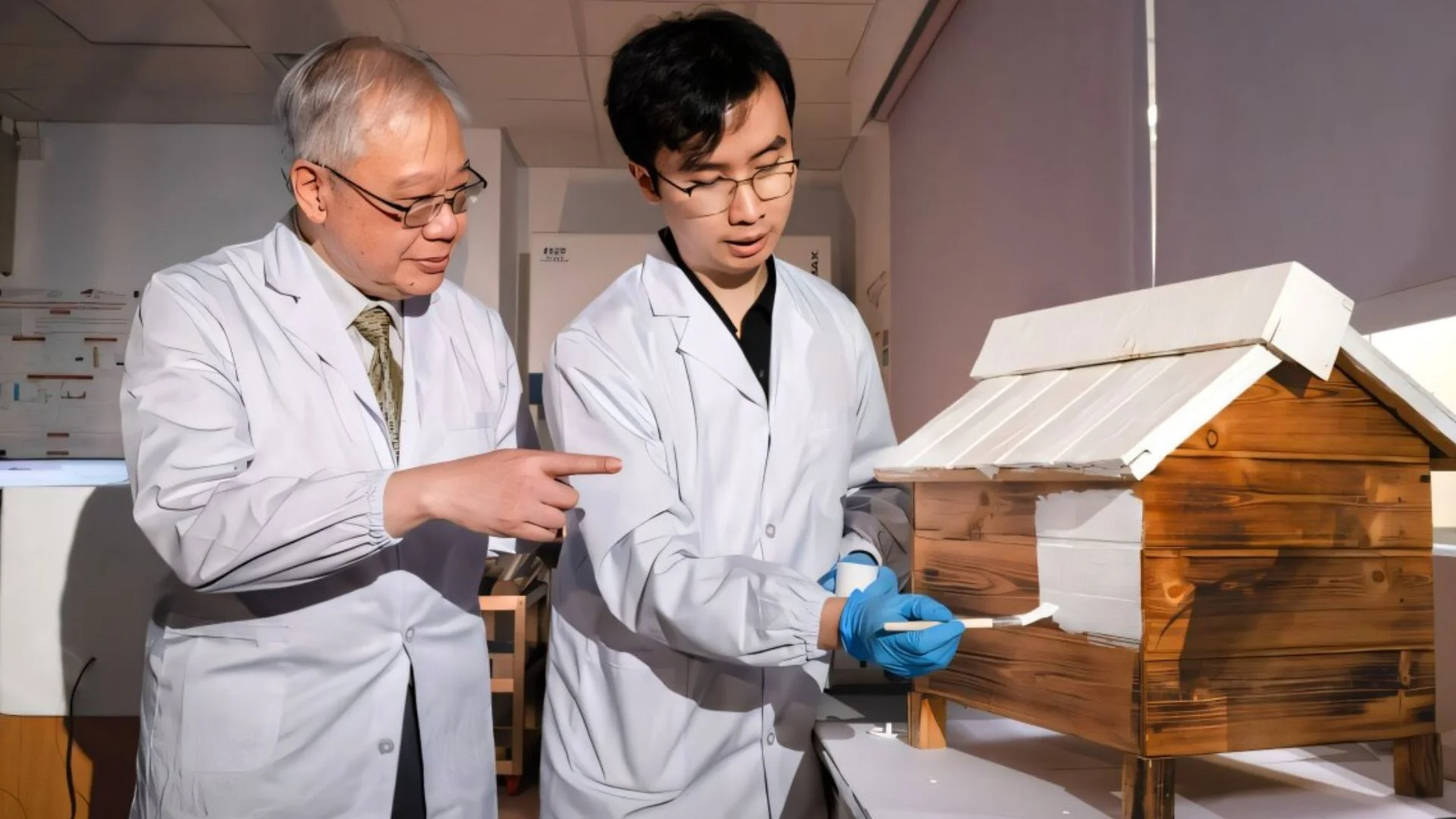
One of the team’s latest innovations is called BRIDGE skin, a paintable building coating inspired by the natural structure of the Tillandsia air plant. The technology was developed by Zeng Yijun, a doctoral student in the Department of Mechanical Engineering. It is designed for application to roofs, walls, and other building surfaces.
The coating performs two important functions depending on weather conditions. During sunny weather, it reflects more than 95% of incoming solar energy and radiates heat into space as infrared radiation. This process helps lower surface temperatures and reduces the need for air conditioning.
According to the research team, surfaces coated with BRIDGE skin can remain up to 9.5 degrees Celsius cooler than the surrounding air. Lower building temperatures can lead to significant energy savings, especially in densely populated urban areas where cooling demand is high. This feature makes the technology attractive for cities facing rising temperatures and growing electricity consumption.
The coating also works during rainy conditions. When raindrops strike the surface, they generate small electrical pulses via a built-in energy-harvesting mechanism. The electricity produced can power small devices such as liquid-crystal displays and wireless sensors.
Researchers explained that combining cooling and energy harvesting in a single material has traditionally been difficult. Components used to generate electricity often reduce a material’s cooling performance. The team addressed this challenge by creating a layered structure inspired by the air plant.
READ ALSO: PNNL Opens New Prismatic Battery Line to Speed Safer Grid Energy Storage Research
The outer layer improves water movement and helps naturally clean the surface. The lower layers handle sunlight reflection, heat release, and electrical charge storage. This design allows each layer to perform a specific task without reducing the effectiveness of the others.
Another advantage is the coating’s paintable format. Unlike rigid energy-generating panels, the material can be applied more easily to existing buildings. This feature could simplify upgrades to older structures and reduce installation costs.
Copper-Based Hydrogen Production Cuts Costs
The second innovation focuses on hydrogen, a fuel widely viewed as an important part of future clean energy systems. Hydrogen produces no carbon emissions when used, but current production technologies often depend on expensive materials such as platinum. These costs remain a major barrier to wider adoption.
To address this issue, postdoctoral researcher Dr. Mak Chun Hong developed a new hydrogen generation system based on low-cost copper ions. Copper is more abundant and generally less expensive than platinum. The change significantly reduces material costs while maintaining strong performance.
The system creates a self-sustaining chemical cycle that continuously produces hydrogen. Researchers discovered a way to capture a temporary copper hydride state that stores energy when exposed to light. The stored energy then continues driving hydrogen production even after the light source is removed.
The team demonstrated that the system can operate using very low light levels, including illumination from a smartphone flashlight. This ability highlights the efficiency of the chemical process. It also opens the door to hydrogen production across a wider range of environments.
READ ALSO: AI-Powered Laser Mosquito Killer Tracks and Eliminates Pests With Precision Targeting
An important feature of the technology is its closed-loop design. The system recycles its own chemical by-products, reducing waste and improving overall efficiency. Such resource recovery aligns closely with circular economy principles and supports more sustainable industrial processes.
Supporting Future Low-Carbon Cities
The two technologies were developed with urban sustainability in mind. Hong Kong and other densely populated cities face growing pressure to reduce emissions while meeting rising energy demand. Solutions that improve building efficiency and expand access to clean fuels are important.
Professor Lee said the laboratory remains focused on creating technologies that maximize resource use in urban environments. The team aims to translate research into practical applications through collaboration between universities and industry partners. Such partnerships can help move innovations from the laboratory to real-world deployment.
WATCH ALSO: US Air Force’s Sentinel missile brings improved range, accuracy, resiliency and flexibility
The research also supports broader carbon neutrality and climate goals. Energy-efficient buildings and affordable green hydrogen are considered key components of future low-carbon infrastructure. Both technologies offer potential pathways for reducing dependence on fossil fuels.
As testing and development continue, these innovations highlight how nature-inspired engineering and circular economy principles can work together to address modern energy challenges. Their successful deployment could help shape smarter, cleaner, and more resilient cities in the years ahead.