German researchers have developed laser cooling technology that helps satellites and spacecraft components dissipate heat more effectively in space.
The method transforms standard metal surfaces into highly efficient heat-radiating surfaces without the need for paint or special coatings.
Several test samples have already completed a mission aboard the International Space Station (ISS), and scientists are now preparing to study their condition after their return to Earth.
Managing heat is a major challenge for spacecraft. Unlike on Earth, where heat can be removed through air or liquids, space is a vacuum. This means that satellites and onboard electronics must rely on thermal radiation to dissipate excess heat and prevent overheating.
To address this issue, researchers at Germany’s Fraunhofer Institute for Telecommunications, Heinrich Hertz Institute (Fraunhofer HHI), developed a technique that uses ultrafast lasers to alter the surface of metals.
READ ALSO: Georgia Tech AR Glasses Predict User Gaze Seconds Ahead for Faster Experiences
The process creates microscopic structures that allow the material to radiate heat much more efficiently. The technology is aimed at satellites, rocket systems, power electronics, and other equipment that must operate under harsh space conditions.
Why Cooling in Space Is Difficult
Electronic equipment generates heat during operation. On Earth, heat can be removed through air circulation or direct contact with cooling systems. In space, those options are not available because there is no surrounding atmosphere.
This means spacecraft must use radiators that convert heat into infrared radiation and send it into space. The effectiveness of this process depends heavily on the surface material. Smooth metal surfaces, including aluminum, commonly used in satellites, are inherently poor heat radiators and struggle to dissipate heat efficiently.
Fraunhofer researchers addressed this problem by altering the metal surface’s physical structure. Instead of adding coatings or chemicals, they alter the surface itself using precision laser technology.
How Laser Cooling Process Works
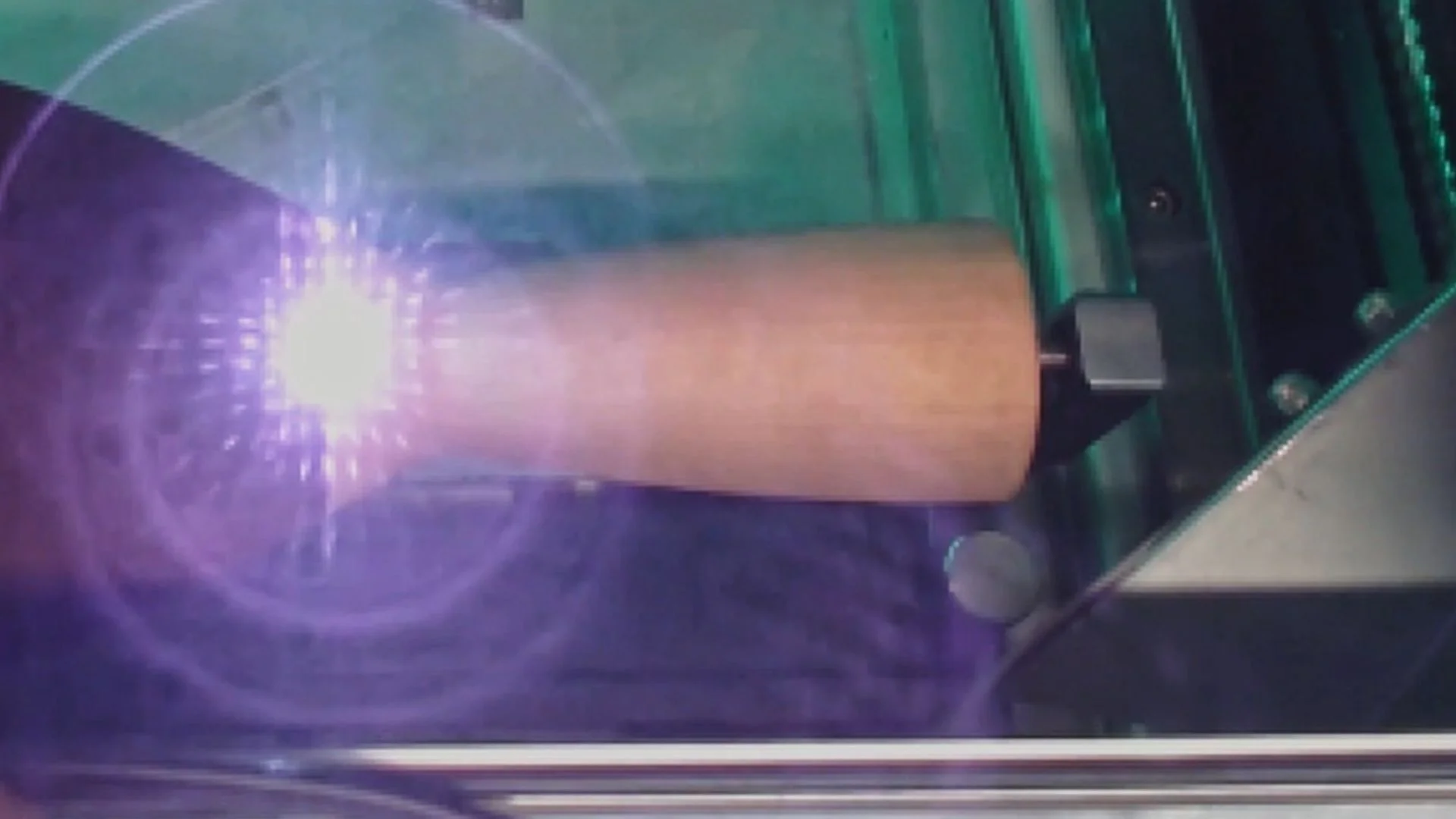
The process uses a femtosecond laser, which emits extremely short pulses of light. These pulses remove tiny amounts of material from the metal surface without damaging the underlying bulk. The treatment creates microscopic cone-shaped structures measuring roughly 1 micrometer.
These tiny structures dramatically change how the surface interacts with heat. The roughened surface behaves like an efficient radiator, allowing it to emit much more thermal energy than untreated metal. Researchers say the method works on flat surfaces as well as complex and curved shapes.
READ ALSO: Plasma Jets Offer a Waterless Way to Kill Bacteria on Future Space Missions
According to Fraunhofer HHI researcher Eike Hübner, the technology can be applied to a wide range of geometries. This makes it suitable for a wide range of aerospace and industrial applications.
Major Increase in Thermal Emissivity
One of the most important measurements for radiator performance is thermal emissivity. This value describes how effectively a material can emit heat as radiation. Untreated metals such as aluminum, titanium, copper, and stainless steel typically have emissivity values of around 10%.
After laser treatment, emissivity levels increase dramatically. Researchers achieved values of 95% to 99% for several metals. This allows the materials to release heat far more efficiently than before.
The treated aluminum surfaces also demonstrated strong thermal durability. Testing showed they could withstand temperatures up to 650 degrees Celsius. Researchers say the surfaces remain stable up to the melting temperature of the underlying metal.
Reducing Weight and Maintenance
The technology offers another important advantage for spacecraft manufacturers. Traditional thermal-control systems often depend on paint coatings to improve heat emission. These coatings add weight and can degrade over time.
Laser-textured surfaces remove the need for many of these coatings. Eliminating paint reduces launch weight, which is valuable because every kilogram added to a spacecraft increases launch costs.
The laser-created surfaces also avoid a common problem known as outgassing. Some coatings slowly release gases in space, which can affect sensitive instruments. Since the new method modifies the metal itself, there are no solvents or coatings that can evaporate.
Solving the Sunlight Challenge
The current laser-treated surfaces appear black. While black surfaces radiate heat effectively, they also absorb more sunlight. This can create challenges for satellites that regularly move between sunlight and shadow during orbit.
To address this issue, researchers are investigating ways to create white versions of the functionalized surfaces. White surfaces would reflect more solar energy while still maintaining strong heat-radiation performance.
Achieving both high reflectivity and high thermal emissivity could provide spacecraft designers with greater control over temperature management in orbit.
Lower-Cost Manufacturing in Development
Fraunhofer HHI is also working to reduce manufacturing costs. The current femtosecond laser systems deliver excellent results but require expensive equipment.
In collaboration with Azimut Space GmbH, researchers are developing an alternative process using nanosecond lasers in an oxygen-rich environment. This approach is less expensive and more robust for industrial production. Although emissivity levels reach about 85% rather than 95% to 99%, the lower cost could support wider commercial adoption.
WATCH ALSO: This US supersonic aircraft could slash flight times and silence the sonic boom
Real-World Testing on ISS
The technology has already moved beyond laboratory testing. Since December 2024, laser-structured aluminum and titanium samples have been attached to the exterior of the International Space Station as part of a project involving the European Space Agency and Azimut Space GmbH.
The samples were mounted on the station’s outer surface and exposed directly to the harsh conditions of space. Researchers used them as radiative heat sinks to evaluate long-term performance under real operational conditions.
The specimens are now returning to Earth for detailed examination. Scientists will analyze them for signs of aging, damage, and any changes in thermal performance after extended exposure to the space environment.
Commercial Applications Ahead
Fraunhofer researchers Eike Hübner, Hanan Al-Haddar, and Ahmad Abdalwareth plan to commercialize the technology through a new startup called Dythalis. The company is focusing on satellite manufacturers and propulsion system developers.
WATCH ALSO: US Air Force’s Sentinel missile brings improved range, accuracy, resiliency and flexibility
The team will showcase laser-structured electronic enclosures and rocket nozzles at ILA 2026 in Berlin. Their work highlights a growing effort across the space industry to improve spacecraft efficiency through advanced materials and surface engineering.
As satellites become more powerful and generate more heat, lightweight thermal-management technologies are becoming increasingly important. The results from the ISS tests will help determine how quickly laser-textured metal surfaces move from research laboratories into next-generation spacecraft and space infrastructure.