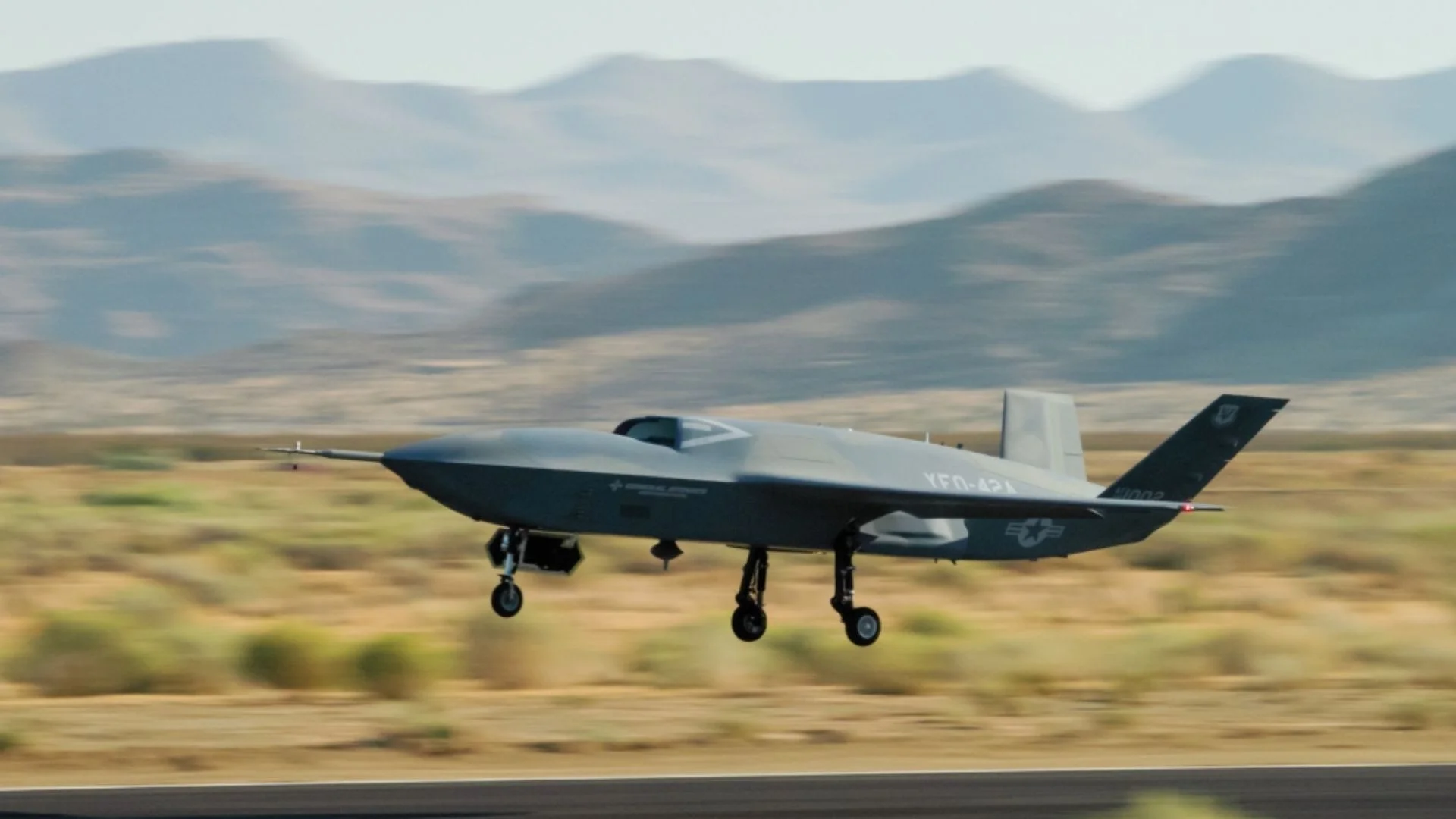
The YFQ-42A collaborative combat aircraft has returned to flight testing after a crash investigation led to important software upgrades.
The unmanned fighter jet, developed by General Atomics Aeronautical Systems for the US Air Force, resumed flights following months of safety reviews and technical corrections. The program is part of America’s wider push to build advanced autonomous aircraft for future air combat missions.
The YFQ-42A program paused flight testing after an accident on April 6, shortly after take-off. Investigators found that the aircraft’s autopilot system made an incorrect calculation involving the drone’s weight and center of gravity. The mistake compromised flight stability, leading to the aircraft’s crash.
No injuries were reported during the incident, but the aircraft was completely destroyed. Despite the crash, other work linked to the program continued without delays. Ground testing and Technology Maturation and Risk Reduction activities moved forward while engineers reviewed the problem.
The Air Force and GA-ASI carried out a joint investigation into the accident. Engineers later updated the aircraft’s software to correct the autopilot issue. After a detailed review, technical authorities approved the changes and cleared the aircraft to return to flight operations.
READ ALSO: MQ-9B Drone Completes First Flight With Saab LoyalEye Airborne Early Warning Radar System
GA-ASI President David R. Alexander said the company used lessons from the accident to improve the growing fleet of collaborative combat aircraft.
He added that the company remains focused on developing dependable, lower-cost unmanned fighter systems. The statement highlights the importance of testing and software reliability in next-generation military aircraft programs.
What Makes YFQ-42A Important
The YFQ-42A is part of the Collaborative Combat Aircraft program designed for future air warfare. These aircraft are intended to work alongside piloted fighter jets during combat operations. They can support missions such as surveillance, electronic warfare, target tracking, and strike operations.
Unlike traditional fighter aircraft, the YFQ-42A operates without a pilot inside the cockpit. The system uses advanced software and semi-autonomous controls to perform tasks while remaining connected to human operators. This approach helps reduce risk to pilots during dangerous missions.
The aircraft also features a modular design that allows rapid installation of different mission systems. This means the same aircraft platform can be adapted for multiple military roles without major redesign work. Military planners see this flexibility as important for responding quickly to changing threats.
GA-ASI describes the aircraft as part of a genus/species development approach. The concept uses a common aircraft structure that can support different mission packages and technologies. This method aims to reduce development costs and accelerate production timelines for future combat drones.
WATCH ALSO: Chinese firm’s humanoid robot can perfectly pick up tennis ball
The US Air Force selected GA-ASI in April 2024 to build the production-representative test aircraft for the program.
The YFQ-42A completed its first flight in August 2025, denoting a major milestone for the project. The successful return to testing now restores momentum to the aircraft development schedule.
Collaborative combat aircraft are becoming a major focus for modern air forces worldwide. Countries are investing in drones that can support fighter aircraft, extend operational range, and increase combat capability without adding more pilots.
The technology also allows military forces to deploy larger numbers of aircraft at lower operating costs compared to traditional fighters.
The YFQ-42A program reflects the growing shift toward human-machine teaming in future warfare. Advanced drones are expected to operate closely with crewed aircraft in highly contested environments. These systems are also designed to respond more quickly to battlefield conditions through software-driven mission support.
The return of the YFQ-42A to the skies marks an important step for the US Air Force’s next-generation air combat plans. Continued testing will help refine autonomous flight systems, improve mission reliability, and shape the future role of unmanned fighter aircraft in military operations worldwide.