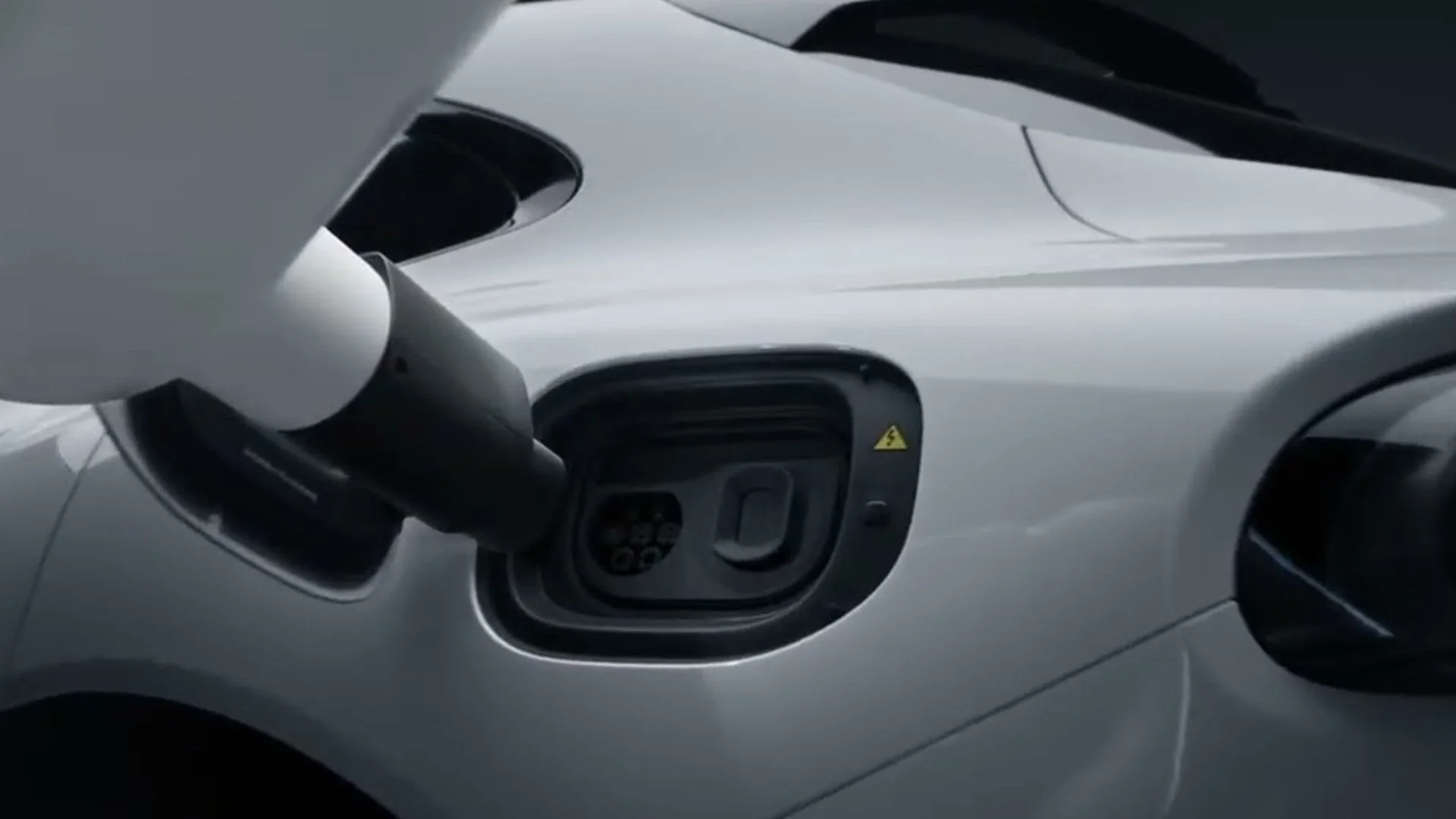
Xiaomi has unveiled a new robotic charging arm for electric vehicles that can automatically connect and disconnect a charging cable without human assistance.
The company showcased the technology in a demonstration video released on June 11. The product is designed specifically for home use and aims to make EV charging easier and more convenient.
The announcement has attracted attention because it presents a concept Tesla first introduced over 10 years ago. In 2014, Tesla CEO Elon Musk said the company was developing an automatic charger that could move toward a vehicle and connect by itself. Tesla later demonstrated a prototype robotic charger in 2015, but the technology never reached customers.
Xiaomi’s charging arm is compact and built for residential garages where space is often limited. The device measures only 152 millimeters in width. Its slim design allows installation beside vehicles even in tight parking areas.
The robotic charger can be mounted either on a wall or on the floor next to a parking space. Once a vehicle is parked, the system identifies the charging port and moves the connector into position. It then plugs in automatically without requiring any action from the driver.
The company says the charger uses artificial intelligence and computer vision to accurately locate the charging port. Xiaomi claims the system can achieve sub-millimeter positioning precision during charging. This high level of accuracy helps ensure reliable connections while reducing the risk of misalignment.
The robotic arm can also communicate directly with compatible vehicles. This allows the charger to automatically open and close motorized charging-port covers when needed. As a result, the entire charging process can be completed without the driver leaving the vehicle or touching the charging cable.
Another important feature is integration with Xiaomi’s broader smart ecosystem. The charger connects with the company’s human-car-home platform. Owners can monitor charging status, control the system remotely, and manage settings through a smartphone application.
EV Charging Goes Hands-Free
The robotic charging arm expands Xiaomi’s growing lineup of EV charging products. The company already offers 7 kW and 11 kW home wallbox chargers. It also sells a portable charging and power-discharging device for electric vehicle users.
Xiaomi has not announced pricing details or a release date for the robotic charger. The technology remains in the demonstration phase. However, the company has presented the system as a future consumer product rather than a research project.
Tesla’s abandoned automatic charger project provides important context for Xiaomi’s latest development. Tesla’s prototype featured a flexible robotic arm that resembled a metallic snake. The device could move toward a vehicle, find the charging port, and connect automatically.
Despite significant interest from EV owners, Tesla never commercialized the technology. In later years, the company shifted attention toward wireless charging systems. Tesla strengthened that strategy in 2023 through the acquisition of German wireless charging specialist Wiferion.
READ ALSO: Scientists Establish Novel 2D “Health State Map” to Define Metabolic Health
Wireless charging removes the need for plugs and cables entirely. Drivers simply park above a ground-mounted charging pad. Electricity is transferred between the vehicle and the charging surface via magnetic fields.
However, wireless charging has some limitations compared with traditional plug-in systems. Industry standards typically deliver efficiency rates of 88-93 percent when alignment is correct. Conventional plug-in charging generally achieves around 95 percent efficiency.
The difference in efficiency means wireless systems lose more energy as heat. Over time, this can increase electricity consumption and operating costs. Wireless systems also face charging speed limits under current industry standards.
A robotic charging arm offers a different approach to hands-free charging. It combines the convenience of automation with the efficiency of a physical cable connection. Drivers receive automatic charging without sacrificing charging performance.
Another advantage is compatibility. Wireless charging requires vehicles to include specialized hardware. Xiaomi’s robotic charger works with existing charging ports, making it easier to support a wider range of electric vehicles.
Xiaomi is not the only company developing automated charging technologies. Hyundai has been testing robotic charging systems at Incheon International Airport in South Korea. Several Chinese cities have also introduced robotic charging solutions in public parking facilities.
Most existing robotic charging projects focus on commercial locations such as airports, parking garages, and fleet operations. Xiaomi’s approach is different because it targets private homeowners. This is significant because home charging accounts for roughly 80 percent of electric vehicle charging activity worldwide.
READ ALSO: Meet Spicomellus afer: Armoured Dinosaur with One-Metre-Long Neck Spikes
The timing is important as global EV adoption continues to grow. More drivers are looking for convenient charging solutions that fit into everyday routines. Automated charging systems can help reduce effort while improving the overall ownership experience.
The introduction of Xiaomi’s robotic charging arm highlights a broader shift toward smarter vehicle ecosystems. Automakers and technology companies are increasingly connecting vehicles with homes, mobile devices, and digital services. Automated charging is becoming another part of that connected experience.
If Xiaomi successfully brings the product to market, it could help redefine how drivers charge electric vehicles at home. The technology combines automation, energy efficiency, and smart connectivity in a single system. As EV adoption expands worldwide, solutions like this could play an important role in the future of home charging.