Scientists from Tokyo Metropolitan University have presented a new concept for mapping the Moon’s chemical composition from orbit.
Their research shows that a lightweight X-ray telescope can collect enough data to create detailed maps of key elements across the lunar surface. The findings are based on extensive computer simulations of a future satellite mission.
Understanding the Moon’s geology remains one of the major goals of planetary science. Researchers want to know how the Moon formed, how its surface changed over time, and why different regions have different compositions. Accurate chemical maps are essential for answering these questions.
Collecting samples from every part of the Moon directly is not practical. Scientists, therefore, rely on remote sensing technologies to study the surface from space. One of the most effective methods is X-ray fluorescence imaging.
This technique works when X-rays from the Sun strike the lunar surface. Elements in rocks and soil absorb this energy and emit their own X-ray signals. Orbital instruments can detect these signals and identify which elements are present.
Previous missions have successfully used this method. NASA’s Apollo missions and India’s Chandrayaan missions collected valuable data about specific regions of the Moon. However, a complete global map has remained out of reach.
READ ALSO: Micron Taps Bechtel to Build Major Semiconductor Manufacturing Campus in NY
Simulations Show Full Moon Coverage in Two Years
The research team was led by Airi Toida and Professor Yuichiro Ezoe. They evaluated how their compact X-ray telescope would perform during a dedicated lunar mission. The telescope was originally designed for studying Earth’s magnetosphere.
Unlike traditional X-ray telescopes, the new instrument is small and lightweight. It weighs less than 10 kilograms, making it easier and less expensive to place aboard a spacecraft. Its compact size also allows multiple units to be carried on a single satellite.
The team incorporated the telescope’s specifications into detailed mission simulations. These simulations included realistic orbital conditions and expected levels of solar activity. Researchers assumed that about 300 solar flares would occur each year.
Solar flares play an important role in mapping. During these events, the Sun releases intense bursts of X-rays that increase the strength of signals coming from the lunar surface. Stronger signals allow scientists to identify elements more accurately.
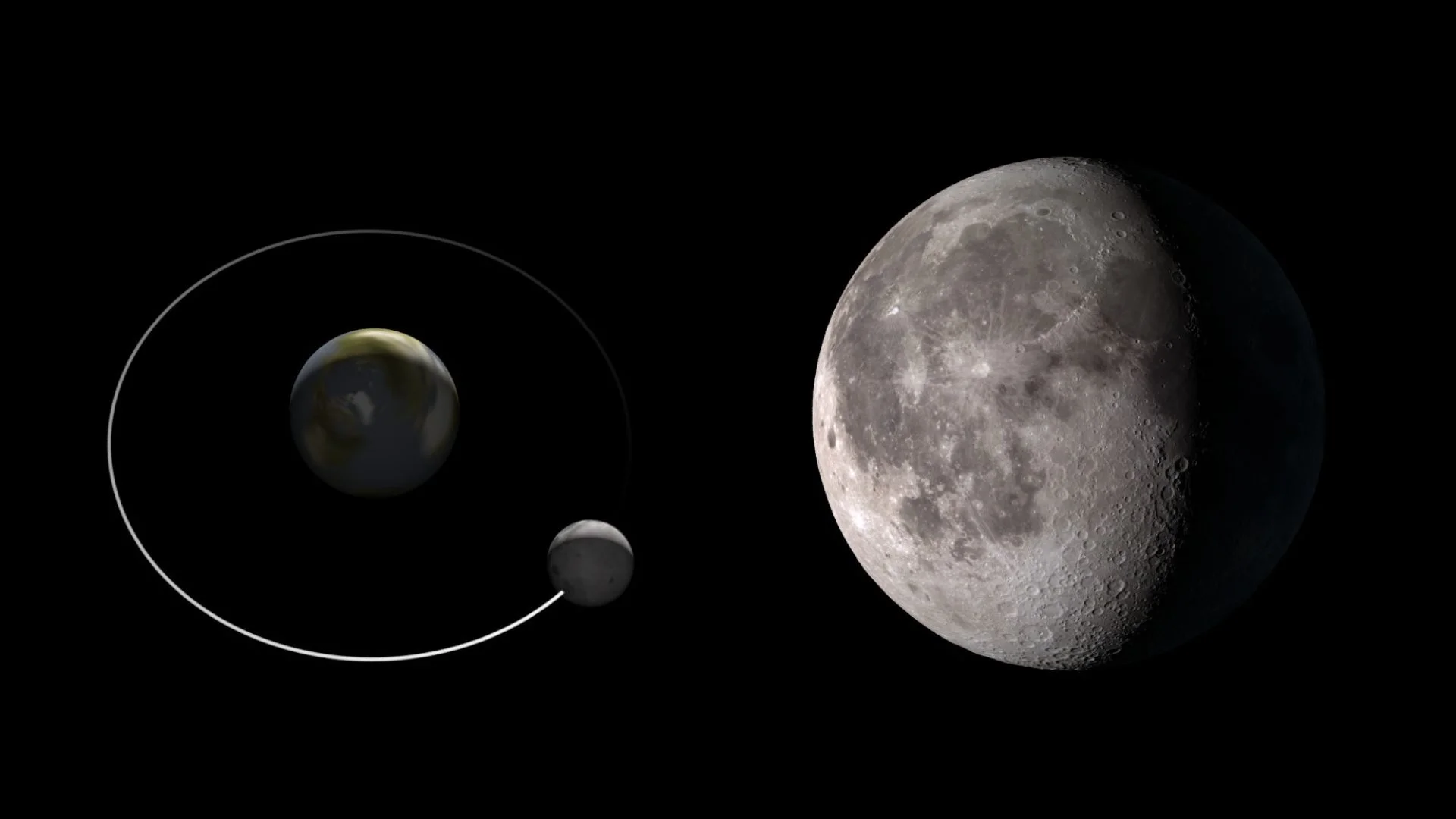
Results showed that a spacecraft carrying a single telescope could map the entire Moon in about two years. The mission would identify five important elements: oxygen, iron, magnesium, aluminum, and silicon. The resulting maps would have a spatial resolution of approximately 70 by 70 kilometers.
X-Ray Telescope Scans Moon Orbit
The study also examined a more advanced configuration. Researchers explored the possibility of installing 25 telescopes in a five-by-five array on the same spacecraft. The compact design makes such an arrangement technically feasible.
READ ALSO: SwRI Demonstrates Diesel Engine Tech That Beats Proposed CARB Tier 5 Emissions Rules
According to the simulations, the larger system would significantly improve performance. Mission time could be reduced from 2 years to 1 year to map the 5 primary elements. At the same time, map resolution would improve to about 30 by 30 kilometers.
The larger array would also allow scientists to detect sodium across the entire lunar surface. Sodium is another important element that can provide clues about geological processes and surface history. Achieving global sodium mapping would add another valuable layer of scientific information.
One challenge in lunar X-ray mapping has been weak solar illumination near the Moon’s polar regions. These areas receive less X-ray radiation from the Sun, making observations more difficult. The new telescope system is designed to improve data collection even under these challenging conditions.
Researchers also note that the detector has already been tested in radiation environments harsher than those expected in lunar orbit. This suggests the system can continue operating effectively during long-duration missions. Reliable performance is critical for producing a complete global survey.
READ ALSO: ‘Surface Avatar’ Robot Test Wraps Up on ISS, Bringing Mars Missions Closer
A full elemental map of the Moon would provide one of the most detailed views of its composition ever created. Such information could support future scientific exploration, guide landing site selection, and help researchers better understand the history of Earth’s closest celestial neighbor.
As interest in lunar exploration continues to grow worldwide, advanced mapping missions like this could become an important foundation for the next generation of Moon research.