The US Navy is moving ahead with plans to test at-sea missile reloading using one of its little-used expeditionary sea base ships.
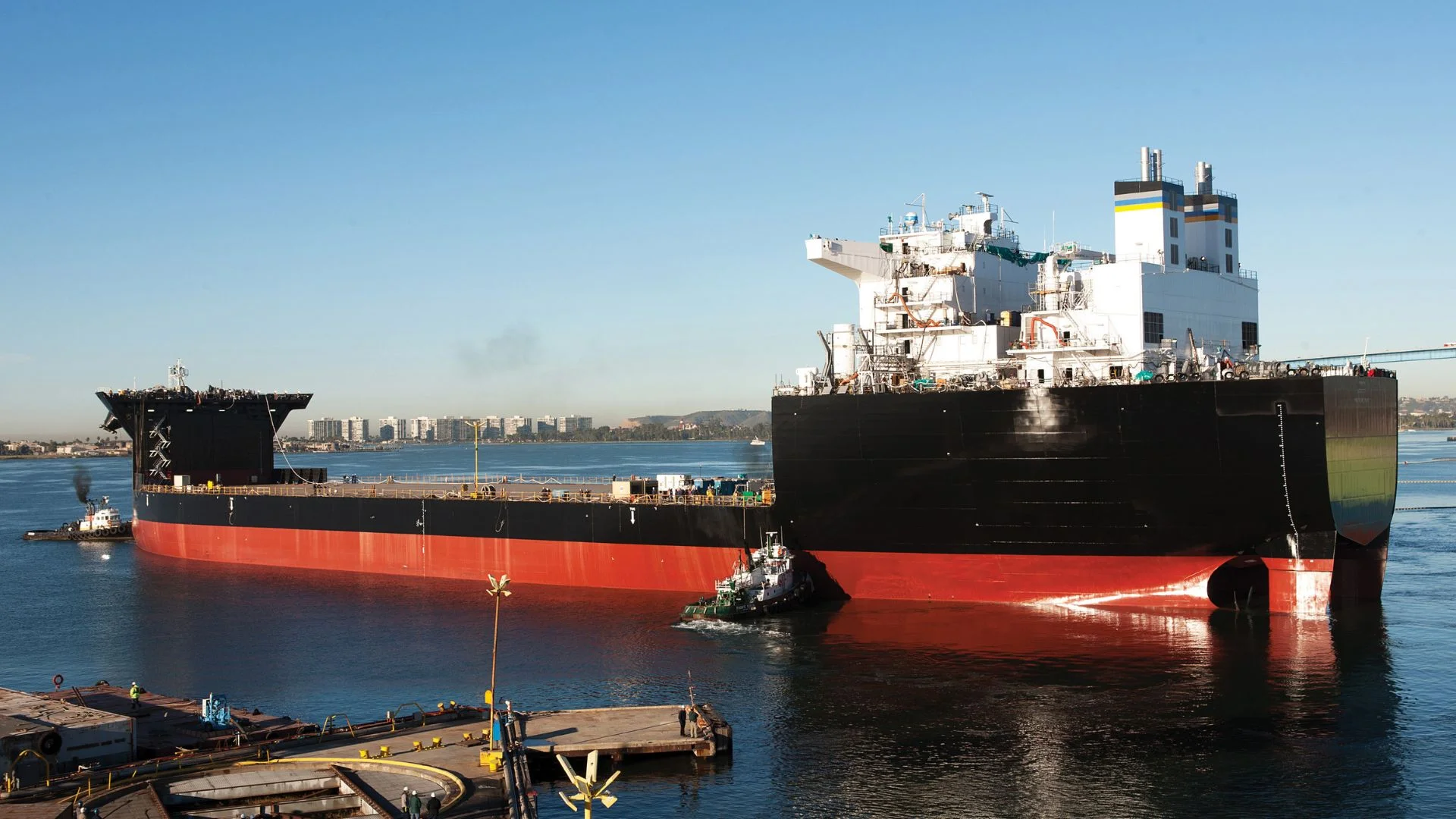
The effort centers on the USNS Montford Point, a massive support vessel that may soon help Navy destroyers and cruisers reload missiles without returning to port.
The plan highlights the Navy’s growing focus on maintaining combat operations in a future Pacific conflict.
READ ALSO: NATO Eyes Cheap Drone Interceptors as Ukraine Challenges US Defense Market Strategy
The service included the project in its Fiscal Year 2027 budget request, which seeks more than $177.7 million for cargo handling and shipboard crane systems. Part of that funding will support a demonstration known as the At-Sea Reload of the Vertical Launch System (ASRV) aboard the Montford Point. The Navy believes the capability can help keep warships deployed longer and reduce the need to return to friendly ports for rearming.
Navy Expands At-Sea Rearming Plans
The Navy’s budget documents describe ASRV as a cost-effective solution for reloading Mk 41 Vertical Launch Systems at sea. These launch systems are installed on many US Navy destroyers and cruisers, including the Arleigh Burke and Ticonderoga classes. They carry missiles used for air defense, missile defense, and long-range strikes.
Today, US warships generally cannot reload these missile cells while operating far from shore. Ships usually must return to a secure port with specialized facilities and heavy equipment. That process can remove combat ships from operations for days or even weeks.
The issue became more visible during recent operations in the Red Sea. Navy officials said some warships had to leave their patrol areas for nearly two weeks just to reload missiles. In a larger conflict, especially in the Pacific region, those delays could become even more serious.
A future war involving China may stretch supply lines across thousands of miles of ocean. Friendly ports may also face missile attacks or other threats during wartime. The Navy wants more flexible logistics systems that allow ships to stay in the fight longer.
WATCH ALSO: DRDO Reveals Advanced Armoured Platform, Boosting India’s Defence Power
The Montford Point class may help solve part of that problem. These ships were originally designed as floating transfer docks that support amphibious and logistics missions. Their wide-open decks and cargo-handling systems make them suitable for moving heavy equipment and munitions between ships.
The USNS Montford Point entered service in 2013, followed by its sister ship, USNS John Glenn, in 2014. Both ships are based on commercial Alaska-class oil tanker designs. They can partially submerge themselves to support loading operations with hovercraft and amphibious vehicles.
In their normal role, the ships act as floating sea bases during military landings. They allow Landing Craft Air Cushion(LCACs) hovercraft to transport troops and equipment from larger cargo ships to shore. Up to three hovercraft can operate from the transfer dock simultaneously.
Why Montford Point Matters
The Navy considered retiring the Montford Point ships only a few years after they entered service. In 2022, officials proposed placing them into inactive status to reduce costs. Congress later blocked the move because lawmakers believed the ships still had important operational value.
That decision now appears significant as the Navy searches for new logistics options. The Montford Point design offers around 25,000 square feet of open deck space. The ship can also support side-by-side cargo transfers between multiple vessels at sea.
Military planners believe the ship may eventually serve as a floating missile-reload station. A supply ship carrying missiles could pull alongside one side of the vessel. A destroyer or cruiser needing new missiles could position itself on the opposite side for transfer operations.
The Navy has not publicly explained exactly how the ASRV system will work. However, officials confirmed that the demonstration will be compatible with all US and allied warships using the Mk 41 launch system. That includes several partner navies operating in Europe and the Indo-Pacific region.
READ ALSO: Blue Energy, GE Vernova Plan 2.5GW Texas Gas-Nuclear Project for AI Power Surge
The project also connects to broader Navy efforts to improve wartime logistics. Budget documents mention additional work involving Lewis and Clark-class dry cargo ships. Those vessels already conduct replenishment missions, including fuel and ammunition transfers.
The Navy is also studying systems for reloading Naval Strike Missiles and Mk 48 torpedoes. Another effort, known as Mobile Supply Platform (MOSUP), is also under development. Officials have not released detailed information about that concept.
Pacific Conflict Concerns Drive New Logistics Ideas
The push for at-sea rearming reflects growing concern about long-term naval warfare in the Pacific. US commanders expect future conflicts to involve heavy missile use over large distances. Ships that run out of weapons may struggle to return safely to distant ports for resupply.
Modern naval combat also places increasing pressure on logistics ships. Support vessels are likely to become major targets during wartime. Protecting supply networks may become just as important as protecting combat ships themselves.
The Navy currently operates 14 Lewis and Clark-class dry cargo ships, but they already support demanding global missions. Adding missile reload duties may further stretch those vessels. Using expeditionary transfer dock ships like Montford Point could help reduce that burden.
The Navy also operates only two Emory S. Land-class submarine tenders. These ships can already reload weapons at sea for submarines. However, they are aging vessels that primarily support underwater fleets.
General Dynamics NASSCO is designing replacement submarine tenders under the AS(X) program. The company has also proposed a related support ship called AD(X), designed specifically for at-sea rearming of surface warships. The Navy has not formally announced plans to acquire the design.
WATCH ALSO: India Tests Powerful Naval Anti-Ship Missile
Defense companies are also exploring other floating logistics concepts. Gibbs and Cox, a division of Leidos, has promoted ideas involving modified semi-submersible oil platforms. Those structures could act as mobile sea bases, missile defense hubs, or supply stations during wartime.
The renewed focus on sea-based logistics shows how naval warfare is changing. Future operations may depend less on fixed ports and more on mobile support systems spread across wide ocean areas. The Navy now appears determined to ensure its warships can remain armed and operational even during prolonged combat far from shore.
If the ASRV demonstration aboard Montford Point succeeds, the Navy may gain a practical way to keep frontline warships supplied during future conflicts. That capability may become especially important in the Pacific, where distance, missile threats, and limited access to ports could define the next era of naval warfare.