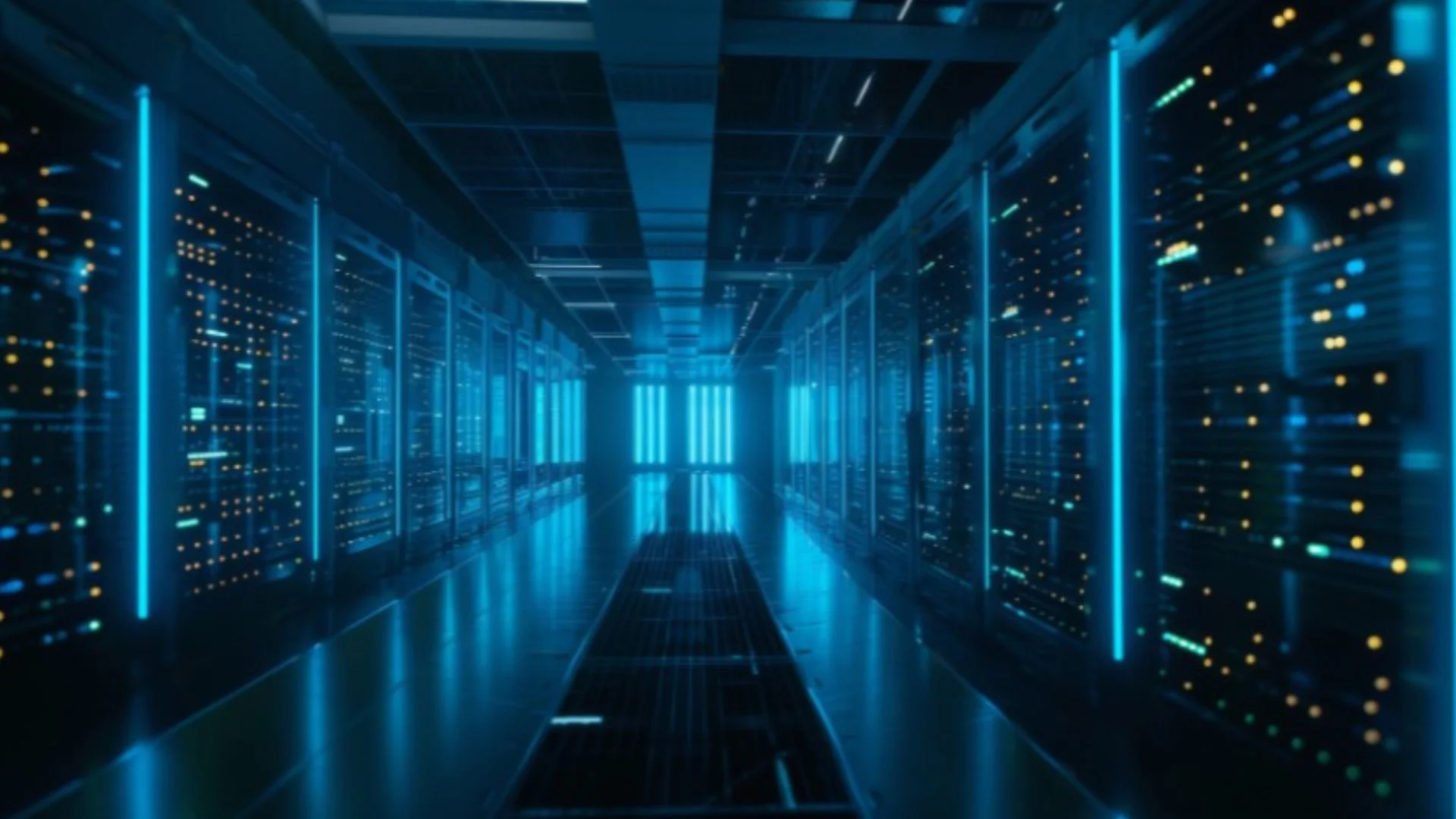
China is rapidly expanding giant artificial intelligence computing clusters as cities and technology firms compete to strengthen the country’s AI industry.
The new systems connect thousands of advanced AI accelerator chips to train models faster and reduce computing costs.
The push reflects China’s wider effort to build domestic technology capabilities amid growing competition with the US.
China Accelerates Construction of Giant AI Computing Clusters
China has turned AI computing infrastructure into a national priority over the past two years. Major cities and technology companies are now racing to build ‘10,000-card clusters’ that connect at least 10,000 AI accelerator chips into one powerful system.
READ ALSO: Turkey Unveils Nester ‘Flying Ginsu’ Missile for Precision Drone Assassination Strikes
These clusters work like large supercomputers designed specifically for artificial intelligence tasks. They help companies train large language models faster and support advanced AI systems that process text, images, video, and audio together.
The systems rely on high-performance graphics processing units, also known as GPUs, along with advanced storage and networking technology. GPUs are chips designed to perform large-scale calculations simultaneously, making them essential for modern AI development.
Several Chinese technology firms are competing to supply the chips that power these clusters. Key domestic companies include Huawei Technologies, Alibaba Group, Moore Threads, and Hygon Information Technology.
Chinese analysts see these projects as part of the country’s larger technology strategy. Building clusters with tens of thousands of AI chips is now viewed as an important measure of strength in the global AI industry.
Huawei, Alibaba, and State Telecom Firms Lead Expansion
Many of the new AI facilities are being developed by China’s three state-backed telecom operators. These companies are working with chipmakers, cloud providers, and local governments to build large computing centers across the country.
WATCH ALSO: This Microsoft AI Could Change Cancer Treatment Forever
Private technology companies are also heavily involved in the expansion. Firms like ByteDance and Alibaba are building their own AI clusters to support internal AI projects and cloud computing services.
Alibaba recently deployed a 10,000-card cluster in Shaoguan, located in Guangdong province. The system uses Alibaba’s self-developed Zhenwu AI chips and operates in partnership with China Telecom.
Huawei also expanded its AI infrastructure footprint earlier this year. In March, Shenzhen launched a 10,000-card intelligent computing cluster powered by Huawei’s Ascend 910C AI chips.
Northern China has become another important center for AI infrastructure development. China Mobile opened a major intelligent computing center in Harbin in late 2024 with more than 18,000 domestic AI accelerator cards.
Central China is also joining the competition for large-scale computing projects. In April, Zhengzhou activated a 60,000-card cluster developed by state-backed supercomputer maker Sugon for scientific AI research.
Industry experts say the growing use of home-grown chips is one of the most important trends in China’s AI sector. The shift comes as US export controls continue to limit Chinese access to some advanced foreign semiconductor technologies.
The Shenzhen cluster reportedly became the first major Chinese AI system built entirely with advanced domestic chips. That milestone reflects Beijing’s broader push for semiconductor self-sufficiency and reduced dependence on foreign suppliers.
READ ALSO: This Raytheon Camera Sees Heat Changes First, Targets Can’t Stay Hidden
Why China’s AI Cluster Race Matters
The commercial use of these systems is developing along different paths across China’s economy. Government agencies, financial institutions, and state-owned enterprises are expected to adopt the technology first because they require secure domestic data processing systems.
The healthcare and education sectors may follow suit as computing costs become more manageable. Universities are expected to rent processing power from these large clusters to support scientific research and AI model development.
Technology companies are taking a different approach by operating their own private computing infrastructure. Analysts say this allows firms such as Alibaba and ByteDance to reduce their long-term dependence on external cloud providers and to control their AI development more directly.
The scale of AI systems is also growing rapidly worldwide. Modern AI models now require far more computing power than earlier generations because they process increasingly complex tasks and larger datasets.
Chinese analysts expect cluster sizes to continue expanding over the next several years. Some forecasts suggest that future systems may eventually connect more than 100,000, or even 1 million, AI accelerator cards.
WATCH ALSO: From Ice to Innovation: US Coast Guard Deploys Drones in Antarctic Mission
That rapid expansion has also raised concerns about overspending and duplicated investment. Some analysts believe intense competition may lead to inefficient projects as companies and local governments rush to secure positions in the AI market.
Others compare the current AI infrastructure race to China’s earlier development of electric vehicles and solar energy industries. In those sectors, heavy competition initially created financial pressure, but it also helped several Chinese firms grow into global industry leaders.
The wider AI competition between China and the US is adding urgency to these investments. Chinese companies are trying to strengthen domestic chip production and computing capacity while continuing to advance their AI software capabilities.
The next phase of the industry will likely focus on improving efficiency, lowering operating costs, and scaling even larger AI systems. As demand for advanced AI services grows, these giant computing clusters are expected to play a key role in China’s long-term technology strategy.