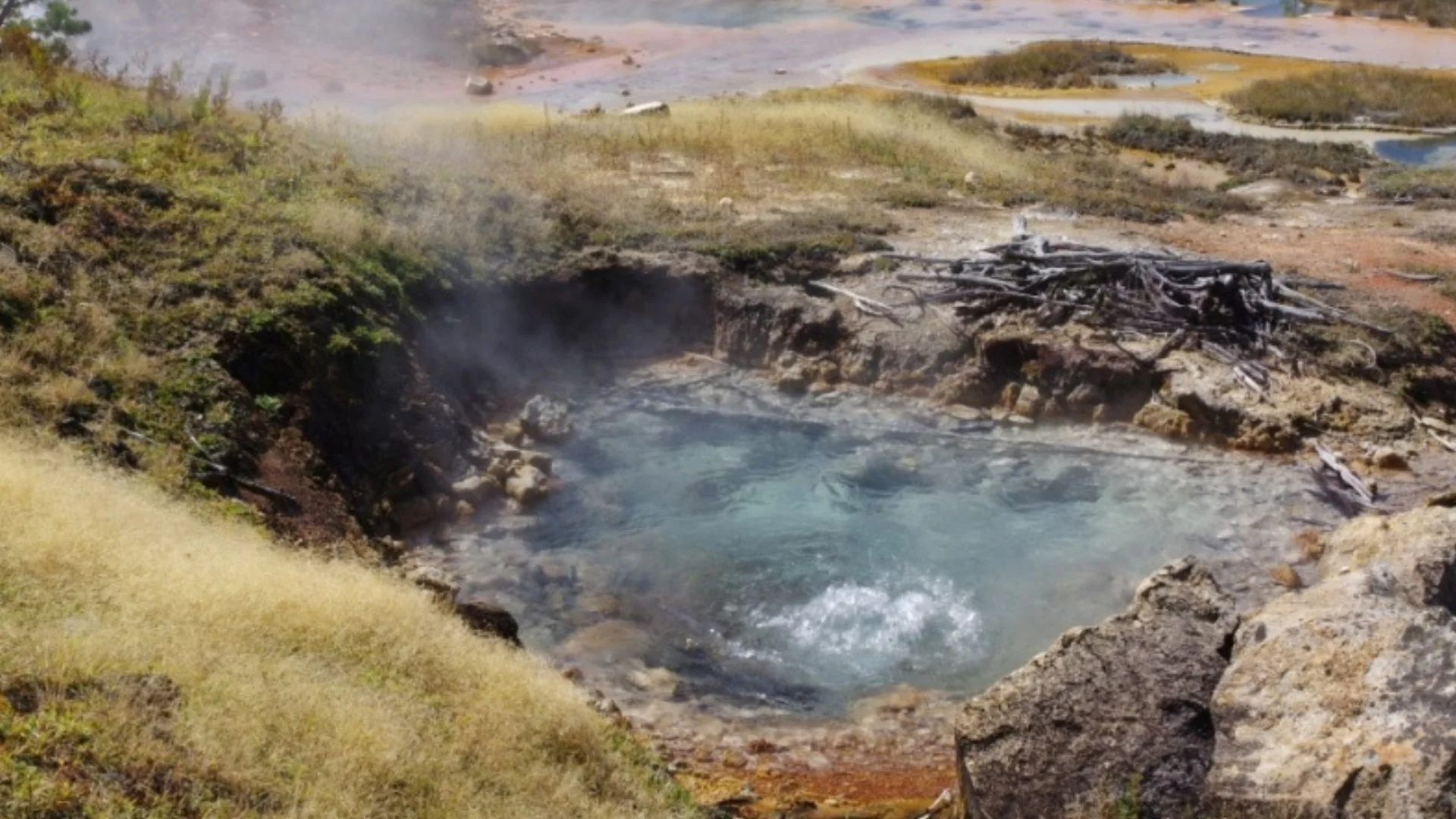
A long-standing mystery beneath Yellowstone National Park is coming into focus as scientists using advanced Chinese supercomputers reveal the volcanic system formed very differently than long believed.
The findings offer a new look at how one of the most powerful volcanic regions on Earth actually works.
Yellowstone is the largest active volcanic system in the world. Its eruptions are far more powerful than the blast from Mount Vesuvius, which destroyed Pompeii. Scientists have long known the scale of the danger, but they have struggled to agree on what drives the magma beneath the surface.
READ ALSO: Rolls-Royce’s UK 3D Printing Hub Targets Future Military Aircraft Engines
A new study published on April 10 in Science presents a different explanation. For years, many researchers believed that hot magma pushed its way upward, breaking open cracks in the Earth’s outer layer, known as the lithosphere. However, the new research suggests that the process happened in reverse.
According to the study, tectonic forces first tore apart the lithosphere. These forces created pathways underground before any magma began to rise. Once those channels were formed, magma moved upward through them. The idea changes the basic understanding of how Yellowstone’s volcanic plumbing system developed.
The research was led by Liu Lijun and Cao Zebin from the Institute of Geology and Geophysics under the Chinese Academy of Sciences.
To investigate the problem, the team built a highly detailed three-dimensional model of the Earth. This model extended from the surface down to the core-mantle boundary and included decades of seismic, electromagnetic, and geological data from western North America.
WATCH ALSO: United Launch Alliance launches launches third batch of Amazon’s Project Kuiper satellites
Building and running such a model required enormous computing power. Liu explained that a single simulation required 600 CPU cores to run continuously for more than 30 hours.
In total, the project consumed over 20 million core-hours. He said that during his time in the US, the team could not run enough simulations because of limited computing resources. “Our computing budget was extremely tight. We would exhaust a year’s allocation after just a few runs,” he said.
After returning to China, Liu gained access to powerful national computing platforms, including Tianhe-1, Sugon, and Beijing Super Cloud. With far greater computing capacity, the team could run more simulations and test different scenarios. This allowed them to refine their model and improve its accuracy.
READ ALSO: China Unveils World’s Largest 10,800-Car Dual-Fuel Carrier Reshaping Global Auto Shipping
The simulations revealed that tectonic activity played the key role in shaping Yellowstone’s underground system. The westward movement of tectonic plates, combined with the sinking of the ancient Farallon slab, pulled hot rock eastward. This movement tore the lithosphere beneath Yellowstone, creating pathways for magma to rise.
Once these channels formed, magma moved upward in stages rather than forcing its way through solid rock. The model also helps explain other unusual features in the region. It shows why there is a gap in volcanic activity and how molten material can move sideways underground for long distances.
The researchers believe this process may not be unique to Yellowstone. Similar tectonic-controlled systems could exist in other volcanic regions around the world. These include Jingpohu in China, the massive Toba volcano in Southeast Asia, the Kamchatka volcanoes in Russia, and volcanic zones in South America’s Altiplano region. In each case, tectonic forces may first open pathways, with magma following later.
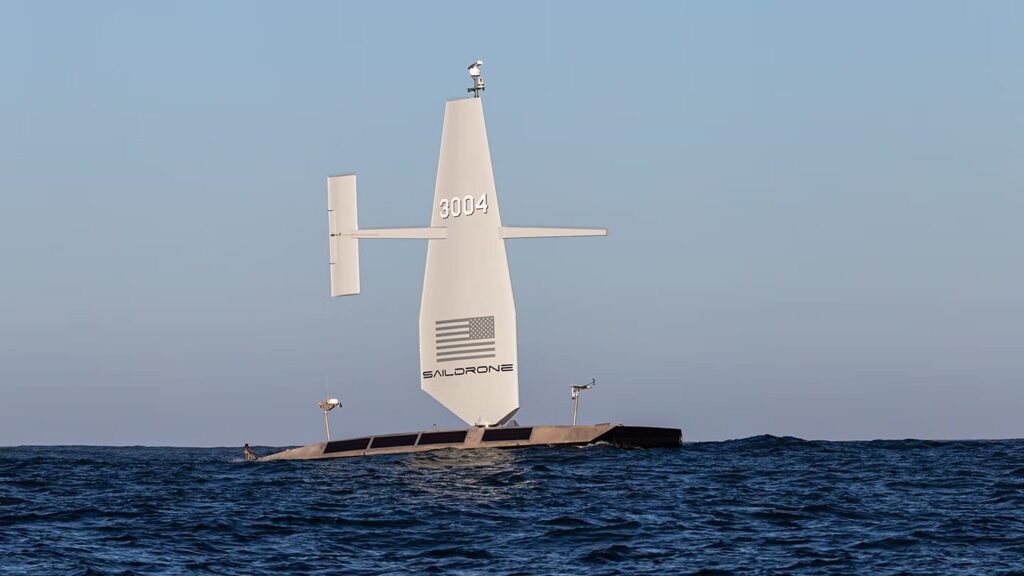
WATCH ALSO: An unmanned boat has completed a long 1,100-nautical-mile voyage
The team is now applying its model to regions closer to China, including the Tibetan Plateau and volcanic zones in northeast China. Their aim is to improve the prediction of geological hazards, support deep mineral exploration, and strengthen resource planning.
Looking ahead, Liu wants to expand this work into a global tool. He hopes to create an open-source system that allows scientists everywhere to study the Earth in detail and even predict geological changes. With growing computing power, the idea of placing the entire Earth into a computer is moving closer to reality.