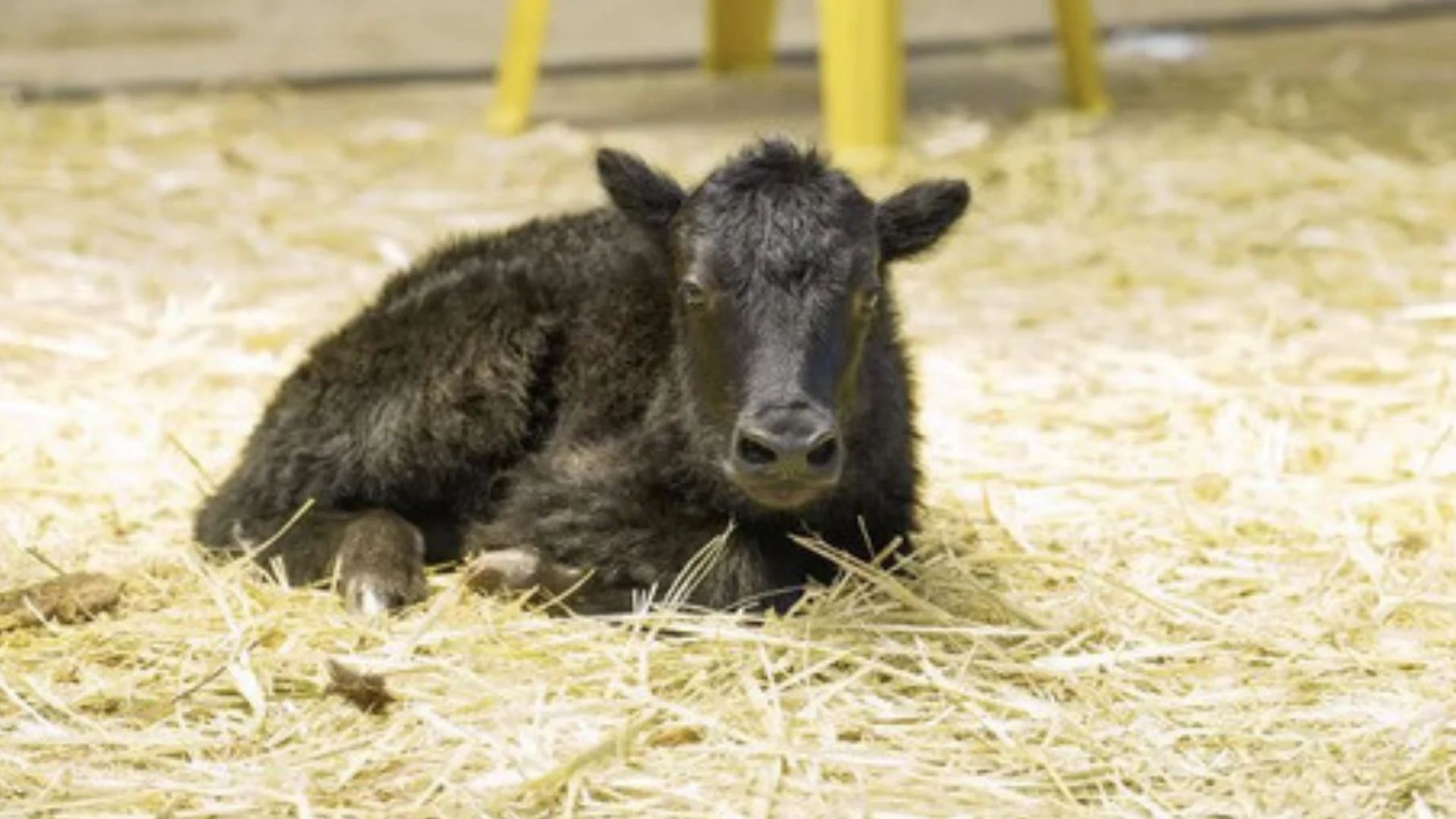
China has reported a major breakthrough in animal breeding as a group of cloned yaks was born naturally for the first time.
The development comes from a research team working in the Xizang Autonomous Region, where yak farming plays a key role in local livelihoods and the economy.
According to a report by China Media Group (CMG), the team successfully achieved batch pregnancies involving 10 cloned yaks. All the calves were delivered naturally, marking an important stage for scaling up the technology for wider use.
This success follows three years of focused research. Scientists combined two advanced methods, whole-genome selection and somatic cell cloning, to improve yak breeding. The team said this integrated approach now places their work at a leading level within China and at an advanced level globally.
READ ALSO: F-35 Upgrade Push Gets New Test Fleet: What’s Really Changing Behind The Scenes
The journey began with a key milestone on July 10, 2025. On that day, researchers produced the world’s first cloned yak using in-house-developed somatic cell technology. Experts described this as a zero-to-one achievement, as it solved long-standing problems in traditional yak breeding in the region.
The first cloned calf showed strong growth. It weighed 16.75 kilograms at birth and reached 183.25 kilograms within 286 days. Researchers said this confirmed the potential of cloning to produce healthy and fast-growing animals.
Building on that success, the team moved to the next stage. Between March 25 and April 5, 2026, they achieved batch pregnancies in 10 cloned yaks. All of them were born naturally, which researchers see as a key sign that the technology can be used on a larger scale.
Whole-genome selection helps identify the best genetic traits in yaks. These include large body size, faster growth, higher fertility, better disease resistance, and more efficient feed use. It also helps select animals that can survive in cold, low-oxygen, high-altitude environments.
WATCH ALSO: Engineers from Australia have introduced a spray that enhances the fire-resistance of clothing
They added that somatic cell cloning allows exact copying of these superior genes. This means high-quality animals can be reproduced quickly and in large numbers. The process cuts the breeding cycle to less than five years, compared to up to 20 years in traditional methods.
Yak breeding has long faced challenges. Natural reproduction rates are low, just over 20 percent. There is also a shortage of high-quality breeding stock, and herd expansion has been slow. Traditional methods rely heavily on visible traits, which can lead to poorer genetic quality over time.
Researchers believe this new combined technology can solve these issues. It can improve breeding efficiency, protect genetic resources, and increase production. The approach also supports economic growth and helps local communities that depend on yak farming.
READ ALSO: PLA Tests YJ-20 Anti-Ship Hypersonic Missiles as Balikatan Drills Expand In South China Sea
The yak industry is one of nine key sectors highlighted in China’s 15th Five-Year Plan for the period 2026 to 2030. Officials see modern breeding technology as essential to strengthening this sector.
Scientists say the successful natural birth of cloned yaks marks a practical step forward. They now plan to expand the program and apply it more widely, aiming to transform yak farming into a more efficient and sustainable industry.