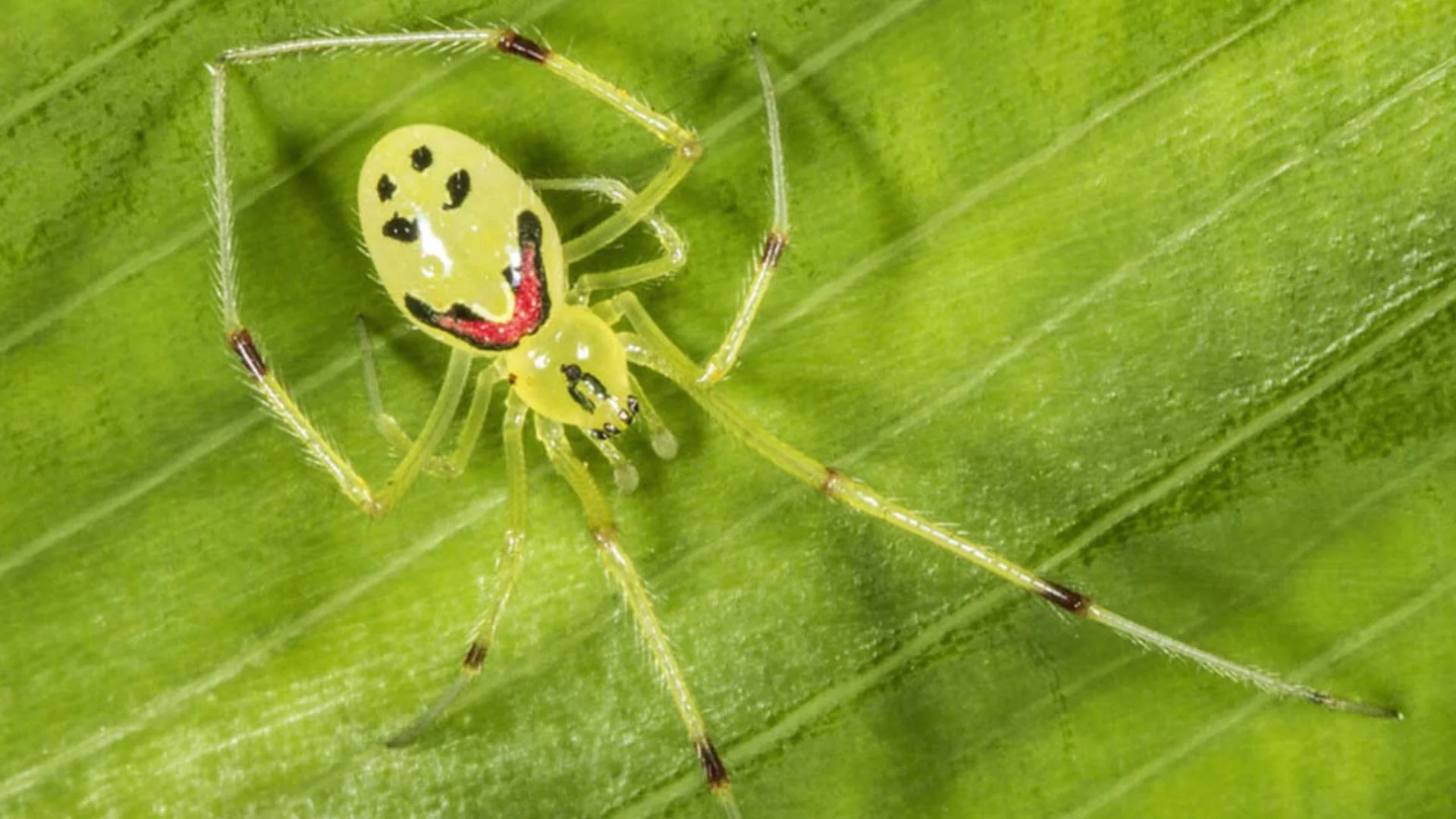
Scientists in India have discovered a new species of smiley-face spider in the Himalayan forests of Uttarakhand.
Until now, these unusual spiders were believed to exist only in Hawaii. The discovery has surprised researchers and opened new questions about spider evolution and survival.
A team of researchers from India’s Forest Research Institute and the Regional Museum of Natural History identified the new spider during biodiversity surveys in Uttarakhand.
The spider belongs to the genus Theridion and has been officially named Theridion himalayana. The study was published in the journal Evolutionary Systematics.
The newly discovered spider drew attention for the patterns on its abdomen. Some of these markings resemble a smiling face, similar to the famous Hawaiian happy-face spider called Theridion grallator. Scientists had previously believed such spiders were unique to the Hawaiian Islands.
Researchers did not originally search for spiders during the field study. The survey mainly focused on ants found in high-altitude Himalayan forests. During the research, co-author Ashirwad Tripathy shared spider images with scientist Devi Priyadarshini for identification.
Priyadarshini immediately noticed the strong resemblance to the Hawaiian species. She had studied the Hawaiian happy-face spider during her master’s program and recognized the unusual markings. That moment led the team to begin a deeper investigation into the Himalayan spiders.
READ ALSO: Special needs children respond positively to new emotional literacy programme in new RCT
The researchers later returned to the region during 2023 and 2024 for further sampling. They collected and studied 61 spiders from the area. The team analyzed their DNA, color patterns, life stages, and physical differences.
DNA Study Reveals A New Spider Species
Genetic testing showed that the Himalayan spiders differed from the Hawaiian species by 8.5-12%. This confirmed that the spiders were not the same species despite their similar appearance. Scientists concluded that the Himalayan spiders represented a completely new species.
The new spider was named Theridion himalayana to honor the Himalayan mountain range. Researchers said the mountains support rich biodiversity and many undiscovered species. The region continues to attract global scientific attention for its wildlife.
The Himalayan species also showed remarkable color diversity. Researchers identified 32 different color morphs grouped into five main categories. Some spiders displayed clear smile-like markings, while others had more abstract patterns.
Scientists believe the two spider species developed their similar appearances independently. This process is known as convergent evolution. It happens when unrelated species evolve similar traits because they face comparable environmental conditions.
Why Do These Spiders Have Smiley Faces?
Researchers are still studying why these spiders evolved such unusual markings. One theory suggests the patterns help scare away predators such as birds. The markings may confuse or intimidate animals looking for an easy target.
The smile-like patterns appeared mostly on female spiders in the Himalayan species. Female spiders often stay near egg sacs to protect their offspring. Since they cannot easily escape danger, defensive markings may improve their chances of survival.
WATCH ALSO: Explore Raytheon’s giant facility where it develops powerful naval radar SPY-6
Scientists say the exact purpose of the patterns remains unclear. More field studies and behavioral research will be needed to understand their function. Researchers also want to learn how these markings affect mating, survival, and predator interactions.
The discovery is important because it expands scientific understanding of spider evolution. It also shows that similar survival strategies can appear in distant parts of the world. Hawaii and the Himalayas are separated by nearly 12,000 kilometers, yet both regions produced spiders with strikingly similar features.
The finding highlights the importance of biodiversity surveys in remote ecosystems. Many species in mountain forests remain undocumented by science. Researchers believe continued exploration in the Himalayas may reveal even more hidden species in the coming years.