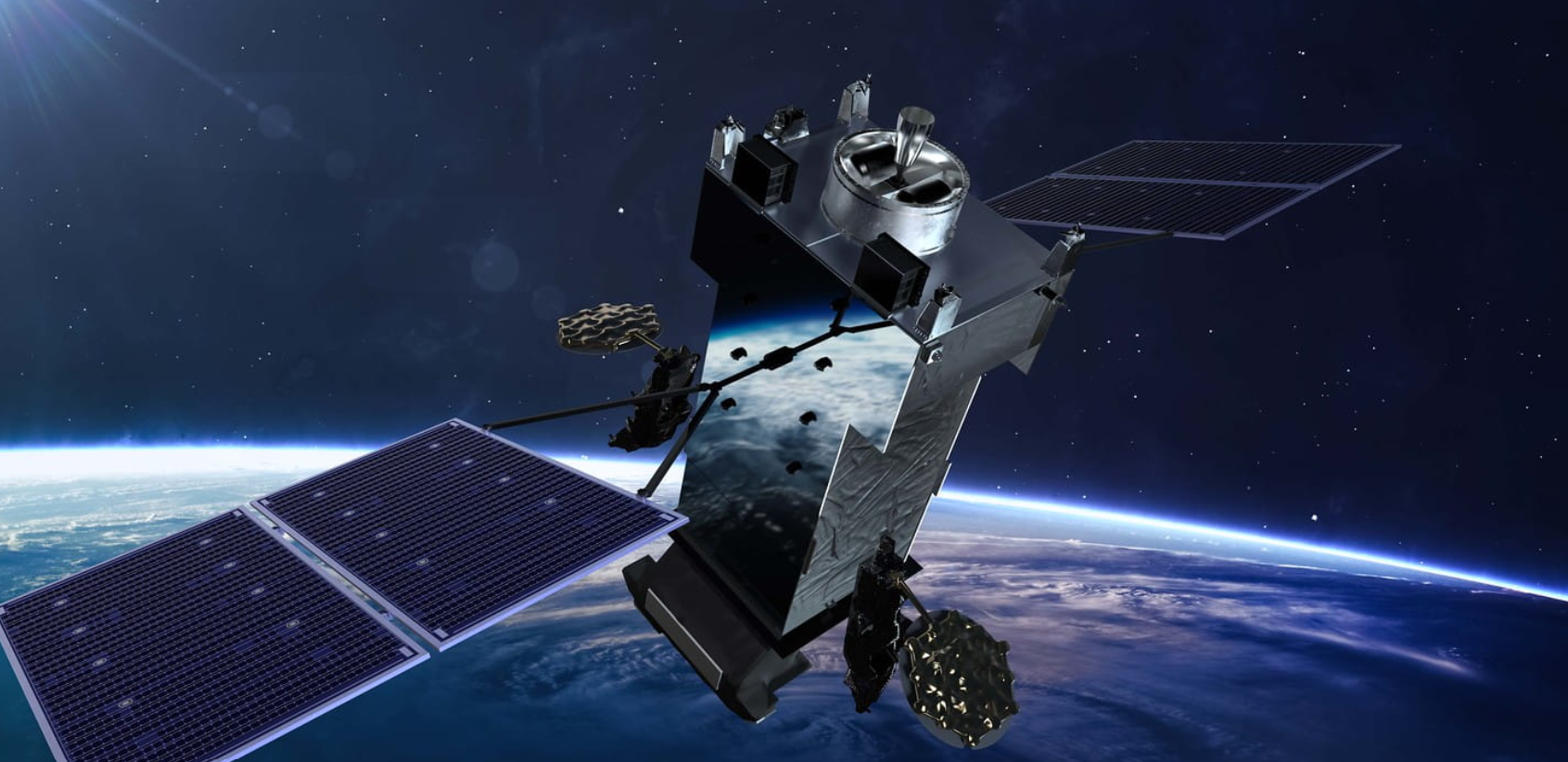
Raytheon, a business under RTX, has successfully delivered its second advanced sensor payload to Lockheed Martin for the U.S. Space Force’s Next-Generation Overhead Persistent Infrared (Next-Gen OPIR) Geosynchronous Earth Orbit (GEO) Block 0 satellite program. This milestone marks continued progress in strengthening space-based missile warning and tracking capabilities amid evolving global threats.
The satellites, often referred to as Next-Generation GEO (NGG), are being developed to enhance the United States’ ability to detect and respond to missile launches with greater speed and precision. These advancements are part of a broader effort to modernize space defense infrastructure.
Enhancing Missile Detection Capabilities
The sensor payloads developed by Raytheon incorporate cutting-edge optical technologies and advanced algorithms. These systems are specifically designed to detect heat signatures generated by missile launches, including those from hypersonic weapons and other emerging threats.
READ ALSO: https://modernmechanics24.com/post/lockheed-win-space-interceptor-contract/
Compared to earlier systems, these sensors offer significantly improved sensitivity and tracking performance. This allows for faster identification and more accurate monitoring of threats in real time. As missile technologies continue to evolve, particularly with the rise of hypersonic systems, the need for more capable detection tools has become increasingly urgent.
By delivering enhanced performance, these sensors play a critical role in building a more reliable and responsive missile warning architecture.
Meeting Growing Demand for Space-Based Defense
The demand for resilient missile warning and tracking systems across multiple orbital regimes is rapidly increasing. Modern defense strategies now rely on a combination of satellites operating in Geosynchronous Earth Orbit (GEO), Low Earth Orbit (LEO), and Medium Earth Orbit (MEO) to provide comprehensive global coverage.
According to Jeff McCall, Vice President for Mission Solutions & Payloads at Raytheon, programs like NGG highlight the importance of high-altitude, long-duration observation systems. These capabilities enable broader mission coverage and improve the ability to monitor key regions continuously.
This shift toward a multi-orbit architecture reflects the growing complexity of global threats and the need for a more flexible and layered defense approach.
WATCH ALSO: https://modernmechanics24.com/post/us-firm-sea-launcher-underwater-drones/
Role of Lockheed Martin’s NGG Satellites
Lockheed Martin is responsible for building the NGG satellites that will carry Raytheon’s sensor payloads. These satellites are designed to provide persistent coverage over mid-latitude regions, filling critical gaps in current surveillance systems.
The NGG satellites will work alongside existing satellite constellations and newer systems deployed in LEO and MEO. Together, they will create a more integrated and comprehensive missile warning network.
This layered approach ensures that potential threats can be detected from multiple vantage points, improving overall reliability and response times.
Progress Toward Deployment
Raytheon has designed and built sensor payloads for two NGG satellites. The first satellite has already been completed and is ready to support initial launch capability, marking a significant step toward operational deployment.
The delivery of the second sensor underscores steady progress in the program and highlights the collaboration between Raytheon and Lockheed Martin. As development continues, these systems are expected to play a vital role in strengthening national security.
READ ALSO: https://modernmechanics24.com/post/uss-eisenhower-sea-trials-schedule/