Space missions have always been limited by the amount of fuel a rocket can carry at launch. Every extra kilogram of propellant increases launch weight and reduces the amount of scientific equipment or cargo that can be transported.
NASA wants to solve this challenge through in-orbit refueling, allowing spacecraft to refuel their tanks after reaching orbit rather than carrying all the fuel from Earth.
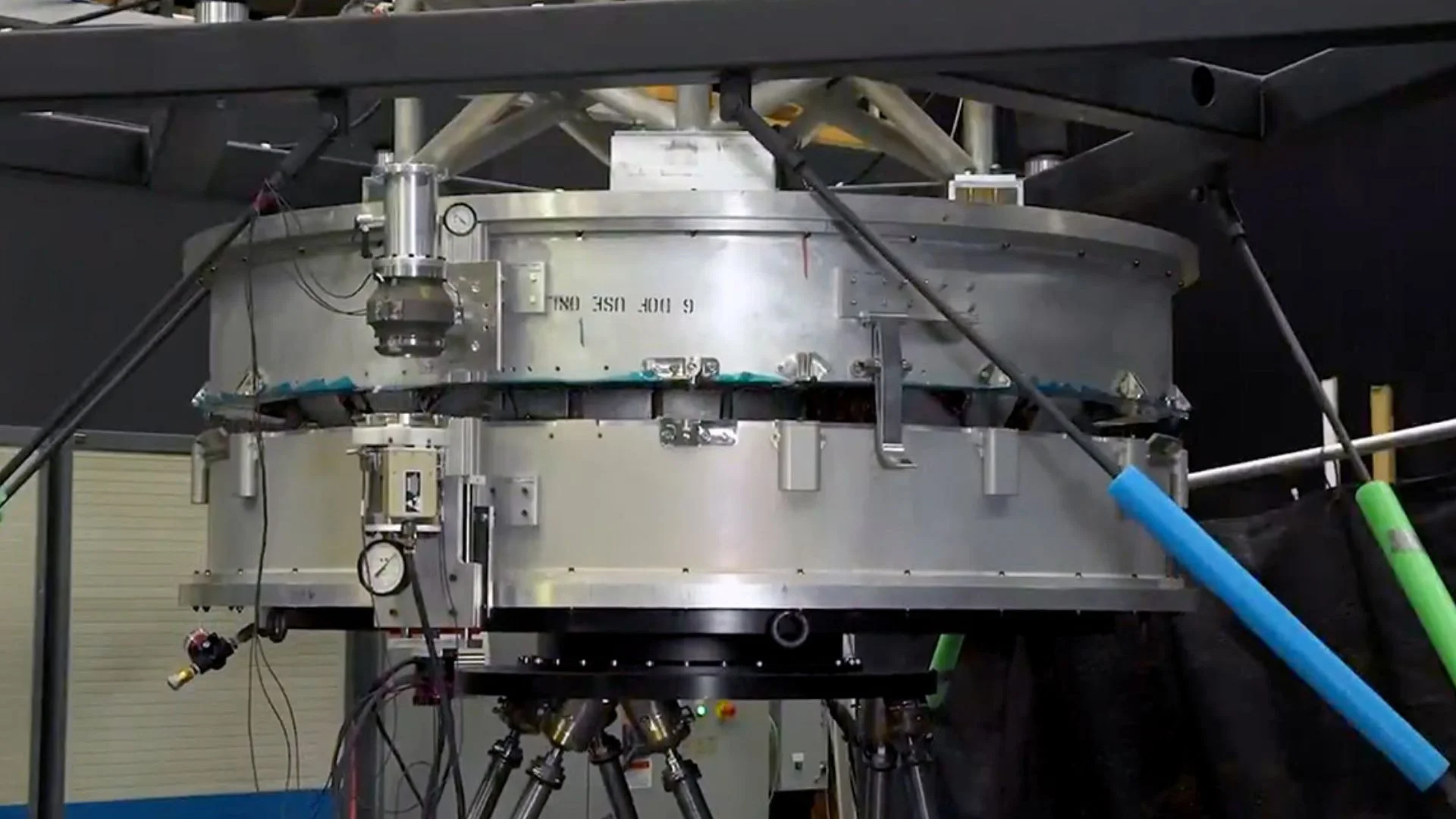
Scientists at NASA’s Marshall Space Flight Center in Alabama recently completed the first major tests of a device called a cryocoupler.
The system is designed to connect two spacecraft in orbit so that one vehicle can safely transfer cryogenic propellants to another. These tests mark an important step in NASA’s long-term plans for space refueling.
The cryocoupler is being developed with aerospace company L3Harris. The goal is to build a connection system that works reliably in the harsh environment of space. It must operate without astronauts performing risky spacewalks.
Cryogenic Orbital Refueling Challenges
The system is designed to transfer liquid hydrogen and liquid oxygen. These fuels power many modern rocket engines because they provide high performance. However, they must remain extremely cold throughout storage and transfer.
Liquid hydrogen and liquid oxygen stay in liquid form only at temperatures hundreds of degrees below zero Fahrenheit. If they become warmer, they quickly turn into gas. That process creates pressure, making it much more difficult to store or transfer the fuel.
READ ALSO: France Receives Fourth Barracuda Nuclear Submarine De Grasse, Bolstering Naval Strength
The connectors currently used on NASA’s Space Launch System were built for launches from Earth. They work only once before separating from the rocket during liftoff. They are not designed for repeated use or for operating in the vacuum of space.
Space also creates challenges that do not exist on Earth. Extreme temperature changes cause metal parts to expand and shrink. Any tiny leak during fuel transfer can reduce efficiency or create safety concerns.
NASA designed the cryocoupler to solve these problems. The connector creates a tight seal even if the two spacecraft are not perfectly aligned. It also connects and disconnects automatically without human assistance.
Successful Early Tests Build Confidence
NASA engineers recently tested the cryocoupler using liquid nitrogen. The liquid reached temperatures of about minus 321 degrees Fahrenheit, making it a safe substitute for testing cryogenic systems. Engineers monitored how the fluid moved through the connector while checking for leaks and measuring changes in the metal caused by extreme cold.
The device successfully transferred the liquid in both connected and disconnected configurations. Researchers reported that the system maintained its performance throughout the tests. These results provide valuable information for improving future designs.
A second test recreated the movement expected during spacecraft docking. One half of the connector was attached to a robotic platform that moved and rotated in different directions. The other half remained fixed to simulate realistic docking conditions.
These tests helped engineers understand how the connector performs when spacecraft are not perfectly lined up. Such small alignment errors are common during orbital operations. The cryocoupler continued to form a reliable connection under these conditions.
Travis Belcher, NASA’s cryocoupler project manager, said in-orbit cryogenic refueling remains one of the most difficult engineering challenges in spaceflight.
He explained that NASA is currently focused on making the hardware reliable before expanding its capabilities. He also noted that the design is still in its early stages and will continue to evolve through future testing.
READ ALSO: China Deploys BeiDou Satellite Tracking on Europe Rail Route to Secure Cargo in Real Time
Why This Technology Matters
The cryocoupler is part of NASA’s broader research into handling cryogenic fluids in space. Teams from NASA’s Glenn Research Center are also contributing to the project. The agency is working closely with industry partners by providing access to specialized facilities and technical expertise.
One long-term goal is to establish propellant depots in Earth orbit. These storage stations would hold rocket fuel that spacecraft could use before heading toward the Moon, Mars, or other destinations. This approach would reduce the need to launch every mission with a full fuel load.
Orbital refueling would also allow spacecraft to carry larger scientific instruments, supplies, or exploration equipment. Instead of using most of their launch capacity for fuel, missions could dedicate more space to useful payloads. This increases mission flexibility while improving overall efficiency.
The technology also supports future exploration strategies that rely on multiple spacecraft working together. A supply vehicle could deliver fuel while another spacecraft prepares for a longer journey. This approach is similar to refueling vehicles during long trips instead of carrying all the fuel from the start.
NASA says more testing is planned before the technology becomes operational. Engineers will continue refining the design and improving its performance under realistic space conditions. Each round of testing will bring the agency closer to practical orbital refueling.
Reliable in-orbit fuel transfer would reshape how future space missions are planned. It would support sustainable exploration beyond Earth while reducing the limits imposed by launch vehicle capacity.