China has opened the Huajiang Grand Canyon Bridge in Guizhou, setting a new world record as the highest bridge.
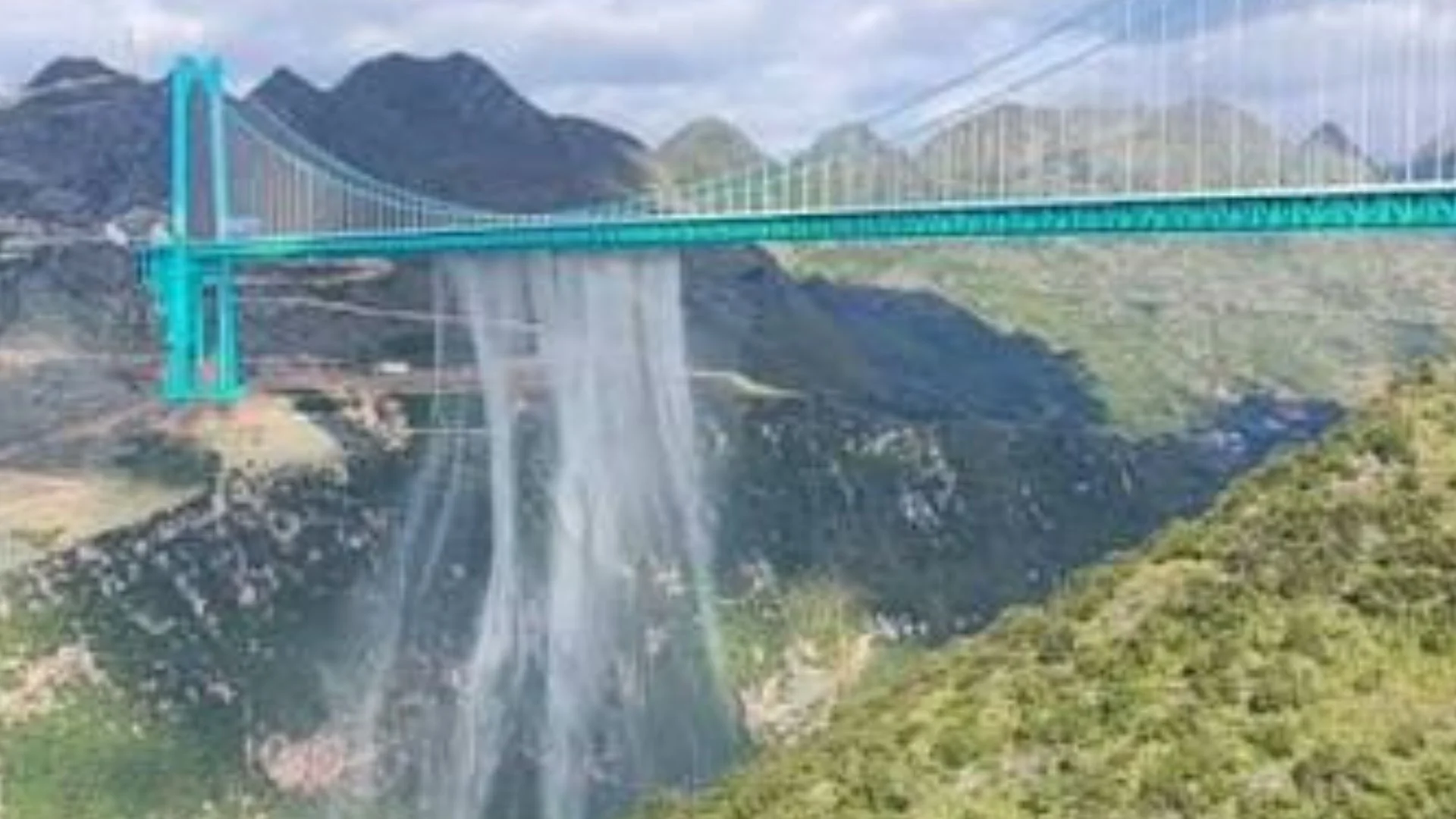
The massive structure rises 625 meters above the Beipan River and features the world’s largest artificial waterfall. The project is improving transport while also creating a major tourism destination.
The new bridge is part of the Liuzhi-Anlong Expressway in southwest China. It crosses a deep canyon surrounded by steep limestone mountains and valleys. The project greatly reduces travel time for people and goods moving through the region.
Huajiang Grand Canyon Bridge
Before the bridge opened, crossing the canyon often took more than an hour. Travelers depended on winding mountain roads or ferry services to reach the other side. Today, vehicles can cross in about 1 minute.
The bridge stretches nearly 2,890 meters across the canyon. Its main suspended section measures 1,420 meters between two towers. Each tower rises about 262 meters above the ground.
The bridge passes through Guizhou’s famous karst landscape. Karst terrain forms when water slowly dissolves limestone over thousands of years. This process creates dramatic cliffs, caves, sinkholes, and deep valleys, making construction especially challenging.
Building across such terrain requires careful engineering and advanced construction methods. Engineers designed the bridge to remain stable under changing weather conditions and heavy traffic. The structure also improves year-round access between communities that were once difficult to reach.
READ ALSO: Scientists Directly Observe Rare Thorium–Thorium Bonding Using Advanced Electron Mapping
World’s Largest Artificial Waterfall
During tunnel excavation, engineers discovered a large underground water source within the limestone. Instead of simply draining the water away, they developed a system to store and reuse it. The water is collected in a reservoir before being pumped back to the bridge.
Recycled water flows from the center of the bridge, creating a giant artificial waterfall. The waterfall stretches about 300 meters across and drops roughly 600 meters into the canyon below. It is described as the world’s largest artificial waterfall.
Engineers can control both the height and the amount of flowing water by adjusting water pressure. After sunset, laser lighting illuminates the waterfall, creating a striking nighttime display. The system also serves practical purposes beyond its visual appeal.
Water from the project is used to irrigate nearby farmland after use. It also provides facilities around the bridge, including rest areas for drivers. The recycled system supports public services while reducing unnecessary water waste.
Tourism Expands
The bridge is attracting both visitors and motorists. A glass walkway beneath the bridge allows people to look directly into the canyon below. Many visitors stop to experience the unique views from one of the highest bridge decks in the world.
READ ALSO: General Fusion Expands Into Italy With Fusion Energy Deal as Clean Energy Race Accelerates
A glass elevator carries tourists to a café built high above the valley. Visitors can enjoy panoramic views of the surrounding mountains while taking a break. The observation area has become one of the bridge’s most popular attractions.
Adventure tourism is also becoming part of the destination. The site now offers activities such as bungee jumping and paragliding. Plans are also being developed to introduce organized base jumping events in the future.
Many travelers describe the experience of crossing the bridge as unforgettable because of its extreme height. From the roadway, vehicles below appear tiny against the vast landscape. The surrounding scenery adds to the bridge’s appeal as both a transport link and a sightseeing destination.
Guizhou has invested heavily in bridges because its mountainous terrain makes road construction difficult. The province is already home to several of the world’s tallest bridges. These projects have helped improve transport, boost tourism, and support regional economic development.
The Huajiang Grand Canyon Bridge reflects China’s continued investment in large-scale infrastructure and advanced engineering. It combines faster transportation with tourism, environmental planning, and modern design in a single project.