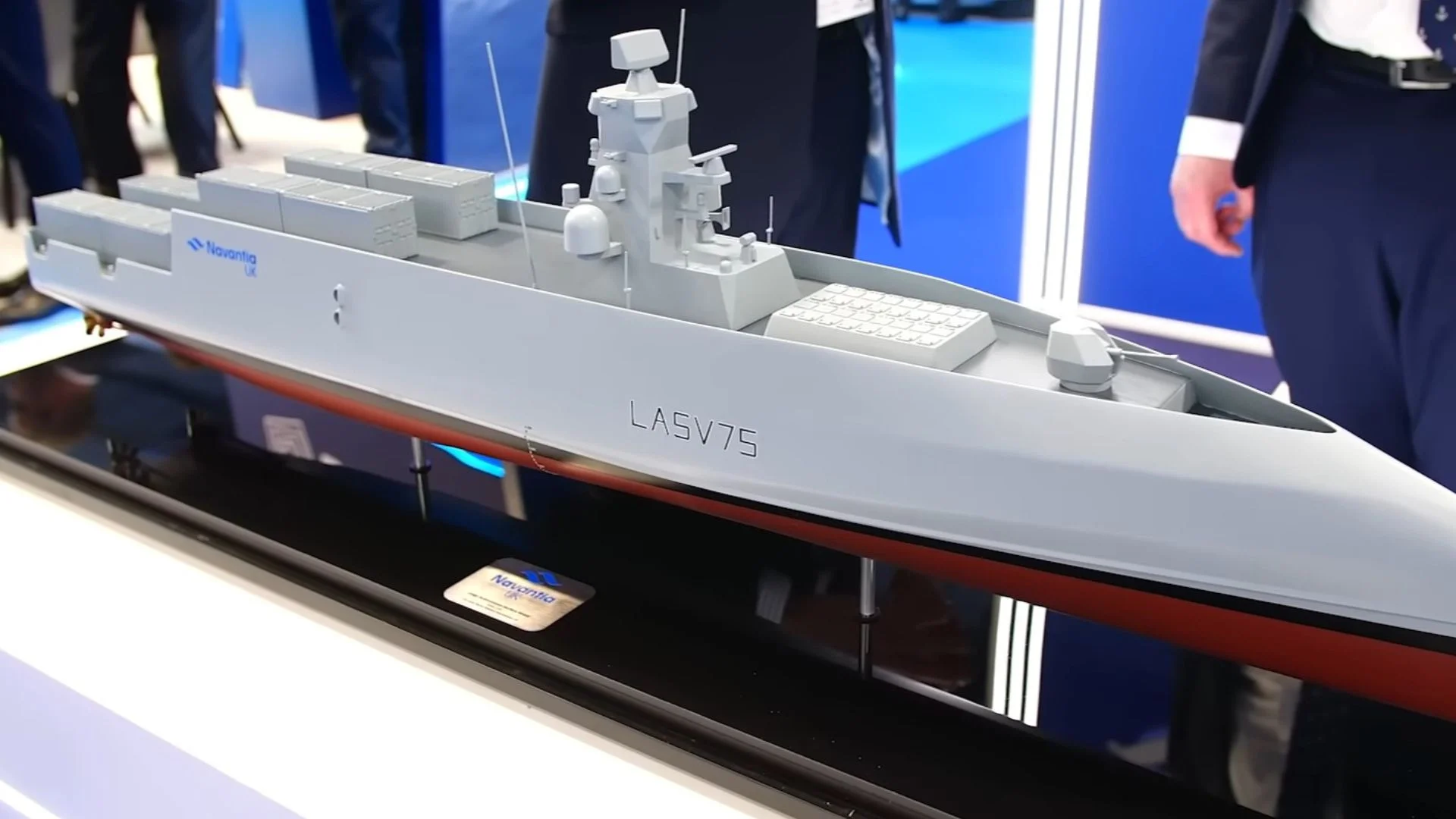
Navantia UK has officially unveiled its new LASV75 autonomous surface vessel concept during the Combined Naval Event (CNE) 2026.
The vessel is designed to support future Royal Navy operations using autonomous and uncrewed technologies. The company said the platform reflects changing naval requirements and the growing demand for persistent maritime capabilities.
The LASV75 is based on a modular hull measuring 75 meters in length. It displaces more than 1,000 tonnes and is built to handle different mission types through interchangeable payload systems. The vessel can operate independently or work alongside larger naval task groups.
Navantia UK developed the concept through its Bristol-based design team. According to product development director Simon Jones, the vessel was created to match future operational needs for both the Royal Navy and allied naval forces. He said modern navies require platforms that can remain at sea for long periods in difficult conditions.
Jones explained that the North Atlantic remains one of the most challenging operational areas for naval forces. He said smaller autonomous vessels often face endurance and weather limitations in harsh environments. The LASV75 was designed with a greater size and stability to improve performance in cold and rough seas.
READ ALSO: US Army Tests IonStrike Interceptor in Europe to Counter NATO Eastern Flank Drone Threats
Modular Design Supports Multiple Naval Missions
The LASV75 was conceived as a fully uncrewed platform from the beginning. Because there is no onboard crew, the vessel does not require traditional living quarters or crew support systems. This allows more internal space for mission equipment, fuel, and payload modules.
The concept model displayed at CNE had a large configurable mission deck. The deck supports container-based systems that can be swapped depending on the operating demands. This approach allows the same vessel to perform surveillance, electronic warfare, escort or strike related missions without major redesigns.
The vessel also uses a modular mast arrangement and interchangeable sensor systems. Navantia UK said this design improves flexibility and allows operators to quickly update the vessel with new technologies. It also supports easier maintenance and future upgrades.
READ ALSO: Collins Aerospace Wins Bell Contracts to Supply Five Key Systems for US Army’s MV-75 FLRAA
The company is investigating NavyPOD-style mission modules along with NATO standard interfaces. These standards are intended to increase compatibility between allies using shared equipment and systems. The interoperability has become increasingly important as NATO members expand cooperation in maritime security operations.
Autonomous surface vessels are becoming more important for current naval operations in the world. Countries invest in uncrewed systems because they reduce crew risk and reduce long-term operating costs. They can also be deployed for long durations without the limitations faced by human crews.
Shipbuilding Expansion and Future Naval Strategy
Navantia UK is working with autonomy and mission-system partners across the defense industry to refine the LASV75 design. The company said scalability and low-cost production were important considerations during development. Engineers are also studying ways to simplify construction and reduce manufacturing timelines.
According to the company, the first LASV75 vessels would be built at the Appledore shipyard in Devon. The facility can produce vessels up to 120 meters long and recently became part of Navantia UK’s expanded industrial network. The shipyard already supports major naval programs and modernization projects.
Navantia UK’s Belfast yard remains focused on the Royal Navy’s Fleet Solid Support program. The GBP1.6 billion project continues to progress following the cutting of first steel for the lead vessel in December 2025. Earlier this month, an 85-meter transport barge was launched from Methil to move ship sections and components between production facilities.
WATCH ALSO: United Launch Alliance launches launches third batch of Amazon’s Project Kuiper satellites
The unveiling of LASV75 also highlights Navantia UK’s broader industrial expansion following its 2025 acquisition of Harland & Wolff assets. The company now operates facilities in Appledore, Arnish, Belfast, and Methil. It is investing around GBP157 million to modernize operations and introduce advanced digital shipbuilding technologies.
Navantia UK said the upgrades intend to reduce naval vessel production schedules by up to 30 percent. The company introduces advanced manufacturing systems and digital construction methods throughout its shipyards. These efforts are intended to improve efficiency as the demand for modern naval forces platforms continues to grow.
The LASV75 concept arrives as navies worldwide increase investments in autonomous maritime systems. Military planners are seeking vessels that can support surveillance, deterrence, and operational flexibility without relying solely on traditional crewed warships. The project shows how autonomous platforms are becoming a central part of future naval strategy.