

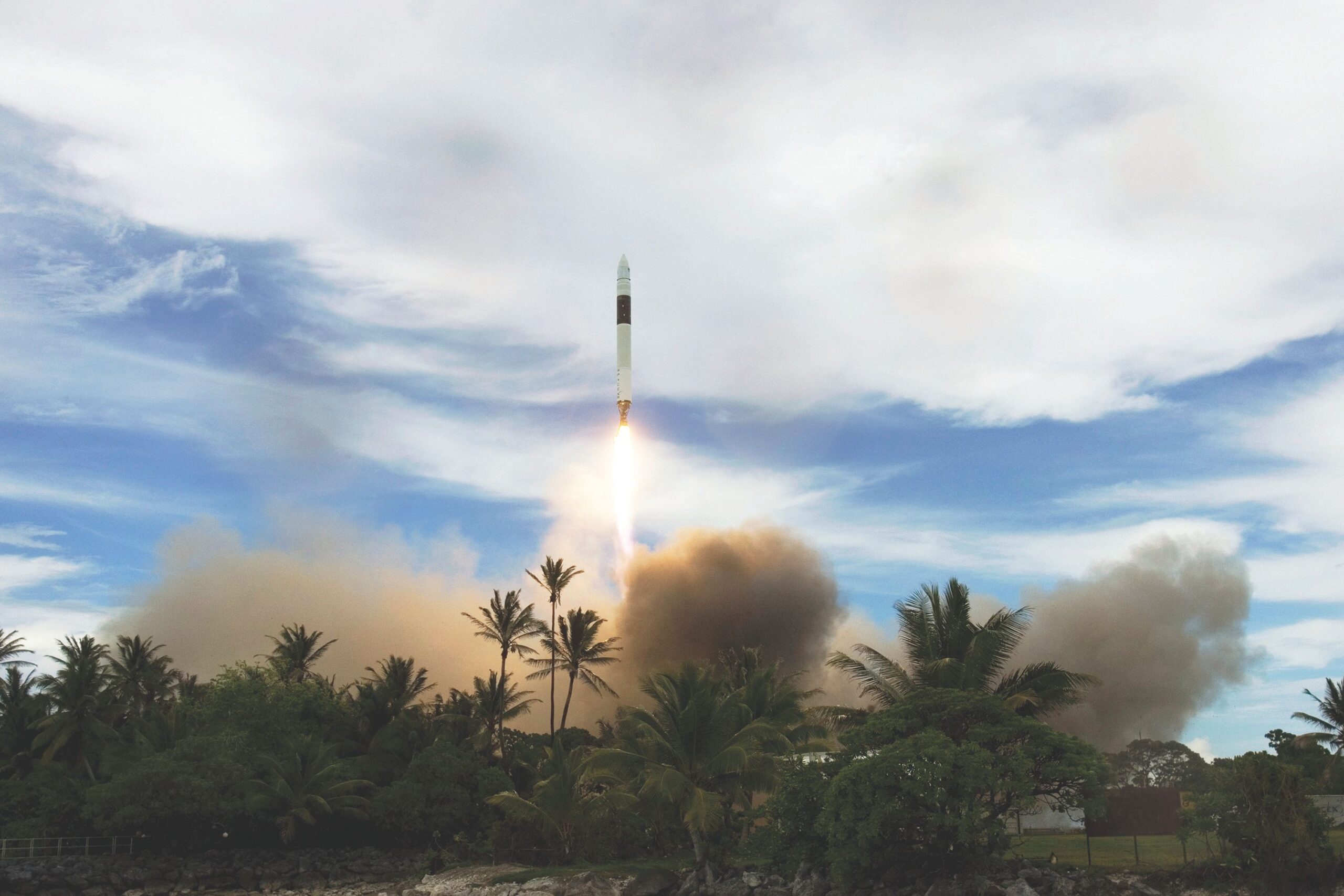
NASA’s Nancy Grace Roman Space Telescope has launched aboard a SpaceX Falcon Heavy rocket. The infrared space telescope is now beginning a three-month journey to its final orbit about one million miles from Earth, where it will study dark matter, dark energy, and planets beyond our solar system.
NASA launched the Roman Space Telescope at 7:26 a.m. EDT on Sunday from Kennedy Space Center in Florida. The mission is designed to survey huge areas of the sky while capturing detailed infrared views of the universe.
The launch was successful, and NASA’s ground team began receiving data from the telescope about seven minutes later. The Falcon Heavy separated from Roman after 31 minutes, while its boosters returned safely for refurbishment.
READ ALSO: https://modernmechanics24.com/post/texas-engineers-magnetic-memory-edge-ai/
The NASA Nancy Grace Roman Space Telescope is managed by NASA’s Goddard Space Flight Center. Teams from NASA’s Jet Propulsion Laboratory, Caltech/IPAC, the Space Telescope Science Institute, and other research institutions are also involved.
NASA is working with several industry partners, including BAE Systems, L3Harris Technologies, and Teledyne Scientific & Imaging. Space agencies and research organizations from Europe, Japan, France, and Germany are also contributing to the mission.
Scientists still do not fully understand dark matter and dark energy. These two mysterious parts of the universe appear to play a major role in how galaxies and the universe have developed.
Roman will also search for exoplanets, which are planets outside our solar system. Its wide surveys could help scientists better understand how planets and galaxies form and change over time.
Roman combines a wide view of the sky with infrared vision. Its main camera, the Wide Field Instrument, has 300 megapixels and 18 infrared detectors.
The telescope will scan large areas of space much faster than previous space telescopes. NASA says Roman is designed to survey the universe about 1,000 times faster than Hubble.
Roman will send about 1.4 terabytes of data each day, giving scientists a huge amount of information to study. Artificial intelligence, machine learning, and citizen scientists will help identify interesting objects and possible discoveries.
Its Coronagraph Instrument will also test technology for future missions. It will attempt to photograph Jupiter-like planets and help develop methods that could eventually be used to search for signs of life on Earth-like worlds.
Roman cannot begin its main science work immediately. It must first travel to the second Sun-Earth Lagrange point, known as L2, and complete about three months of testing and calibration.
NASA expects to release Roman’s first images by early 2027. The telescope also depends on complex communication systems to stay connected with Earth throughout its journey.
WATCH ALSO: https://modernmechanics24.com/post/spacex-falcon-9-successfully-lands/
he Roman Space Telescope will give astronomers a new way to study some of the biggest questions in space. Its combination of a wide field of view, infrared vision, and fast surveys could reveal objects and events that are difficult for other telescopes to find.
The mission could also create a large new map of the universe and provide clues about dark energy, dark matter, galaxy formation, and planets beyond our solar system.









One Response