

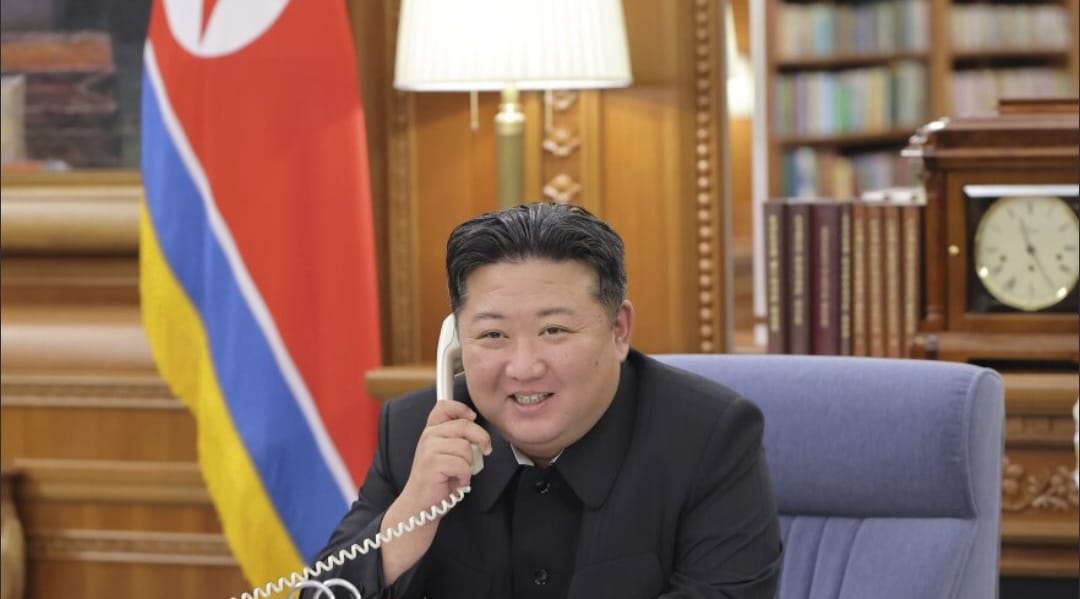
North Korea has removed Defence Minister No Kwang-chol in a wider reshuffle of the country’s military leadership, state media reported on Sunday.
The changes were approved at a meeting chaired by leader Kim Jong-un on Saturday, with several senior officials receiving new positions. The reshuffle comes as Pyongyang continues to develop new weapons and strengthen its military capabilities amid tensions with South Korea and the US.
The Korean Central News Agency (KCNA) said No Kwang-chol was dismissed as defence minister and also moved down the ruling Workers’ Party hierarchy.
He was reassigned as the first vice-director of the Munitions Industry Department, a body closely linked to the country’s weapons production sector. Kim Song-gi, who heads the General Political Bureau of the Korean People’s Army, was appointed as the new defence minister.
The General Political Bureau is responsible for political affairs and ideological control within North Korea’s armed forces. Its director taking over the defence portfolio places a senior political-military official in charge of the ministry. KCNA did not provide a detailed explanation for No’s removal or say whether the change reflected a specific policy dispute.
READ ALSO: https://modernmechanics24.com/post/ai-cuts-china-coastguard-weapon-risk/
Another major change involved Pak Jong-chon, a senior military official who had served as a defence adviser. He was appointed vice-chairman of the Central Military Commission and also joined the ruling party’s Political Bureau. Several other military and party officials were promoted as part of what KCNA described as a structural reorganisation.
Focus Shifts to Weapons
The leadership changes were announced alongside renewed attention to North Korea’s defence research and weapons development.
At a ceremony on Saturday, Kim Jong-un praised scientists, researchers and officials involved in advancing military technology and awarded them the country’s highest national honours. KCNA said their work had helped address major scientific and technological challenges involved in developing new combat weapon systems.
The state media report did not identify the weapons or systems involved. It said North Korea’s weapons research centre had recently developed exclusive technologies that were important for strengthening the country’s ability to conduct warfare. Such statements suggest that Pyongyang is placing continued emphasis on military research, although the available report gives no technical details about the systems.
A photograph released by KCNA showed Kim personally pinning a medal on one of the recipients. The recognition came after a series of weapons-related activities, including tests in late June overseen by Kim involving a new extended-range multiple rocket launcher and artillery system. Multiple rocket launchers are designed to fire several projectiles rapidly over a wide area, while extended range allows such systems to strike targets farther from their launch positions.
Seoul Makes Changes Too
The developments in Pyongyang coincided with a separate defence leadership change in South Korea.
Seoul announced that Kang Shin-chul, a former deputy commander of the South Korea-US Combined Forces Command, would become the country’s new defence minister. Presidential chief of staff Kang Hoon-sik announced the appointment during a televised address on Sunday.
The changes in both Koreas came shortly after the annual South Korea-US military exercises ended. North Korea routinely condemns the drills, arguing that they are preparations for an invasion, while Seoul and Washington describe their military cooperation as defensive. This year’s exercises received additional attention after US President Donald Trump directed that they be shortened.
Trump has also criticised the exercises as provocative and accused Seoul of failing to support the US during its war against Iran. At the same time, he has spoken positively about Kim Jong-un and indicated interest in another meeting with the North Korean leader. Trump and Kim held two summits during Trump’s first term, but negotiations over North Korea’s nuclear programme did not produce a lasting agreement.
WATCH ALSO: https://modernmechanics24.com/post/china-c919-first-international-flight/
Pyongyang Maintains Hardline Stance
North Korea has so far shown little indication that it intends to respond positively to Washington’s renewed overtures. Pyongyang has continued missile launches and criticised the reduced South Korea-US exercises despite their shorter format. It has also objected to US-approved arms sales to South Korea and Washington-backed programmes documenting alleged human rights abuses in North Korea.
The latest military reshuffle therefore comes at a sensitive point in relations between Pyongyang, Seoul and Washington. Changes among senior commanders and party officials, combined with new attention to weapons research, indicate that military organisation and defence technology remain central to Kim’s policy agenda.
The next appointments, weapons tests and policy statements will offer further clues about how North Korea intends to shape its military posture in the months ahead.














One Response