Ukraine has unveiled a new unmanned naval drone designed to launch interceptor drones during combat missions.
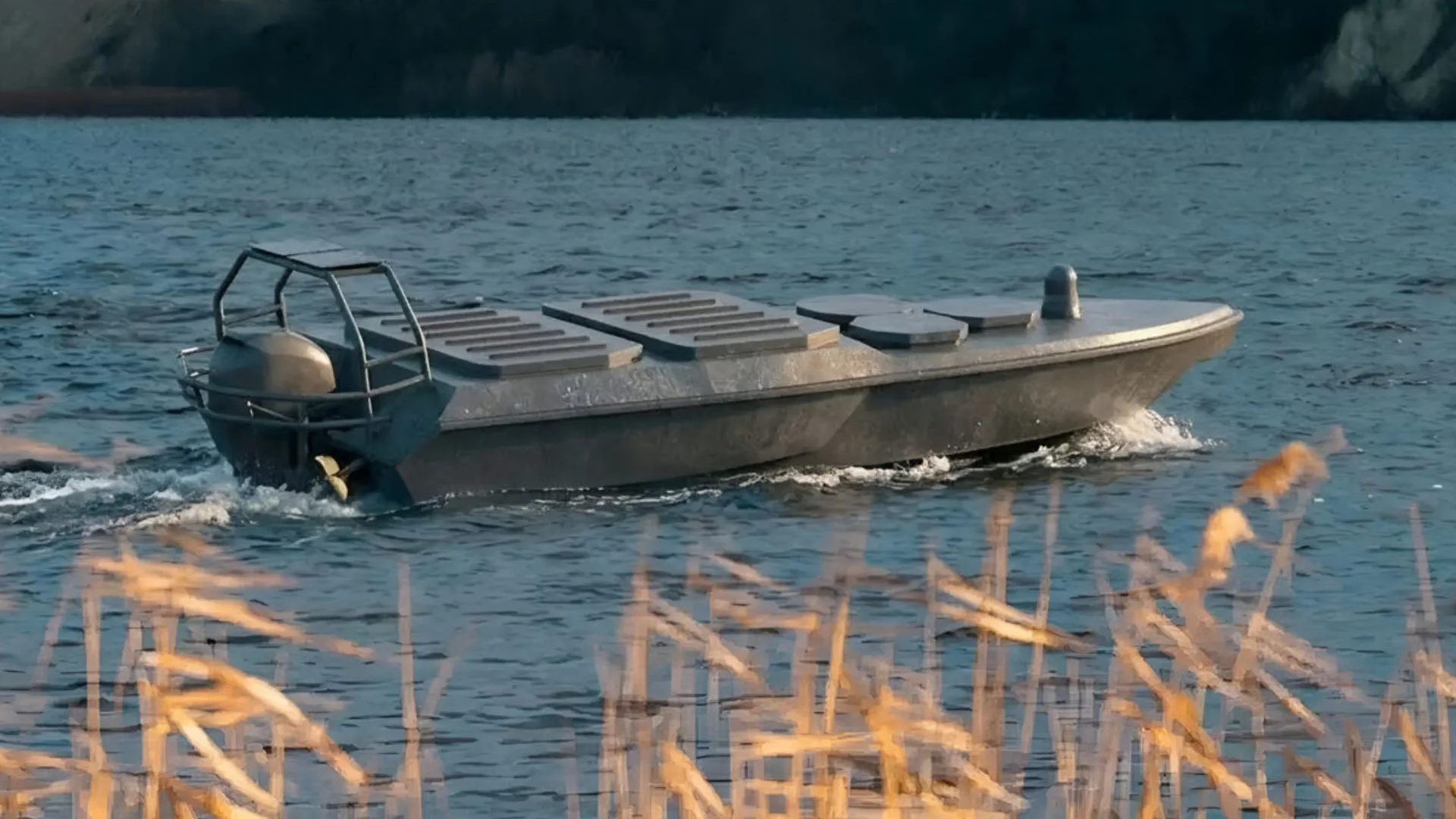
The system is intended to counter large-scale Shahed drone attacks and protect major infrastructure across the Black Sea region. Developed by Ukrainian defense company MAC HUB, the Katran X1.2 unmanned surface vessel can carry up to 27 FPV interceptor drones in a single operation.
The platform combines naval mobility, artificial intelligence, and airborne interception capabilities into one autonomous combat system. Company officials said the vessel is designed for both strike missions and air defense operations at sea.
The Katran X1.2 operates as a drone carrier at sea and can launch multiple airborne interceptors against incoming targets. These drones are designed to destroy Iranian-made Shahed attack drones that Russia has frequently used against Ukrainian cities and infrastructure. The system also supports fixed-wing interceptor drones for longer-range engagements.
Katran X1.2 Fleet Expands
The unmanned vessel has an operational range of 1,600 kilometers and is designed for long missions across the Black Sea. It uses an integrated satellite communication antenna to maintain contact over large distances. The vessel can travel at a maximum speed of 93 kilometers per hour and cruise steadily at 65 kilometers per hour.
The drone boat also features several self-sustaining systems that enable it to operate with minimal human control. A built-in damage detection system monitors leaks and technical failures during missions. An onboard pumping system automatically removes water, reducing the risk of flooding in rough conditions.
The platform uses autopilot technology and advanced navigation software to maintain awareness at sea for several days. An artificial intelligence system manages target detection and tracking during operations. The vessel can continue functioning even if communication links are interrupted or jammed.
Ukraine has increasingly relied on naval drones during the war to challenge Russia’s larger Black Sea Fleet. Earlier Ukrainian sea drones mainly focused on explosive attack missions against ships and coastal targets. The Katran X1.2 adds a new layer by combining naval operations with drone-interception capabilities.
FPV Interceptor Drones Designed for High-Speed Air Defense
MAC HUB tested the Katran X1.2 on the Dnipro River while carrying the company’s Dead Fly FPV interceptor drones. These drones are powered by artificial intelligence and designed to automatically chase airborne targets. The interceptors reportedly reach speeds of up to 380 kilometers per hour during combat missions.
According to reports, Ukrainian military operators requested even faster interceptor speeds for future deployments. Engineers are now upgrading the drones to exceed 450 kilometers per hour. Faster interceptors would improve their ability to engage fast-moving drones and cruise missiles.
First-person View (FPV) drones are usually controlled via live video feeds sent to operators. Ukraine has widely used FPV drones during the war because they are cheaper and faster to produce than traditional missiles.
By launching them from a sea platform, operators can extend their range and improve attack angles against enemy targets.
The Katran X1.2 can also carry air-defense missiles to engage helicopters, light aircraft, and cruise missiles. This gives the vessel multiple combat roles during naval operations. The combination of missiles and interceptor drones turns the platform into a mobile defense hub at sea.
WATCH ALSO: World’s largest nuclear fusion research project ITER has reached a new milestone
Ukraine Strengthens Drone Warfare Across the Black Sea
Ukraine continues to invest heavily in unmanned systems as drone warfare reshapes modern combat. Both Ukraine and Russia now rely on drones for surveillance, attacks, and air defense missions across land and sea battlefields. Naval drones have become especially important in the Black Sea, where direct naval engagements remain risky.
The Odessa seaport and the surrounding infrastructure remain key strategic targets during the conflict. Protecting these areas from drone and missile attacks has become a major military priority for Kyiv. A mobile sea-based drone defense system gives Ukraine more flexibility in securing shipping routes and coastal facilities.
Military analysts have observed growing interest worldwide in autonomous naval platforms equipped with airborne drones. Similar systems are being explored by several countries as modern warfare shifts toward unmanned operations. Ukraine’s latest developments highlight how smaller, lower-cost systems are changing battlefield tactics.
READ ALSO: Spanish and UK Scientists Achieve Lifelong, Tissue-Specific Protein Control in Living Animals
The unveiling of the Katran X1.2 also reflects Ukraine’s rapid defense innovation during the ongoing war. Ukrainian companies have accelerated drone production and testing since the conflict expanded in 2022. As drone attacks continue to evolve, systems that combine mobility, autonomy, and layered defense are expected to play a larger role in future military operations.