The GT50 engine development program has taken an important step forward after achieving successful combustion tests on the Rufus 3 test rig.
The latest results confirm stable operation of the engine’s production combustion chamber, one of the most critical components in a gas turbine engine. The achievement comes as engineers continue preparations for the first full run of the prototype engine.
Alongside the progress of combustion testing, the team has completed the trial fitting of the GT50’s major engine casings.
These tests verified that the main structural components fit together correctly before final assembly begins. Engineers also conducted detailed inspections and measurements of the final gas generator rotor, a key rotating component of the engine.
The rotor has now been sent for balancing, an essential process before installation into the prototype. Once completed, it will be integrated into the engine as assembly progresses. The project team expects final assembly of the prototype GT50 engine to begin shortly.
Bringing all major systems together will prepare the engine for its first operational tests. The recent milestones reduce technical risks and provide greater confidence in the engine’s overall design.
READ ALSO: Liquid crystal structures key to organic solar cell performance, study finds
With combustion validation and assembly preparations progressing as planned, the GT50 program is now moving closer to a major development milestone.
GT50 Fuel System
At the same time, engineers have continued developing and qualifying the GT50 fuel system. This system plays a key role in controlling how fuel is delivered throughout the engine’s operating range. Accurate fuel control is necessary for both performance and reliability.
The fuel system is being used to map the engine’s full operating envelope. This means engineers are collecting data across different power settings and operating conditions. The information gathered will support the development of the final flight-ready Full Authority Digital Engine Control(FADEC).
A FADEC system acts as the engine’s electronic control center. It automatically manages fuel flow and other operating parameters. This helps ensure efficient and stable engine operation without constant manual adjustments.
Development work has included testing and calibrating pumps, valves, protection systems, and fuel nozzles. These components were evaluated using the Rufus 1 rig and a dedicated fuel testing platform. The goal has been to ensure consistent fuel delivery under a wide range of operating conditions.
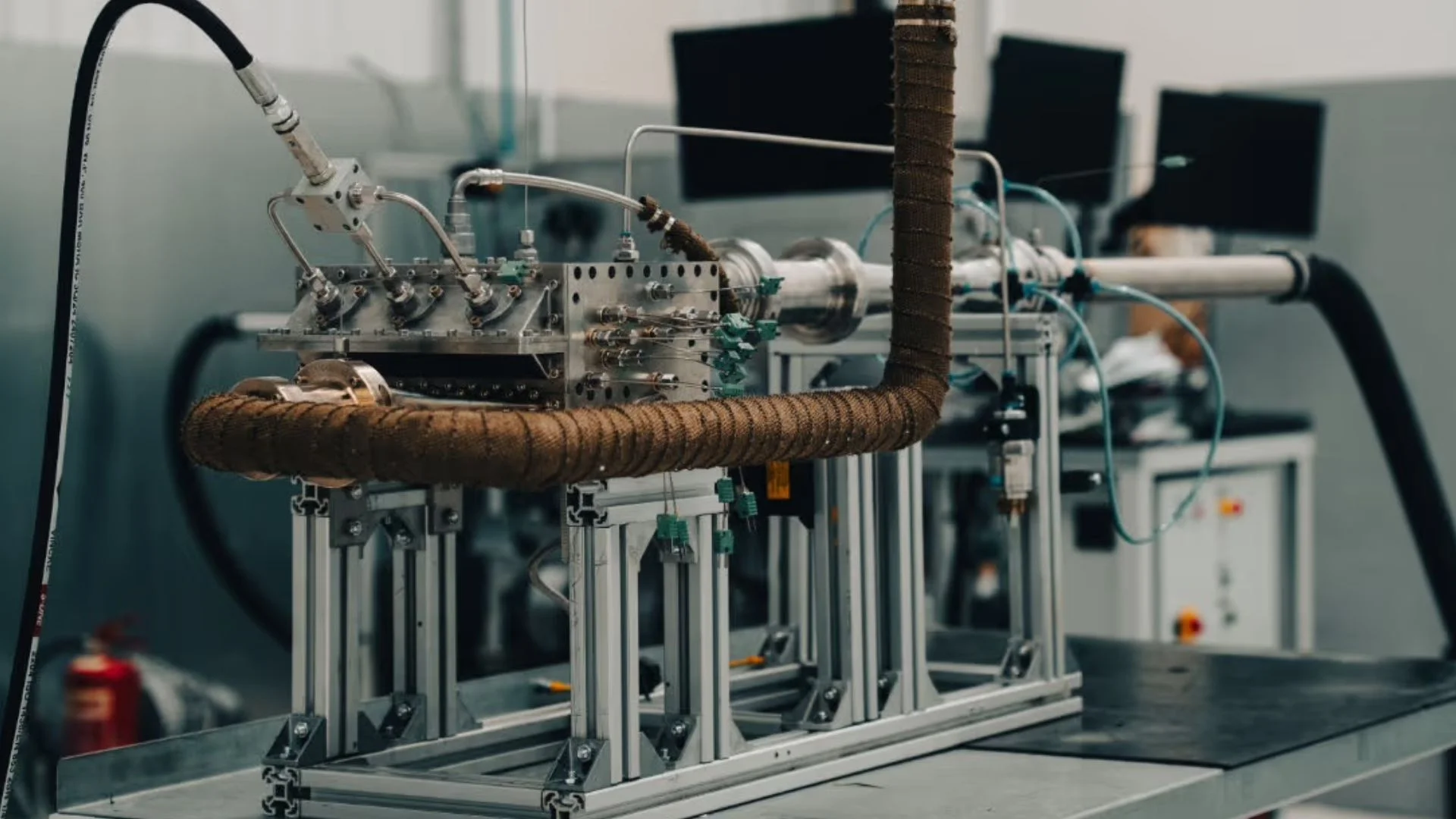
Rufus 3 Rig Validates Combustion
The Rufus 3 rig was built specifically to study combustion before testing the complete engine. It represents one quarter of the GT50 combustion chamber and includes three fuel injectors and swirlers. The rig also includes systems that control airflow and fuel flow, as well as measurement equipment.
Combustion testing is one of the most demanding stages in gas turbine development. Fuel must ignite quickly and burn efficiently while remaining stable across different power levels. Small changes in airflow or fuel delivery can significantly affect performance.
READ ALSO: Thales and KNDS France Unveil RAPIDFire Land: New Ground-Based Variant of 40mm Naval Defence System
The challenge becomes even greater because the GT50 requires a very large fuel operating range. At maximum power, the engine consumes between 10 and 15 times as much fuel as during ignition. A standard single-orifice fuel nozzle struggles to manage such a wide range without creating excessive pressure demands on pumps and control systems.
To address this issue, engineers began developing the fuel system early in the program. Over the past 18 months, they have focused on reliable fuel delivery, improved nozzle manufacturing, and reducing the risk of carbon deposits and contamination. They also worked to achieve the precise fuel atomization needed for efficient combustion.
The latest testing campaign produced one of the program’s most important achievements so far. Engineers successfully fired the production combustion chamber and achieved reliable operation for the first time. The system ignited quickly and maintained stable combustion throughout testing.
The team also demonstrated controlled adjustment of fuel and airflow across different operating conditions. This confirmed that the combustion system can operate smoothly while maintaining stable flame characteristics. Although further tuning is still required, the core performance objectives have been achieved.
The successful tests reduce one of the largest technical risks facing the GT50 program. Combustion stability is essential for engine efficiency, durability, and safety. Validating the production chamber before full engine testing improves confidence in the overall design.
WATCH ALSO: High-pressure monster gun can make 40-ton military vehicle more lethal on battlefields
The development is significant because small gas turbine engines are increasingly being used in advanced aviation, defense, and industrial applications. Reliable combustion and precise digital engine control are key requirements for these systems. Successful testing, therefore, represents an important step toward a practical and operational engine platform.
Engineers will now continue refining operating parameters and optimizing performance. Further adjustments are expected over the next several days as testing continues.