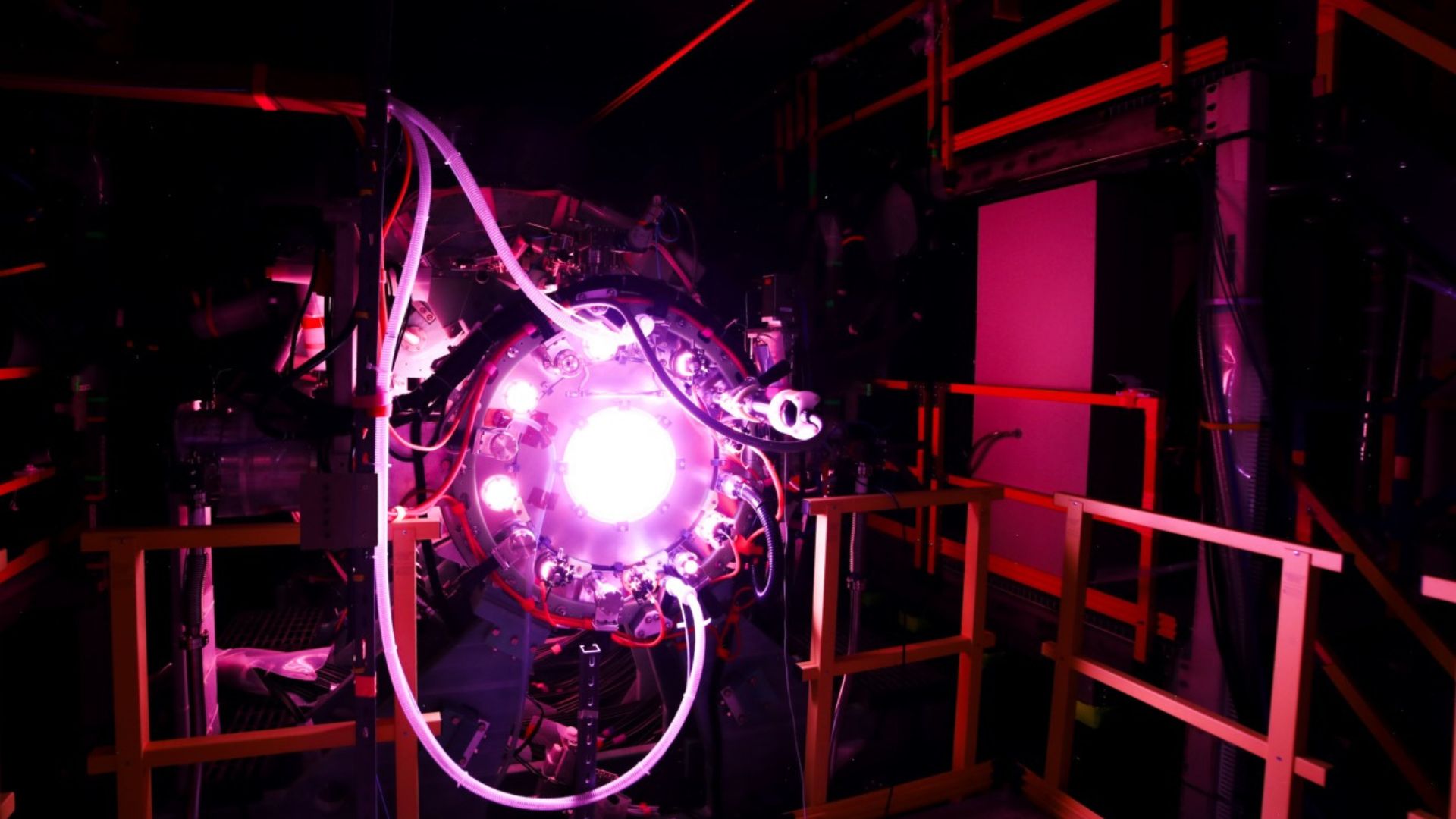
Helion announced that it has obtained the final regulatory licenses needed for its fusion energy facility in Malaga, Washington.
The approvals were issued by the Washington State Department of Health. The company says it is the first US fusion developer to reach this stage.
Construction of the fusion plant is already underway in central Washington. The facility is designed to generate electricity using nuclear fusion, the same process that powers the Sun and other stars. Fusion works by combining light atomic particles at extremely high temperatures to release energy.
According to Helion Chief Executive Officer David Kirtley, the licenses mark an important step toward connecting fusion-generated electricity to the grid.
He said the approvals help move the project from development toward commercial operation. The company continues to focus on building and testing its technology.
How Fusion Energy Tech Works
Fusion energy differs from traditional nuclear power plants that rely on nuclear fission. Fission generates electricity by splitting heavy atoms, while fusion creates energy by joining lighter atoms together. Supporters view fusion as a promising clean-energy source because it does not produce long-lasting radioactive waste.
Helion says its fusion systems operate at temperatures of around 150 million degrees Celsius. The company states that independent experts have verified its prototype machine achieved those temperatures. Reaching such extreme heat is necessary to create the conditions required for fusion reactions.
READ ALSO: DARPA Targets 10x Military Battery Energy to Power Future Drones and Combat Systems
Unlike many research-focused fusion projects, Helion has focused on engineering and construction. Critics have questioned the industry’s timelines and noted that the company has published limited peer-reviewed technical research. Helion maintains that building operational systems remains its primary objective.
Microsoft Agreement and Industry Impact
The company drew global attention in 2023 when it signed an agreement with Microsoft. Under the deal, Helion plans to provide at least 50 megawatts of electricity from its fusion plant beginning in 2028. If achieved, it would mark one of the first commercial uses of fusion-generated power.
The regulatory environment for fusion has also become more favorable in recent years. In 2023, the US Nuclear Regulatory Commission determined that fusion facilities do not require the same complex regulatory framework used for nuclear fission reactors. That decision was widely viewed as an effort to support innovation while maintaining oversight of safety.
READ ALSO: NASA’s X-59 Reaches Mach 1.4, Advancing Quiet Supersonic Flight Over Populated Areas
Fusion remains one of the most closely watched technologies in the global energy sector. Governments, investors, and technology companies are backing projects that aim to provide large amounts of carbon-free electricity. Helion’s latest licensing milestone adds momentum to that effort and sets the stage for the next phase of commercial fusion development.
As construction progresses, the industry will be watching closely to see whether Helion can meet its 2028 power-delivery target and demonstrate fusion energy at a commercial scale.