The Savannah River Site(SRS) has introduced several major improvements at a basin that stores used nuclear fuel.
The upgrades are designed to strengthen operational safety and improve maintenance activities. They also support the long-term management of nuclear materials stored at the facility.
The basin stores used nuclear fuel from former production reactors and research reactor programs. These programs include both domestic and international sources. The facility plays an important role in managing nuclear materials safely over long periods.
The storage basin contains about 3.4 million gallons of water. Water depths range from 17 feet to 50 feet. The water acts as a protective barrier, shielding radiation and helping keep the fuel secure.
One of the latest projects involved replacing exhausted resin used in the basin’s water treatment system. The resin removes impurities from the water and helps maintain water quality. Clean water is essential for both fuel protection and worker safety.
Maintaining proper water chemistry is a major part of nuclear fuel storage. Impurities in the water can increase electrical conductivity. Higher conductivity can contribute to corrosion, fuel degradation, and contamination risks.
The resin captures unwanted particles and dissolved materials from the water. Over time, it becomes saturated and loses its effectiveness. When this happens, workers must replace it to keep the system functioning properly.
READ ALSO: Copper Thin Films Enable Ballistic Electron Transport at Chip Wiring Dimensions
New Maintenance Process Cuts Time
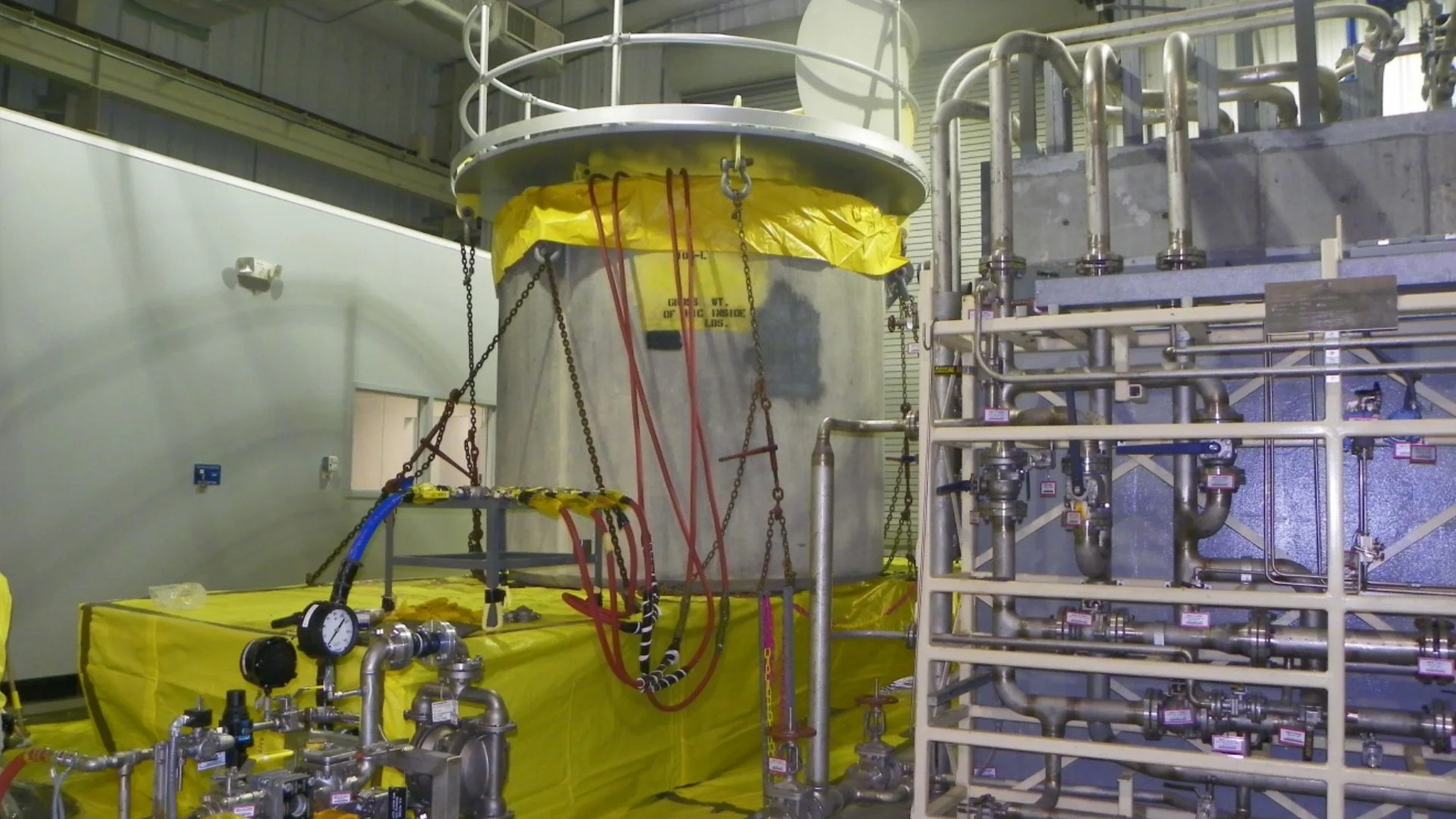
The resin replacement process involved removing contaminated resin and installing fresh material. Workers performed the operation using a method known as slurrying. This process moves resin through pipes using water and pumping systems.
During the slurry-out phase, pumps transferred the spent resin from storage tanks into a special container. Excess water was removed from the container and returned to the system. This allowed workers to safely handle the used material.
The slurry-in phase followed the removal of the old resin. Operators mixed fresh resin with water and pumped it into the treatment vessels. The new resin immediately resumed its role in maintaining water purity.
Another significant improvement involved installing new water wall doors. The water wall serves as a radiation-shielding barrier within the facility. It protects workers while fuel remains stored underwater.
In the past, maintenance behind the water wall required draining water and partially dismantling sections of the barrier. The process often took considerable time and required heavy equipment. Workers also spent longer periods performing complex tasks.
The new hinged water wall doors simplify access to these areas. Workers can now open the doors within minutes. This greatly reduces the time required for maintenance activities.
According to site officials, the new system was used for the first time during the recent resin replacement project. A task that previously required about a week and a half was completed in only minutes. The improvement also reduces radiation exposure by limiting the time workers spend in maintenance zones.
READ ALSO: China Launches Largest Semi-Submersible Fish Farming Platform With 4,000-Ton Capacity
Savannah Leads Nuclear Innovation
The Savannah River Site recently completed another major modernization project. The basin’s control room has been upgraded from an aging analog system to a modern digital platform. The change represents a significant improvement in daily operations.
The digital interface now manages more than 80 valves throughout the system. Operators can monitor and control equipment more efficiently. The upgrade also improves reliability and supports faster responses to operational needs.
Tristan Downey, deputy facility manager for the L Area facility operated by Savannah River Nuclear Solutions, said the upgrades and new equipment have improved safety, efficiency, and reliability. He also highlighted the coordination required to successfully complete the complex work. The project brought together multiple teams to ensure smooth execution.
WATCH ALSO: Tesla’s Optimus humanoid robot steals spotlight at ‘Tron: Ares’ premiere
The improvements arrive at a time when nuclear facilities worldwide are focusing on extending the safe storage of used nuclear fuel. Many sites are investing in modernization projects that improve maintenance efficiency and strengthen safety systems. Reliable storage infrastructure remains a key part of the broader nuclear energy and research ecosystem.
The latest upgrades at the Savannah River Site demonstrate how targeted investments can improve long-term nuclear fuel management. Better water quality systems, faster maintenance access, and digital controls help reduce operational risks while supporting workforce safety.