Germany’s defense minister delivered a rare and direct sales pitch for German submarines during Canada’s CANSEC defense exhibition in Ottawa.
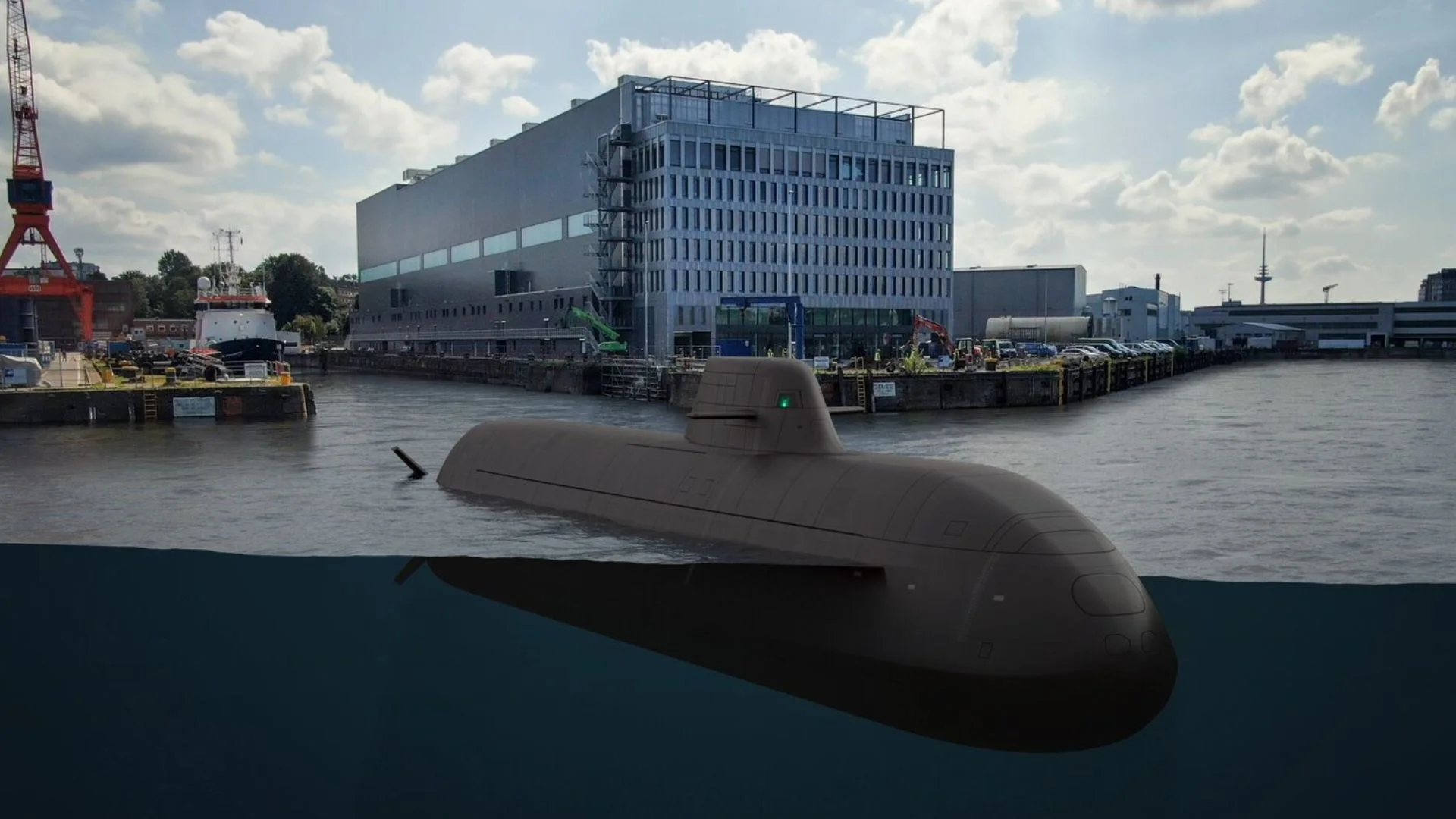
Boris Pistorius urged Canada to select the Type 212CD submarine for the Canadian Patrol Submarine Project. The program is valued at up to C$60 billion (US$43.3 billion).
Pistorius appeared alongside Canadian Defense Minister David McGuinty during the event. The two stood in front of a Franco-German helicopter that uses Canadian-made engines. The setting highlighted existing industrial cooperation between the countries.
The German minister described the submarine proposal as more than a commercial deal. He said the project would deepen economic and defense ties across the Atlantic. He also linked the offer to long-term cooperation between NATO allies.
His appearance was notable because German political leaders have traditionally kept some distance from defense export campaigns. Germany has historically taken a cautious approach to arms sales abroad. That approach appears to be changing as Berlin seeks a larger role in global defense markets.
Pistorius has now visited Canada three times in three years as the defense minister. During this latest visit, he promoted investment plans and government support for the bid. He also highlighted economic studies tied to the proposal.
READ ALSO: Chinese Scientists Create Self-Cleaning Fabric Coating That Cuts Laundry Water Use by 82%
Type 212CD South Korea Rivalry
Germany and Norway jointly submitted their offer for up to 12 Type 212CD submarines in March. The submarines are being developed by German shipbuilder TKMS. They are designed for long underwater operations and advanced surveillance missions.
The Type 212CD is a modern conventional submarine powered by advanced propulsion technology. Unlike nuclear submarines, it does not require a nuclear reactor. Its design focuses on stealth, endurance, and reduced detectability underwater.
According to figures presented by Pistorius, the project could generate a C$86 billion impact on GDP. It could also create C$167 billion in overall economic output. The estimates suggest more than 650,000 job-years during the life of the contract.
Germany’s biggest competitor is South Korea’s Hanwha Ocean. The company is offering its KSS-III Batch II submarine to Canada. Last week, one of those submarines arrived at Canadian Forces Base Esquimalt in British Columbia as part of a public demonstration effort.
South Korea has emphasized delivery speed as a major advantage. Hanwha Ocean has promised to provide four submarines by 2035. Germany and Norway responded by proposing to shift vessels from their own production pipeline to deliver four submarines to Canada by 2036.
Pistorius dismissed suggestions that public demonstrations alone should influence the decision. He said the focus should remain on proven technology and operational experience. Germany argues that its submarine fleet has a long track record within NATO operations.
NATO Integration and Arctic Security at the Center
A key part of Germany’s argument is the interoperability of its fleet. Germany and Norway already operate or are acquiring Type 212CD submarines. If Canada joins the program, all three countries would use the same platform.
German officials say this would create a NATO fleet of 24 Type 212CD submarines. Such a fleet would improve training, maintenance, and operational coordination. It would also strengthen NATO’s ability to monitor and protect northern maritime regions.
WATCH ALSO: India recently tested carried out the successful launch of Intermediate Range Agni-Prime Missile
The proposal aligns with Germany’s growing interest in Arctic and North Atlantic security. In recent years, Berlin has increased cooperation with Canada, Norway, and Denmark on maritime defense issues. The Arctic has become increasingly important due to shifting security concerns and growing strategic competition.
Pistorius also revealed that Iceland is close to joining an existing North Atlantic maritime security partnership. The initiative already includes Germany, Canada, Norway, and Denmark. The expansion would further strengthen cooperation among NATO partners in the region.
Germany also highlighted its support for Canada’s participation in the European Union’s SAFE defense financing mechanism. Berlin sees deeper defense-industrial cooperation as a way to strengthen both European and North American security. The submarine deal has therefore become part of a broader strategic relationship.
Canada is expected to make its final decision on submarine acquisition by early July. The choice will shape the country’s naval capabilities for decades and influence future defense partnerships. Whatever the outcome, the project is set to become one of the most significant military procurement decisions in Canadian history.