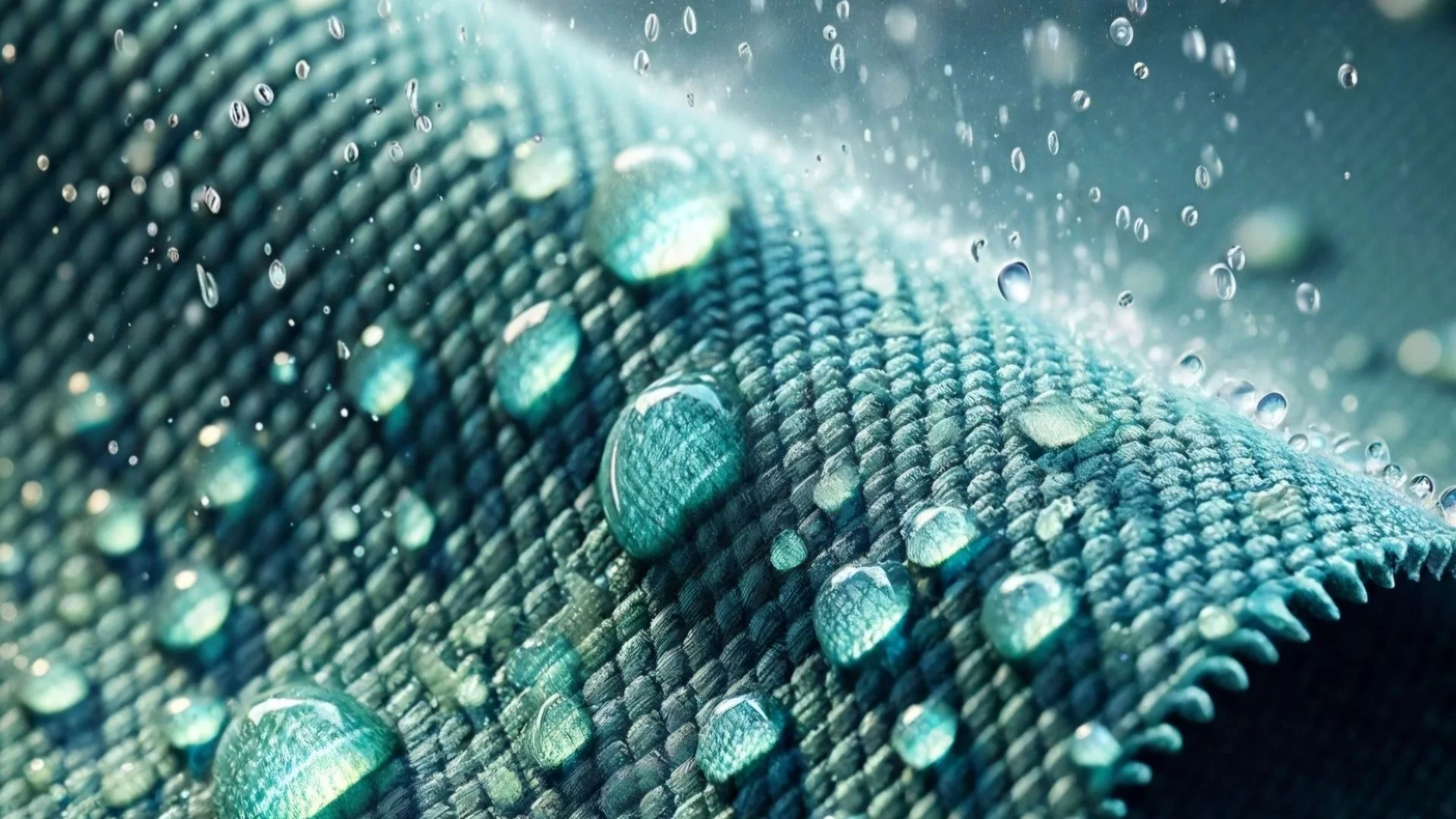
Scientists in China have created a new fabric coating that helps clothes stay clean without relying on traditional laundry detergents.
The technology allows many common stains to be removed using only water. Researchers believe it can significantly reduce the environmental impact of washing clothes.
The innovation was developed by material scientists from Southeast University and Jilin University in China. Their findings were published in the scientific journal Communications Chemistry. The study focuses on changing fabric surfaces rather than improving detergents or washing machines.
Fabric Coating Changes Laundry
Laundry is an essential part of daily life around the world. However, it consumes large amounts of water and energy every year. Detergents also contribute to environmental pollution through chemical residues and the release of microplastics from synthetic fabrics.
According to the researchers, a standard washing machine cycle typically uses between 40 and 60 liters of clean water. When multiplied across millions of households, the environmental cost becomes substantial. In China alone, laundry activities generate an estimated 10 billion liters of wastewater every year.
To address this issue, the research team took a different approach. Instead of focusing on stronger cleaning products, they redesigned the textile surface itself. Their goal was to stop stains from sticking firmly to fabric in the first place.
READ ALSO: Rockefeller University Scientists Unveil the World’s First Complete Cellular Atlas of the Mosquito
The scientists created a special coating by spraying multiple layers of positively and negatively charged polymers onto fabrics. They tested the coating on cotton, silk, and polyester materials. The process produced an extremely thin protective film on the fibers’ surfaces.
This coating contains a large number of sulfonate groups. These chemical structures attract water molecules and organize them into a microscopic layer across the fabric surface. Researchers describe this layer as a form of molecular water armor.
The water-based barrier acts as a shield between the fabric and contaminants. Oils, food particles, dirt, sweat residues, and microorganisms struggle to make direct contact with the fibers. As a result, stains remain loosely attached and are much easier to remove.
The concept differs from traditional waterproof coatings. Waterproof materials are designed to repel water droplets. The new coating instead uses water itself as a protective layer, helping prevent contamination from sticking to the fabric.
To test the technology, researchers stained fabrics with ketchup, chili oil, and soy sauce. These substances were chosen because they are common household stains and can be difficult to remove. The coated fabrics were then cleaned using only water.
The results showed strong cleaning performance. In many cases, a single rinse removes stains as effectively as a conventional detergent wash. The coating performed especially well against oily surface stains that normally require cleaning products.
The team also examined the wastewater produced during washing. They found that the coated fabrics released significantly fewer microplastic particles. The protective layer helped trap loose fibers and prevented them from entering the water system.
READ ALSO: Chinese Academy of Sciences Engineers Break New Ground in Fusion Reactor Maintenance Robotics
Microplastic pollution has become a growing environmental concern worldwide. Tiny plastic particles from synthetic clothing frequently enter rivers, lakes, and oceans during washing. Reducing these emissions is increasingly viewed as an important goal for the textile industry.
Beyond stain resistance, the coating also improved fabric hygiene. Laboratory testing showed antibacterial and antifungal properties. Researchers believe the protective water layer helps prevent microbes from attaching to the fabric surface.
The coating also reduced the buildup of sweat, skin cells, and odor-causing substances. A simple rinse was often enough to remove residues that normally remain trapped in fibers. This helped keep fabrics fresher between washes.
The environmental benefits were substantial. Researchers calculated that the new system reduced water and electricity use by more than 82 percent compared with a standard laundry cycle. Such savings could become increasingly important as global water conservation efforts expand.
The technology also offers potential financial benefits. Manufacturing coated fabrics currently costs more than producing standard textiles. However, researchers estimate that consumers could recover the additional expense after roughly 15 washing cycles due to reduced detergent and energy use.
Another important finding involved durability. Early testing showed that the coating remained effective after more than 100 washing cycles. This suggests the protective layer can withstand long-term use without losing its cleaning performance.
Comfort is another key consideration for consumers. Because the coating is only a few nanometers thick, researchers do not expect it to affect the texture, softness, or breathability of clothing. Maintaining comfort will be essential for commercial success.
Despite the promising results, the technology remains in the proof-of-concept stage. Further testing is required before it reaches the market. Researchers plan to conduct broader consumer trials to evaluate real-world performance and user acceptance.
Public perception may also present a challenge. Many consumers associate visible soap foam and strong fragrances with cleanliness. Researchers say building trust will require transparent testing, clear evidence, and practical demonstrations of the technology.
WATCH ALSO: World’s largest nuclear fusion research project ITER has reached a new milestone
Additional work is needed to evaluate long-term safety and environmental impact. Independent safety reviews, durability standards, and lifecycle assessments will be important before large-scale commercialization. These steps will help ensure the coating meets consumer and regulatory expectations.
The development arrives as governments and industries search for ways to reduce resource consumption and pollution. The textile sector faces increasing pressure to improve sustainability across manufacturing, use, and disposal. Technologies that reduce water use and microplastic pollution are attracting growing attention worldwide.
If future testing confirms the early results, self-cleaning fabrics could change how people wash clothes. Reducing dependence on detergents and cutting resource consumption would benefit both consumers and the environment.
The next phase of research will determine how quickly this laboratory innovation can become part of everyday life. The technology is still under development, but its potential extends beyond household convenience.
Summarily, self-cleaning fabrics could help reduce global water consumption, lower energy demand, and limit microplastic pollution, making laundry far more sustainable in the years ahead.