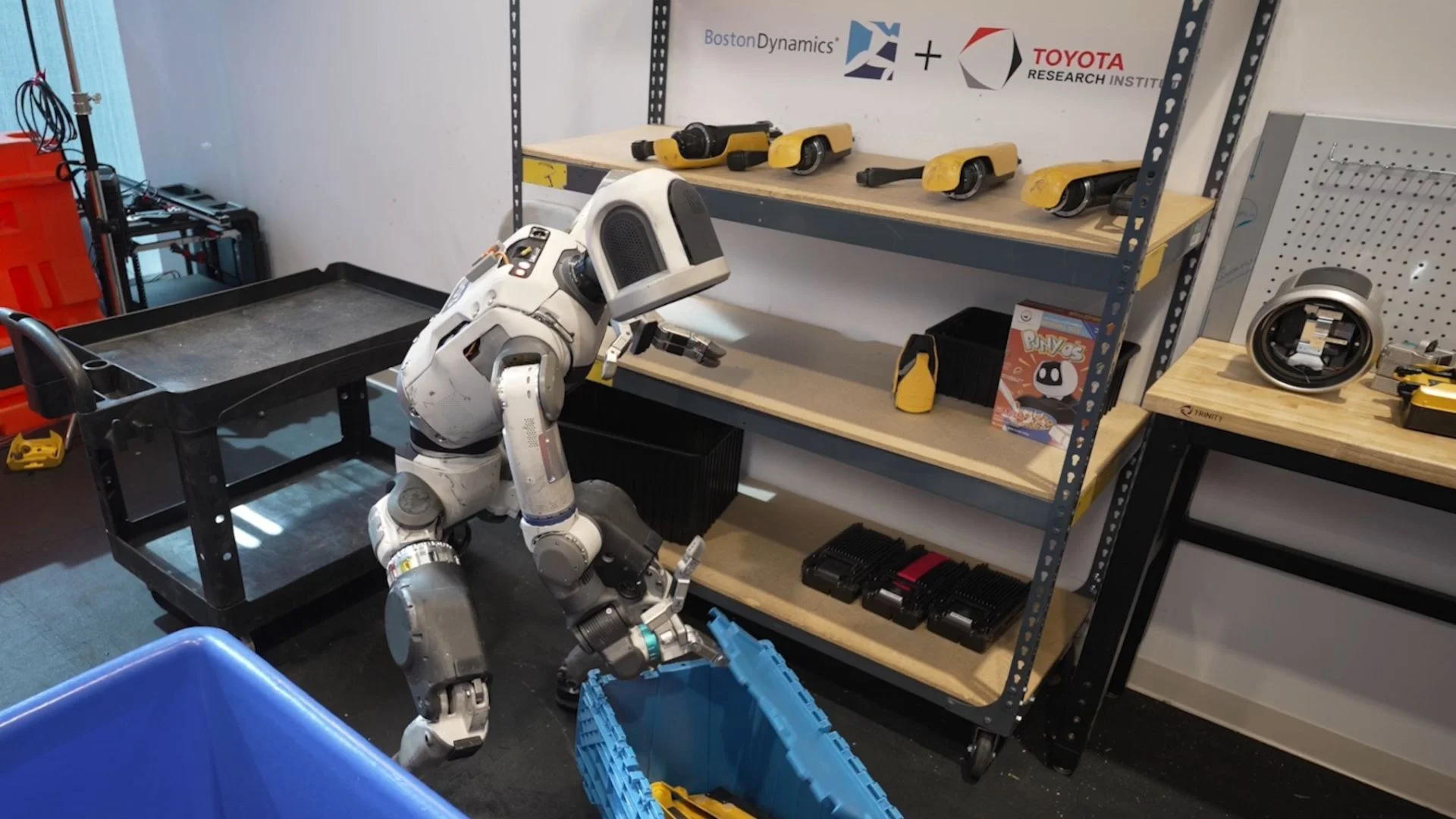
Chinese researchers have reported a major breakthrough in the manufacturing of key components for humanoid robots.
The new research focuses on improving the production of ball screws, which are essential to robot joint movement. The work is expected to support more efficient and environmentally friendly manufacturing of advanced precision parts.
A research team led by Professor Peng Ruitao from Xiangtan University in Hunan Province recently published its findings in the Journal of Manufacturing Processes. The study examines machining methods for large-pitch gothic-arch ball screws. These components are widely used in humanoid robots and other high-end industrial equipment.
Ball screws are important mechanical parts that convert rotational motion into linear movement. They help robot joints move smoothly, accurately, and efficiently. Their performance directly affects the speed, precision, and lifespan of robotic systems.
READ ALSO: Thales and KNDS France Unveil RAPIDFire Land: New Ground-Based Variant of 40mm Naval Defence System
Humanoid robots rely on joint actuators to perform human-like movements. Inside these actuators, ball screws help transfer power and control motion. High-quality ball screws are therefore essential for stable and reliable robot operation.
The study focuses on large-pitch gothic-arch ball screws, a type of component designed to handle high loads while maintaining efficient motion transmission. These parts offer strong performance but are difficult to manufacture. Their complex spiral-shaped surfaces require extremely precise machining.
According to Peng, the complicated geometry of these ball screws creates significant production challenges. Manufacturers must achieve high precision while maintaining consistent quality across the entire component. Even small machining errors can affect performance and durability.
Robot Joint Drives Innovation
Traditional grinding methods remain widely used for producing such parts. However, these processes often require large amounts of cutting fluid and consume considerable time and energy. They also increase manufacturing costs and create environmental concerns.
The researchers aimed to address these limitations through a deeper understanding of the machining process. Their work examined the mechanisms behind several common production issues. This allowed the team to identify ways to improve efficiency while maintaining precision.
The study provides a theoretical foundation for future improvements in manufacturing. It also offers practical guidance for engineers working on advanced transmission components. The findings can help manufacturers optimize production methods for high-precision equipment.
READ ALSO: A Cat-Like Robot Mimicking Bunting Behavior to Alleviate Human Tension
Beyond humanoid robots, ball screws are used in industrial robots, automated production systems, and precision machinery. They are also found in equipment that requires accurate motion control. Improvements in their manufacturing can benefit multiple industries.
The research is part of a broader effort by the Xiangtan University team. Researchers have been studying technical challenges in high-end power equipment manufacturing for several years. Their work covers key areas of precision component production and process optimization.
The team has gradually developed a comprehensive research framework. This framework spans basic mechanism analysis, manufacturing process improvement, and engineering validation. Such an approach helps bridge the gap between laboratory research and industrial application.
The timing of the study is significant as demand for humanoid robots continues to grow worldwide. Companies are investing heavily in robots designed for manufacturing, logistics, healthcare, and service industries. Efficient production of key components is important as the sector expands.
Reducing manufacturing costs while improving quality remains a major goal for the robotics industry. More sustainable production methods are also receiving greater attention. Research that improves efficiency and reduces resource consumption supports both objectives.
READ ALSO: Liquid crystal structures key to organic solar cell performance, study finds
China has been increasing its investment in advanced manufacturing technologies, including robotics and precision engineering. The development of high-performance components is considered an important part of strengthening industrial capabilities. Studies such as this contribute to ongoing efforts to improve domestic manufacturing technologies.
The new findings offer valuable insights into one of the most challenging aspects of precision component production. By improving the machining of ball screws, researchers are helping create a stronger foundation for future robotic systems. Continued advances in this area are expected to support the next generation of humanoid robots and other high-precision industrial equipment.