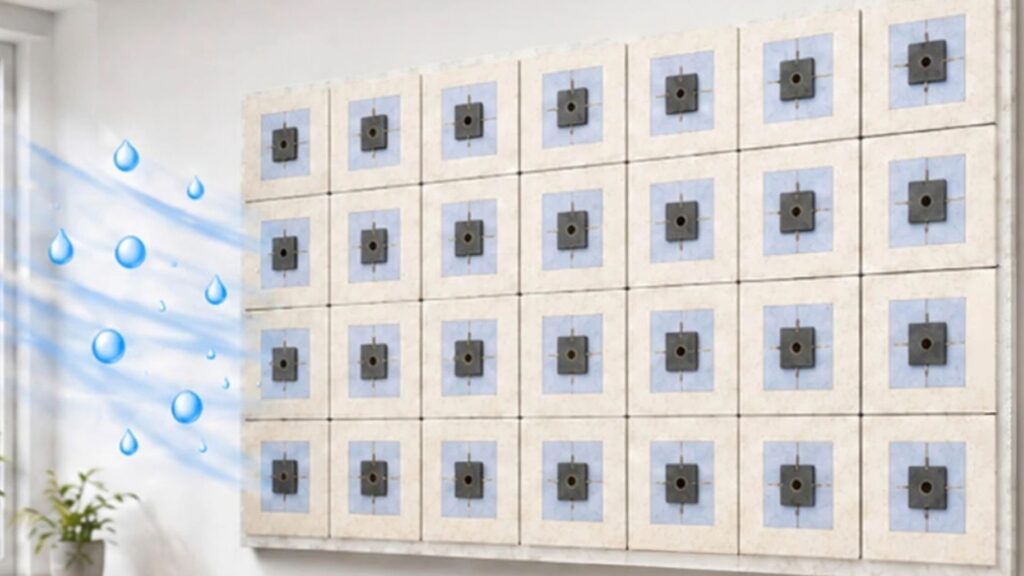
Researchers from Aalto University have tested a new Carnot battery system that stores electricity as heat using ordinary sand.
The experimental setup combines thermal storage with a Stirling engine to convert heat back into electricity via the Carnot cycle.
The project was designed to explore low-cost options for long-duration energy storage as renewable power use continues to grow worldwide.
Scientists are increasingly seeking alternatives to lithium-based batteries, which become expensive for long-term energy storage.
In the prototype, electric heaters warmed a sand-filled storage tank, while a Stirling engine later generated electricity from the stored heat. Tests showed that higher operating temperatures improved both power output and discharge duration.
READ ALSO: China Reveals J-10CE Defeated Eurofighter Typhoons 9-0 in Qatar Air Combat Drills
However, the system also suffered significant thermal losses, reducing overall round-trip efficiency. The findings highlight both the promise and the current technical challenges of using sand-based thermal storage systems for future grid-scale energy applications.
Sand-Based Carnot Battery System
The experimental prototype used ordinary brown silica sand as the thermal storage material. Sand is inexpensive, widely available, and can tolerate high temperatures without degrading quickly. Researchers wanted to test whether it could replace costly phase-change materials commonly used in thermal storage systems.
The prototype included a heavily insulated storage tank with a volume of 0.2 cubic meters. Inside the tank, the sand grains ranged in size from 0.6 mm to 2 mm. The sand had a bulk density of about 1,800 kilograms per cubic meter and stored heat through its thermal capacity.
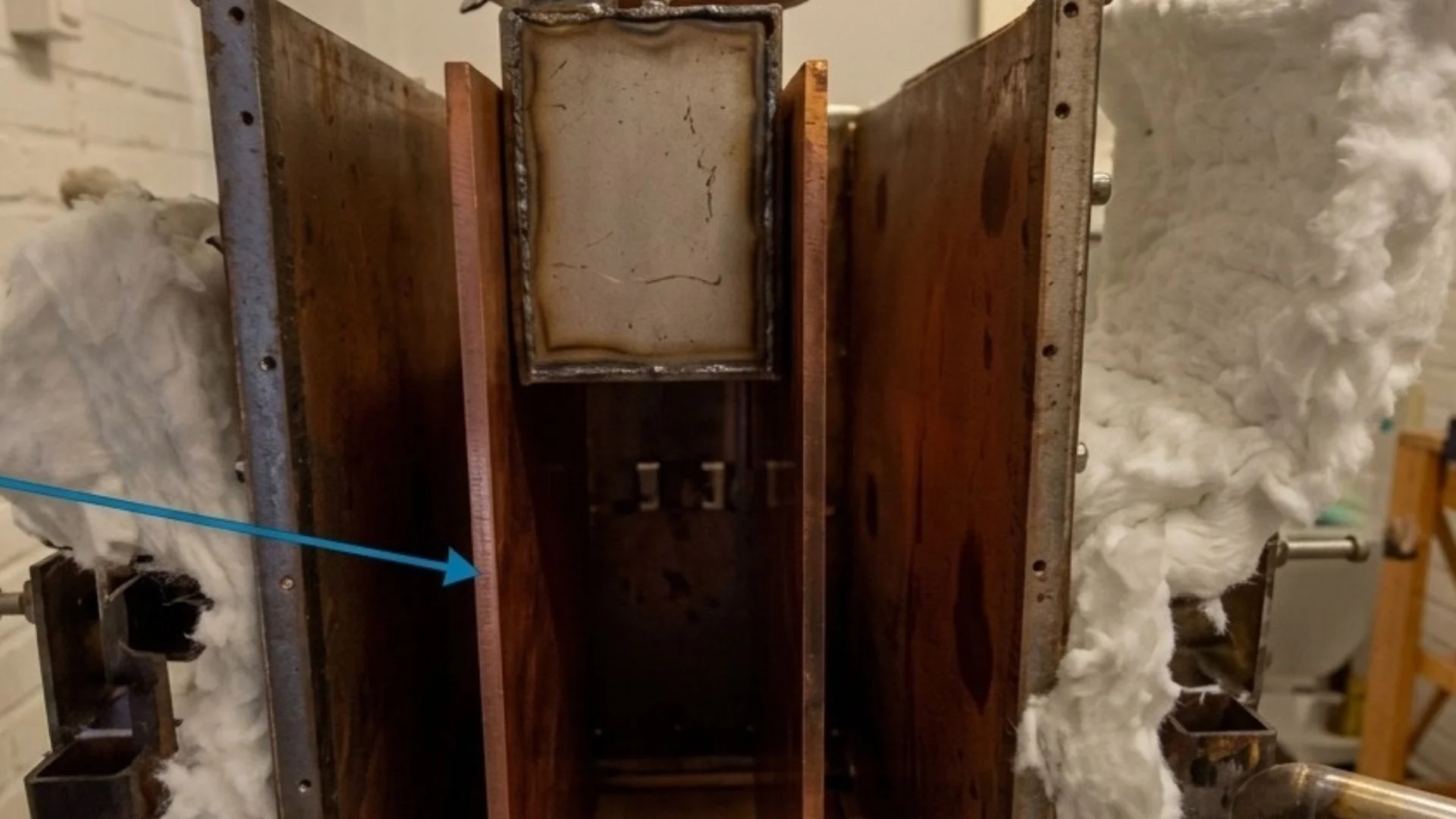
Ten electric heating elements charged the system by heating the sand. Each heater was rated at 3 kilowatts and operated at 230 volts. Heat then moved through copper plates and a copper block connected to the Stirling engine.
The system used a commercial Microgen free-piston Stirling engine with a 1-kilowatt electric output rating. The engine had a conversion efficiency of around 26% under standard operating conditions. Stirling engines work by repeatedly heating and cooling a sealed gas, which creates pressure changes that drive mechanical motion.
READ ALSO: Mohenjo-daro Grew More Equal as It Expanded, Challenging Urban Inequality Theories
Unlike combustion engines, Stirling engines operate using external heat sources. This allows them to run on stored thermal energy instead of burning fuel directly. Researchers selected the engine because it can work with different heat sources and offers quieter operation.
Higher Temperatures Increased Power Output
The team tested the prototype at two operating temperatures. The Stirling engine head temperature was set at either 300 degrees Celsius or 350 degrees Celsius during experiments. Researchers also built a detailed computer simulation in COMSOL Multiphysics to investigate higher temperatures.
At 300 degrees Celsius, the system produced around 500 watts of peak electrical power. The discharge cycle lasted roughly nine hours before the stored heat became insufficient. Round-trip efficiency ranged between 4.4% and 5.9%.
Performance improved when the operating temperature increased to 350 degrees Celsius. Peak electrical output rose to around 690 watts, while the discharge period extended to about 14 hours. Round-trip efficiency also improved to 6.8%-8.3%.
Researchers explained that higher temperatures allowed the engine to extract more useful energy from the stored heat. However, the gains were still limited by major thermal losses throughout the system. Large amounts of heat escaped into the surroundings instead of reaching the engine.
Energy balance measurements highlighted the scale of the losses. During one 300-degree Celsius cycle, the system used 53 kilowatt-hours of electrical input energy. It produced only 2.33 kilowatt-hours of electrical output.
More than 16 kilowatt-hours of energy were rejected through the cooling system. Another 34 kilowatt-hours were lost through heat leakage and structural heat transfer paths. These losses significantly reduced overall system efficiency.
Researchers also found that sand’s relatively low thermal conductivity created additional challenges. Heat moved slowly through the sand bed, limiting the flow of thermal energy to the engine. This caused temperature drops near the engine head, leading to unstable operation at times.
The research adds important real-world data to the growing field of thermal energy storage. Many previous studies focused mainly on computer models and theoretical performance estimates. Experimental demonstrations using low-cost materials have remained limited.
The study also highlights the trade-off between affordability and efficiency. Sand is far cheaper than specialized thermal storage materials, but it transfers heat less effectively. Engineers will need better insulation and improved heat transfer designs to make the technology commercially viable.
WATCH ALSO: SpaceX is gearing up to conduct 11th flight test of Starship on October 13
The researchers used their validated simulation model to examine temperatures of 400 and 500 degrees Celsius. According to the model, efficiencies between 19.1% and 31.6% could become possible if heat leakage is significantly reduced. However, those higher-temperature results were not experimentally verified with the current prototype.
Interest in long-duration energy storage continues to grow worldwide as renewable energy adoption increases. Wind and solar power often generate electricity when demand is low, creating a need for affordable storage solutions. Thermal storage systems using abundant materials like sand offer one possible path toward lower-cost grid storage.
The study was published in the Journal of Energy Storage under the title “Stirling engine-based Carnot battery with sand as heat storage medium: 1 kWe prototype.”
Researchers say the current results should serve as guidance for future system designs rather than final performance targets. Further improvements in insulation, thermal management, and system integration will determine how competitive sand-based Carnot batteries become in the global energy storage market.