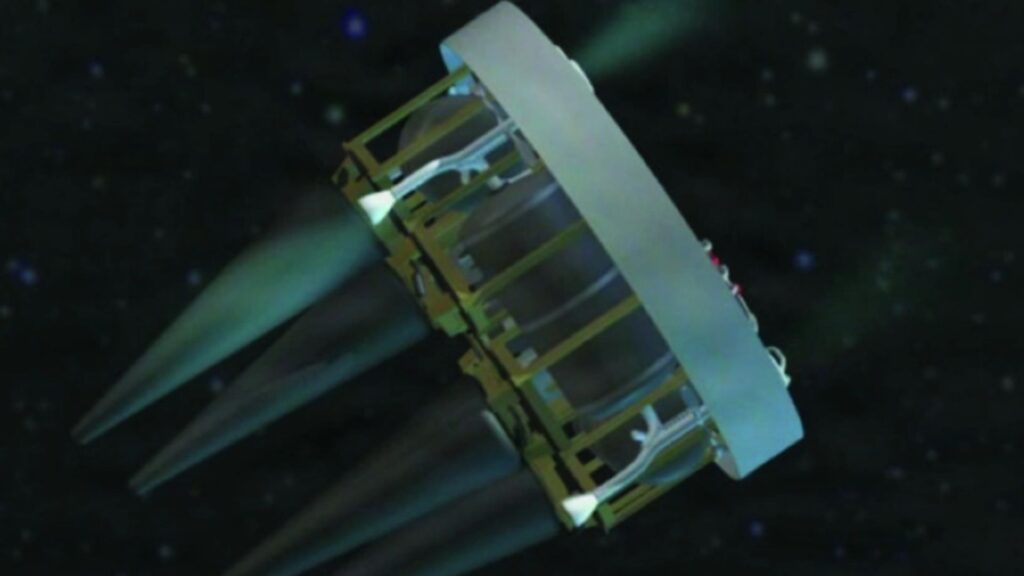
Lund University scientists, as part of the EU-funded InsectNeuroNano initiative, are reverse-engineering the honeybee’s brain to build a revolutionary, low-power computer chip. This bio-inspired technology, using nanophotonic circuits, aims to replicate insect navigation with a chip weighing mere grams and using a fraction of the power of conventional systems, potentially guiding future micro-robots.
How does a bee, with a brain the size of a sesame seed, perform feats of navigation that would challenge a supercomputer? It’s a question that has long fascinated biologists and engineers alike. The answer, according to a European research team, lies in a beautiful, efficient specialization that our general-purpose computers lack. Now, they’re harnessing that natural genius to design the next generation of ultra-efficient computing. “A bee finds its way back without a smartphone or satellite navigation,” said Professor Anders Mikkelsen of Lund University, who coordinates the InsectNeuroNano project. “They do this by looking at the polarisation of the sky, and their speed. Based on that, they don’t get lost.”
The contrast in efficiency is staggering. As reported by the researchers, a modern chip capable of similar navigation calculations can weigh over 80 grams and consume more than 7 watts of power. A bee, meanwhile, weighs under one gram and uses less than one hundredth of a watt to power its entire brain. The goal of the InsectNeuroNano team is to close this gap by creating a chip that does one thing exceptionally well: navigating like an insect. “Our chip can only do one task,” Mikkelsen explained. “But it can do it extremely energy efficiently and in a tiny size. It’s a completely different strategy from other computer chips.”
READ ALSO: https://modernmechanics24.com/post/first-patient-atalante-x-exoskeleton-trial/
This philosophy of specialized, “hard-wired” function is key. Unlike a versatile CPU, the team’s chip is designed from the ground up to process signals from a light sensor and motion data to continuously calculate position, mirroring the dedicated neural circuits in a bee’s brain. To achieve this, the team is moving beyond traditional electronics. Instead of relying solely on electrical wires, they are pioneering the use of nanophotonic circuits, which guide light through structures nanometers in size. “You can send more data with light in a more energy-efficient way,” Mikkelsen stated. “Also, our sensor detects light, so we’re using light to sense and to think, which simplifies things.”
The interdisciplinary effort bridges biology and engineering. Professor Elisabetta Chicca from the University of Groningen, a specialist in bio-inspired systems, builds computational models to translate biological insights into chip design. “For some problems, nature has already found a solution that is compact, low-power and efficient,” Chicca said. “Insect brains offer one such solution. We don’t know everything about them, but we know enough to start building a system.” This collaboration is a two-way street, with engineering models also helping biologists test hypotheses about how insect neural circuits might be organized.
WATCH ALSO: https://modernmechanics24.com/post/wing-expands-walmart-drone-delivery/
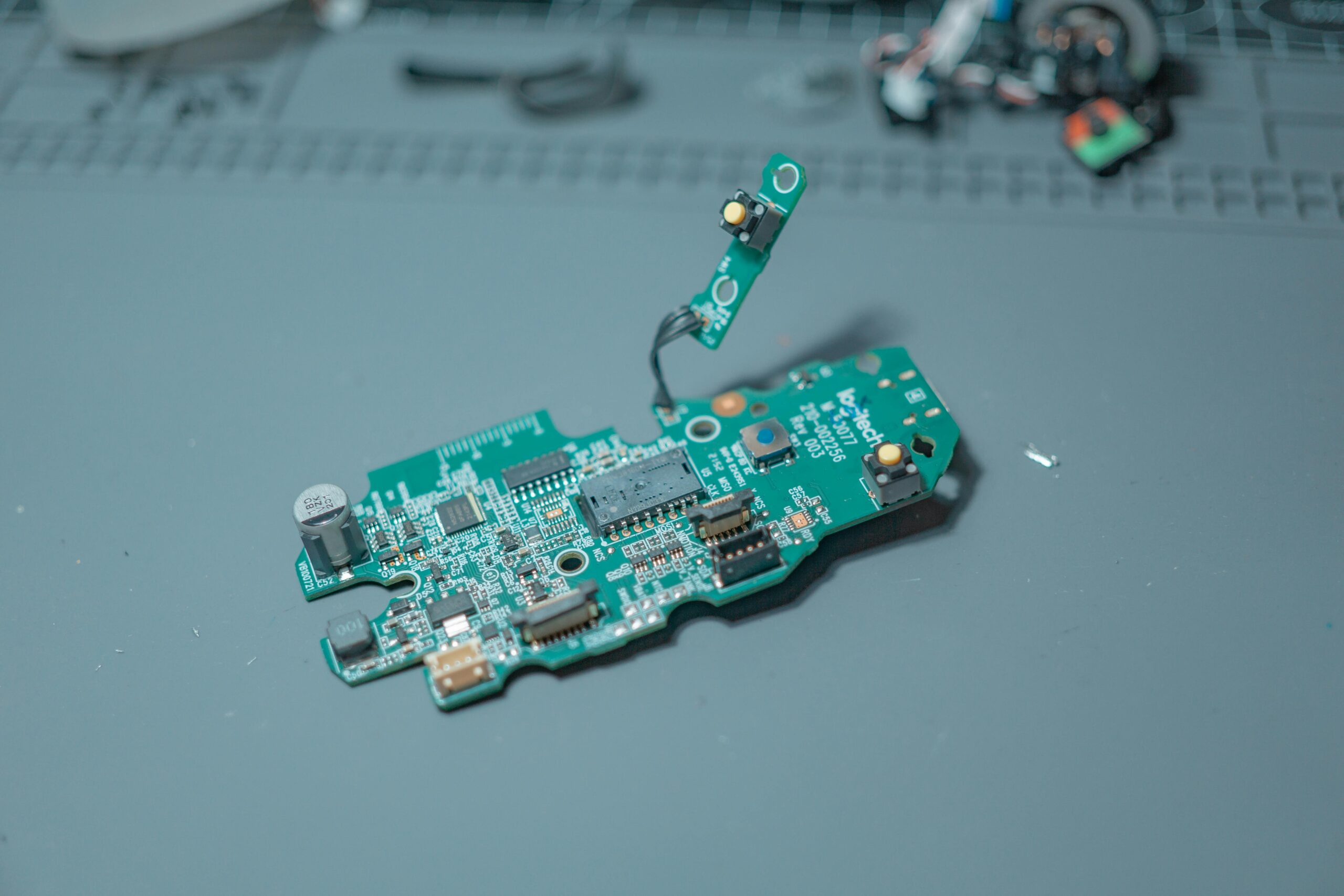
Progress is tangible. The team has already created a first prototype chip in the lab that successfully mimics core insect brain functions. However, as Mikkelsen notes, the path to a functional “robot bee” is long, with a timeline of perhaps 10 years before such technology is deployed in the real world. The challenges of miniaturization and integrating new photonic computing principles are significant. Yet, the foundational leap has been made. “We went from a theoretical concept to something on a lab table that mimics insect brains,” Mikkelsen said.
The potential applications are profound, pointing toward a future of autonomous, insect-sized robots for environmental monitoring, search-and-rescue, or distributed sensing. By learning from a bee’s innate GPS, researchers aren’t just building a better chip—they’re learning a new, profoundly efficient language of computation written by evolution.
READ ALSO: https://modernmechanics24.com/post/sex-toy-use-women-60-plus-usa/