

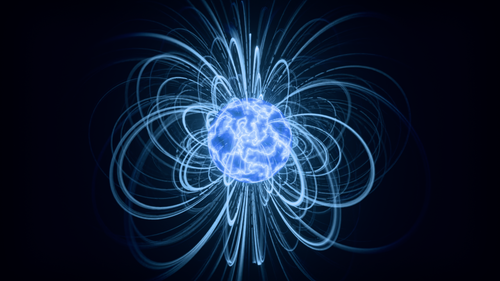
Argonne National Laboratory is part of a new project called STREAMLINE that uses AI and supercomputers to study atomic nuclei. The project aims to make complex nuclear calculations faster and allow scientists to model much larger groups of particles.
STREAMLINE is using machine learning to tackle the nuclear quantum many-body problem. This is the challenge of predicting how many protons and neutrons interact inside an atomic nucleus.
The project brings together Argonne National Laboratory, universities, and other U.S. national laboratories. Researchers hope the new approach will help them study nuclear systems that were previously too difficult for computers to model.
READ ALSO: https://modernmechanics24.com/post/serbia-china-humanoid-robot-production/
The Facility for Rare Isotope Beams at Michigan State University leads the renewed STREAMLINE 2 collaboration. Argonne scientist Alessandro Lovato is one of the lead investigators.
The team also includes researchers from Fermilab, Oak Ridge National Laboratory, Florida State University, North Carolina State University, Ohio State University, Ohio University, and the University of Tennessee.
Atomic nuclei contain many interacting protons and neutrons. As the number of particles grows, the number of possible interactions increases extremely quickly.
Traditional computer methods can therefore become too expensive to run. Earlier approaches could handle only around a dozen interacting particles in some cases, limiting how closely scientists could model real atomic nuclei.
STREAMLINE uses machine learning, a form of AI, to approximate the complex behavior of quantum particles. At Argonne, Lovato’s team is using neural networks to represent quantum wave functions.
A wave function is a mathematical description of a quantum system. Instead of solving every interaction directly, the neural network learns patterns that can represent the behavior of the system more efficiently.
The new approach can scale to systems with up to 100 interacting particles, according to Argonne. This could help researchers study larger and more realistic atomic nuclei.
The results can also be compared with measurements from nuclear physics facilities such as Argonne’s ATLAS accelerator. Better nuclear models could help researchers study neutrinos, understand neutron stars, and test ideas about the basic forces of nature.
WATCH ALSO: https://modernmechanics24.com/post/apple-opens-advanced-center-houston/
AI does not remove the underlying complexity of nuclear physics. The models still need training, large amounts of computing power, and careful checks against experiments.
The project also depends on powerful supercomputers. Argonne researchers are using systems such as Aurora at the Argonne Leadership Computing Facility to run large simulations and train their machine-learning models.
The main breakthrough is using neural networks to model nuclear systems that were previously too difficult to calculate at larger scales. This could give scientists a faster way to connect nuclear theory with real experimental results.
The work also shows how AI can be used for more than analyzing existing data. It can become part of the process scientists use to build and test models of nature. STREAMLINE could therefore help open new paths in nuclear physics, astrophysics, and other areas of fundamental science.














One Response