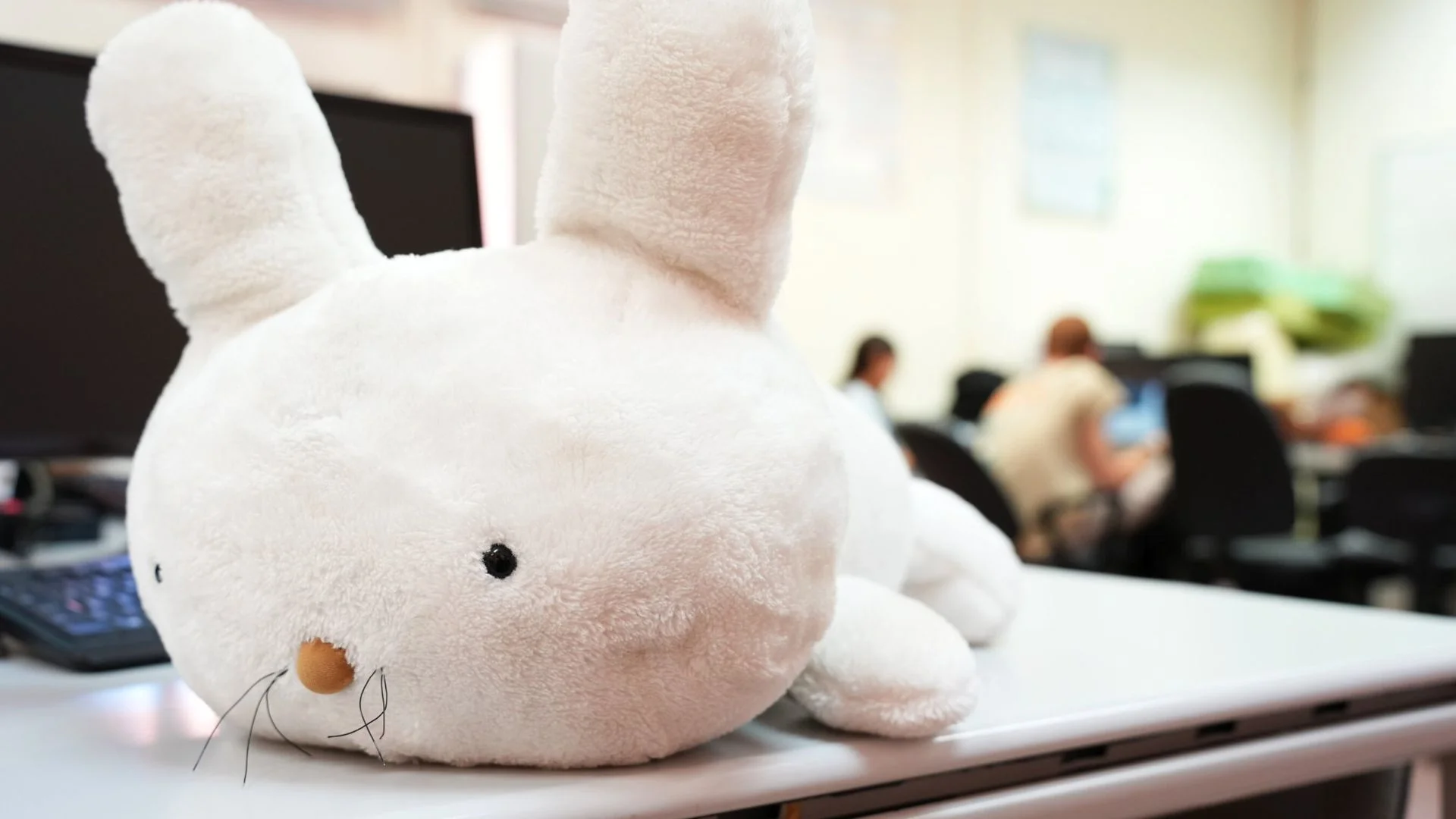
Researchers at the Social Robotics Group of the Robotics Lab at the Universidad Carlos III de Madrid (UC3M) have created a new voice recognition system for assistive robots.
The technology enables a robot named Mía to identify people by simply listening to them speak. It does not require any prior registration or training process.
The robotic rabbit is designed to support older adults, particularly those experiencing cognitive decline. Researchers are currently testing the system in day centers operated by the Madrid City Council. The goal is to provide personalized emotional support and social interaction.
One of the biggest challenges in social robotics is creating natural interactions between humans and machines. For a robot to respond personally, it first needs to know who it is talking to. The new system helps address that challenge solely through voice recognition.
Unlike many identification systems, Mía does not use cameras or facial recognition. Instead, it relies entirely on the robot’s built-in microphone. This approach reduces hardware demands and helps protect user privacy.
Researchers said traditional image-based systems often require powerful processors. They can also raise concerns about the collection and storage of visual data. The voice-based approach avoids many of these issues while remaining effective.
READ ALSO: US Army Secures Peak Alloy Ammo Technology to Push Higher Projectile Speeds
Another key feature is that all processing happens directly inside the robot. Voice information does not need to be sent to external servers. This local processing helps keep personal data secure.
Voice Recognition Tech
The AI system creates what researchers describe as a unique voice signature for each person. When someone speaks to the robot, the software analyzes patterns and characteristics within the audio signal. These patterns help distinguish one person from another.
The process is designed to resemble how humans gradually learn familiar voices. During the first conversation, the robot automatically creates a profile for the speaker. There is no need for users to complete a separate setup process.
Researchers developed the system to work with limited computing resources. The robot generates a simple internal map of voice characteristics. It then groups together voice signatures that appear similar.
Each group represents an individual user. When a known person speaks again, the system matches the voice to an existing profile. This enables the robot to automatically recognize returning users.
The technology can also identify entirely new speakers. If a voice does not fit any existing group, the AI treats it as a potential new user. Continued interaction allows the robot to build a fresh profile and remember that person in future conversations.
Tests conducted by the research team showed a high success rate when identifying known users. The results demonstrate that effective voice recognition can be achieved without expensive hardware. This makes the technology more practical for everyday assistive robots.
Robotic Rabbit Transforms Elder Care
Mía belongs to a growing field known as animal robotics. These robots are designed to deliver some of the emotional benefits associated with animal-assisted therapy. They provide companionship without the challenges of caring for a live animal.
READ ALSO: Cornell’s ShadowDraw AI Transforms Everyday Object Shadow Into Creative Artwork
Animal-assisted therapy has long been linked to reduced stress and anxiety. However, real animals are not always suitable in healthcare settings. Robotic alternatives offer a controlled and consistent solution.
Researchers said the rabbit-shaped robot encourages older adults to engage in caregiving behaviors. Users often feel motivated to interact with and care for the robot. This creates positive emotional engagement during daily activities.
Early pilot programs have produced encouraging results. Researchers observed improvements in mood among participating older adults. The robot also encouraged more interaction between people in the care centers.
Social isolation and loneliness remain major concerns for aging populations worldwide. Technologies that promote communication and engagement are becoming increasingly important. Mía is designed to support these goals through regular interaction.
The ability to recognize individual users adds another layer of personalization. The robot can adapt its behavior based on previous interactions. This allows it to respond differently to different people.
Researchers envision future versions that can tailor responses to individual emotional needs. For example, the robot may use calming behaviors when interacting with someone who often appears restless. Personalized interactions could improve both comfort and engagement.
The development also reflects a broader trend in healthcare technology. Assistive robots are moving beyond simple tasks and becoming social companions. Personalization is considered a key factor in making these systems more effective.
WATCH ALSO: Lockheed Martin has converted Black Hawk choppers into pilotless cargo drone
The UC3M research team continues to refine the technology through real-world testing. Several working prototypes are already operating in clinical environments. Researchers are also seeking partnerships with companies interested in bringing the technology to a wider market.
Systems that combine privacy-focused AI with personalized care offer a practical path forward. Mía’s ability to recognize a voice from a simple greeting marks an important step toward more human-centered assistive robotics.