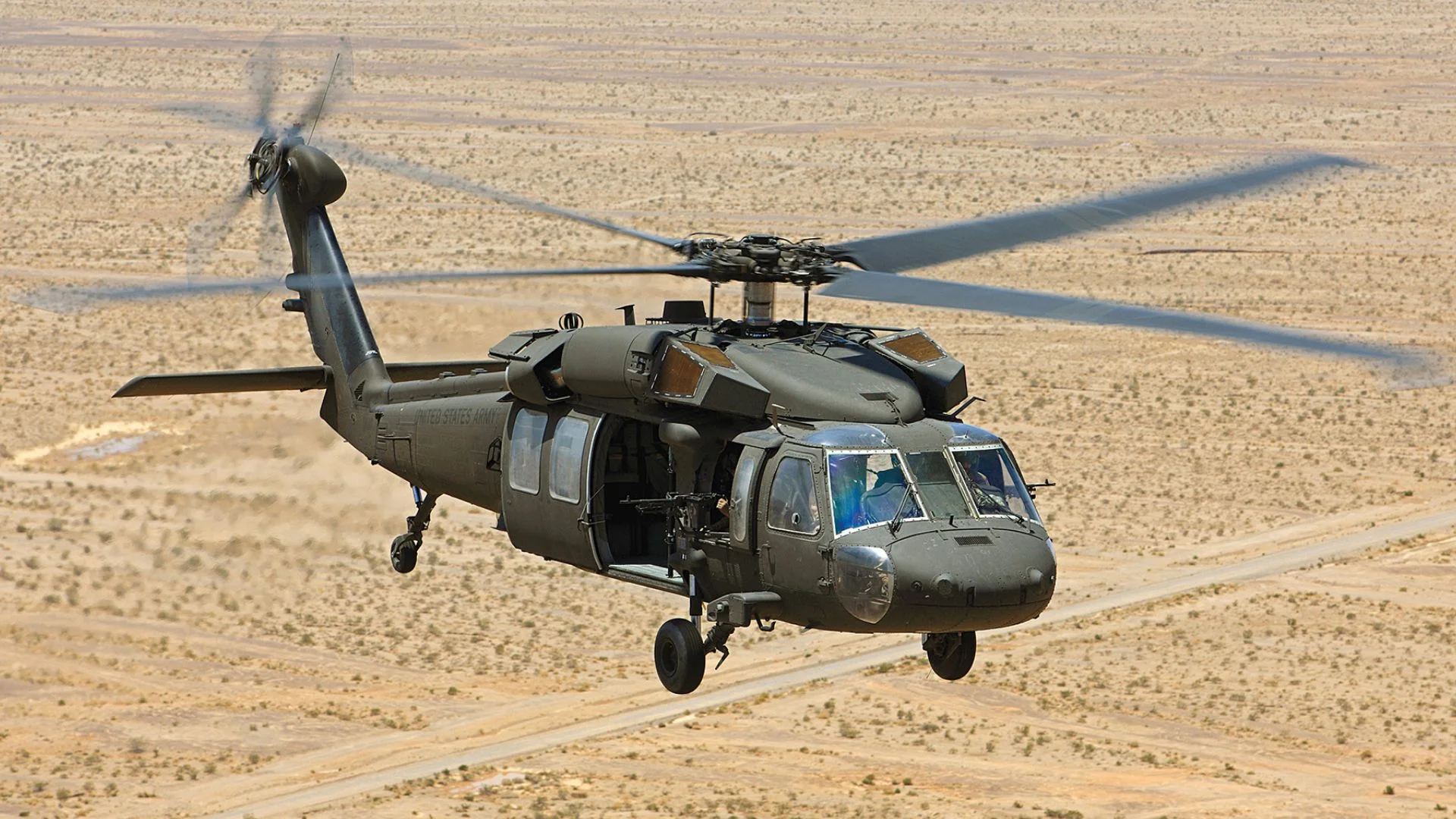
Lockheed Martin has unveiled the Armed Black Hawk at the Farnborough International Airshow 2026, showcasing a new configuration of the widely used UH-60/S-70 helicopter.
The aircraft combines troop transport with advanced strike capabilities by integrating AGM-114 Hellfire and AGM-179 Joint Air-to-Ground Missile (JAGM) systems.
The new version is designed to give military operators greater flexibility while reducing the need for separate attack and utility helicopter fleets.
The Armed Black Hawk is intended for both Foreign Military Sales (FMS) and Direct Commercial Sales (DCS) customers.
Lockheed Martin said the helicopter is aimed especially at NATO allies and partner nations seeking stronger combat capability without significantly increasing operating costs. The company has focused on delivering a production-ready system that can enter service without major redesigns.
Unlike dedicated attack helicopters, the Armed Black Hawk keeps its original transport role while adding powerful offensive weapons. It can carry up to 11 fully equipped soldiers alongside its combat equipment. The aircraft can also support casualty evacuation, cargo transport, intelligence missions, and battlefield logistics.
READ ALSO: SLAC Scientists Advance Scalable Quantum Dot Qubits to Power Future Quantum Chips
Armed Black Hawk: Multi-Mission Design
The new configuration is built around a modular six-station weapons management system. This design allows operators to install the weapons package on production aircraft while leaving room for future upgrades as new technologies become available. The approach helps customers modernize existing fleets without replacing their helicopters.
The aircraft supports several weapon options depending on mission requirements. These include forward-firing 7.62 mm mini-guns, podded .50 caliber gun systems, GP-19 gun pods, and Hydra 70 rocket launchers. It also carries precision-guided Hellfire and JAGM missiles for engaging high-value targets.
Each pilot can independently manage up to four external weapon stations mounted on two short wings. The pilots can also control fixed forward-firing machine guns positioned near the cabin when they are not operated by door gunners. This arrangement allows crews to engage multiple targets while maintaining control of the aircraft.
The external wings provide flexibility for different combat missions. Each wing can carry combinations of heavy machine guns, seven-shot or nineteen-shot Hydra 70 rocket pods, Hellfire missiles, or JAGM missiles. Depending on the selected loadout, the helicopter can carry as many as 16 precision-guided missiles.
Hellfire and JAGM missiles are designed to destroy armored vehicles, tanks, fortified positions, and air defense systems from safe distances. These guided weapons use advanced targeting systems to improve accuracy and reduce unnecessary damage around the target. By adding these missiles, the Black Hawk gains strike capabilities usually associated with dedicated attack helicopters.
Combat Support Roles
The Armed Black Hawk also strengthens fire support during troop insertions and extractions. Hydra 70 rockets and forward-firing .50 caliber guns allow crews to suppress enemy positions while ground forces move in or out of combat zones. This added protection increases the safety of soldiers during high-risk operations.
READ ALSO: US Restores Isotope Enrichment After 26 Years, Ending Reliance on Foreign Supply
The helicopter can also perform armed escort missions. It can protect military convoys, supply columns, and even coastal maritime traffic using rockets and machine guns against both conventional and irregular threats. This makes it suitable for a wide range of military operations beyond direct combat.
For reconnaissance missions, the helicopter integrates electro-optical and infrared sensor systems. These sensors allow crews to detect, identify, and monitor targets during both day and night operations. Once a target is confirmed, the crew can immediately engage it using the aircraft’s onboard weapons.
This direct connection between sensors and weapons shortens the time needed to respond to threats. Instead of relying on another aircraft for strikes, the Armed Black Hawk can identify and attack targets during the same mission. This capability improves battlefield awareness and speeds up decision-making.
Another important feature is the helicopter’s rapid reconfiguration capability. The crashworthy cabin can quickly change from an armed assault layout to a medical evacuation platform with stretchers or an intelligence aircraft carrying specialized equipment. Operators can also remove seats to create more space for cargo or use the external hook for sling-load missions.
Global Market Focus
Lockheed Martin says the Armed Black Hawk is not intended to replace dedicated attack helicopters such as the Boeing AH-64 Apache. The Apache remains optimized for heavy attack operations with stronger armor, advanced targeting systems, and specialized combat features. Instead, the Armed Black Hawk offers a balance between transport capability and offensive firepower.
This balance is expected to appeal to countries with limited defense budgets. Rather than maintaining separate fleets for transport and attack missions, operators can rely on a single helicopter family for multiple tasks. That approach reduces training requirements, maintenance costs, spare parts inventories, and logistical complexity.
The helicopter supports a wide variety of missions beyond combat. It can conduct air assault operations, close air support, anti-armor warfare, reconnaissance, casualty evacuation, tactical airlift, humanitarian assistance, and disaster relief. Such flexibility increases aircraft availability and helps military planners respond more quickly to changing situations.
Lockheed Martin also highlighted the strong industrial support behind the program. Thousands of Black Hawk helicopters already serve with the US Army, US Air Force, US Marine Corps, and many international operators. The company expects the global support network for the Black Hawk family to remain active beyond 2070.
International production also strengthens the aircraft’s export prospects. S-70 helicopters for overseas customers are manufactured at PZL Mielec in Poland, where armed mission equipment can also be integrated. This European production capability helps shorten delivery times and supports NATO’s industrial cooperation goals.
Customers will receive integrated logistics, training, software support, and mission system maintenance through Lockheed Martin’s global support organization. The company says this long-term support structure helps ensure reliable operations throughout the aircraft’s service life. It also simplifies sustainment for operators already using Black Hawk helicopters.
READ ALSO: MIT Study Reveals Why Energy Project Location Shapes Future Grid Reliability and Blackout Risk
Future Battlefield Needs
The launch of the Armed Black Hawk reflects wider changes in military aviation. Armed forces increasingly want aircraft that can perform several missions instead of relying on specialized fleets for each task. This trend is driven by rising operational demands, tighter budgets, and the need for faster deployment during modern conflicts.
The Armed Black Hawk combines transport, reconnaissance, precision strike, medical evacuation, and logistics support in one aircraft without losing its core utility role. By adding Hellfire and JAGM missiles to a proven helicopter platform, Lockheed Martin is offering military operators a flexible solution that aligns with changing battlefield requirements.
However, this new configuration is expected to attract interest from governments seeking greater operational capability with lower long-term sustainment costs.