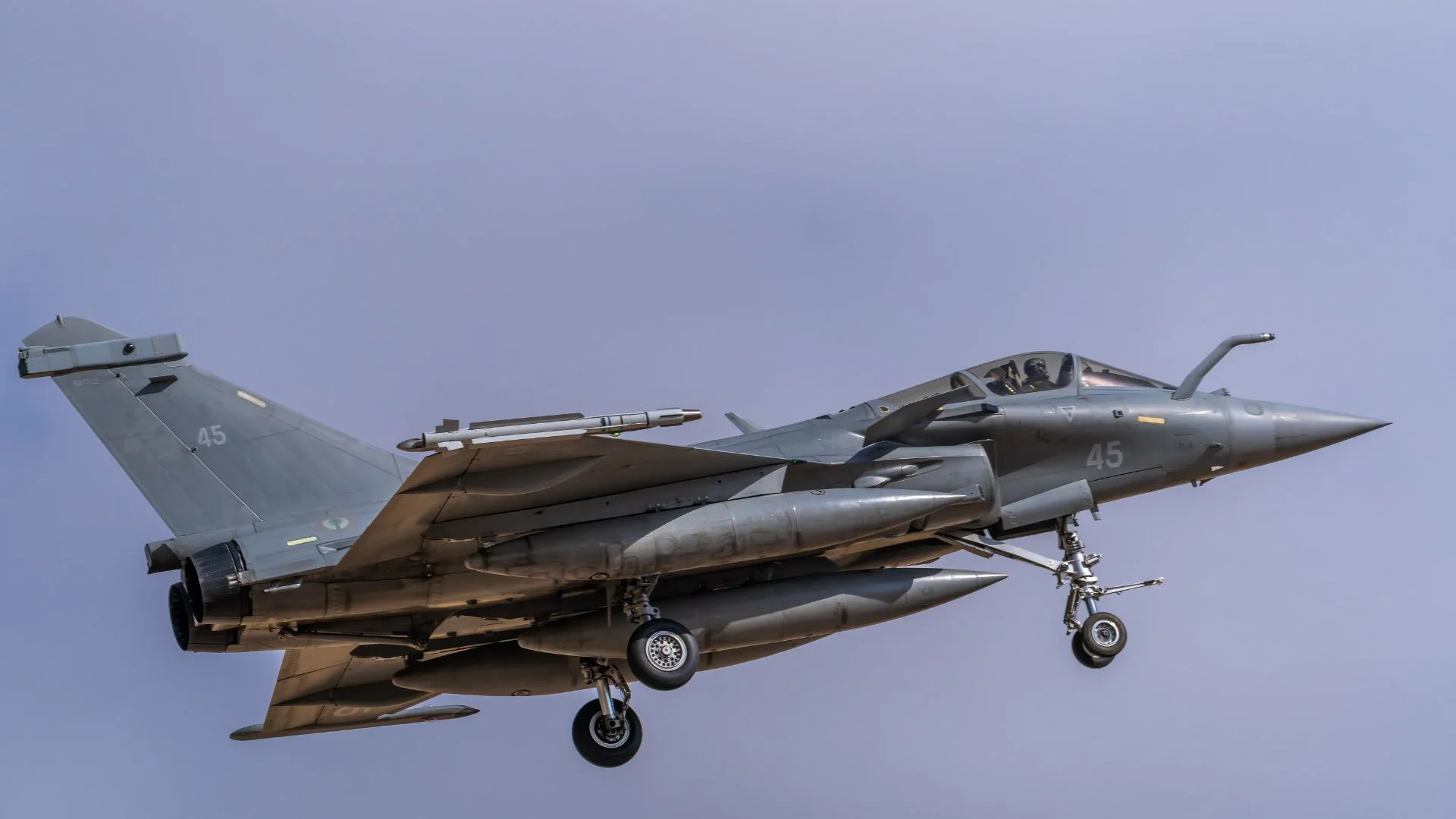
Rafael Advanced Defense Systems has presented a broad portfolio of combat-tested defence technologies at the Farnborough Airshow 2026.
The Israeli defence company is showcasing systems designed for precision strike, air defence, counter-drone operations, communications, cyber capabilities and satellite-based technologies. The exhibition comes as many countries increase defence spending in response to changing security challenges.
The company said it is focusing on systems that have already been used in operational conditions. It also highlighted its ability to deliver equipment quickly through an expanding industrial network. Rafael believes governments are placing greater importance on reliable supply alongside battlefield performance.
One major area of focus is the company’s long-range precision strike weapons. These include the SPICE 250 guided weapon, the ROCKS air-to-surface missile and the ICE BREAKER cruise missile. Each system is designed to operate even when satellite navigation signals are blocked or disrupted.
SPICE 250 allows aircraft to engage multiple targets during a single mission without relying on GPS or laser guidance. ROCKS is designed to destroy heavily protected and underground targets from long distances. Rafael also announced that it will reveal additional launch-platform developments for ROCKS during the airshow.
Precision Strike Systems
The ICE BREAKER missile completes Rafael’s long-range strike family. It offers precision attacks at distances of up to 300 kilometres while remaining difficult for radar systems to detect. The missile follows the terrain, uses artificial intelligence to match scenes during flight and allows operators to remain involved in the targeting process.
Rafael said ICE BREAKER can be launched from aircraft, ships and ground-based platforms. Using one missile across multiple services can simplify logistics and reduce maintenance requirements for military operators. This approach also helps armed forces standardise their precision strike capabilities.
READ ALSO: Battery-Like Carbon Capture Device Uses Electricity to Pull CO₂ From Air More Efficiently
The company is also presenting its LITENING 5 targeting pod for combat aircraft. The system helps pilots detect, identify, track and engage targets with greater accuracy. Rafael said more than 25 aircraft types across 28 air forces currently use the targeting pod.
According to the company, LITENING 5 has supported hundreds of drone interception missions in active combat zones. It automatically identifies targets and guides different types of precision weapons during operations. The system also provides real-time information sharing between aircraft and command centres.
Germany recently approved the purchase of 90 LITENING 5 targeting pods for its Eurofighter Typhoon fleet. Rafael said the package includes secure connectivity features that support NATO air operations. The agreement highlights growing European demand for advanced airborne targeting systems.
Rafael’s Layered Defence Network
Air defence remains another major part of Rafael’s Farnborough display. The company is showcasing Iron Dome, which has intercepted thousands of rockets, cruise missiles and drones during multiple military operations. The system has become one of the world’s best-known short-range air defence solutions.
Rafael also highlighted the operational deployment of Iron Beam, a high-power laser interception system delivered to the Israel Defense Forces in December 2025. The company described it as the world’s first operational laser-based system for aerial interception. Recent testing confirmed that Iron Beam works alongside Iron Dome through a shared battle-management network.
This integrated approach allows commanders to decide whether to use traditional interceptor missiles or laser energy against incoming threats. Missile interceptors are effective against a wide range of targets, while lasers can reduce interception costs for suitable threats. Combining both systems provides greater flexibility during air defence operations.
The company is also displaying Iron Beam 450, Iron Beam-M and LITE BEAM. Together, these systems provide protection for fixed military sites, mobile units and forward-deployed forces. Rafael said the family offers different options depending on operational needs.
David’s Sling forms the medium- and long-range layer of Rafael’s air defence network. SPYDER provides mobile protection against aircraft, helicopters, drones and missiles at shorter ranges. Rafael noted that Romania recently selected SPYDER in what the company described as its largest defence contract to date.
All of these systems are connected through MiCAD, Rafael’s battle-management and command network. The open-architecture system allows different sensors, interceptors and command centres to exchange information in real time. This helps military operators respond more quickly to fast-moving threats.
READ ALSO: 1X’s Neo Robot Gets Washable, Tactile Hands That Sense Touch Like Humans
Growing Global Demand
Counter-drone technology is another important part of Rafael’s presentation at Farnborough. The company is displaying Sky Dart, Hunter Eagle and Ghost Hunter as hard-kill systems designed to destroy low-flying unmanned aircraft. These systems work alongside Rafael’s electronic warfare and directed-energy technologies.
Rafael first introduced this counter-drone family during DSEI 2025 in London. Since then, interest in drone defence has increased as unmanned aircraft have become a major feature of modern conflicts. Many countries are now investing in multiple layers of protection against drone attacks.
The company also emphasised its growing industrial presence across Europe and other international markets. Local manufacturing facilities are intended to shorten delivery times and strengthen supply chains. This approach addresses growing demand from armed forces seeking rapid equipment deliveries.
Rafael President and CEO Yoav Tourgeman said today’s defence market expects both proven performance and dependable production.
He said the company’s systems are based on operational experience rather than experimental concepts. Tourgeman added that Rafael’s industrial network allows it to deliver those capabilities more efficiently to international partners.
The Farnborough Airshow provides Rafael with an opportunity to demonstrate how its combat-tested technologies fit evolving military requirements. As countries continue modernising their armed forces, demand for integrated air defence, precision strike and counter-drone systems is expected to remain strong. The company’s latest showcase reflects a wider shift toward proven capabilities that can be delivered quickly to meet changing global security needs.