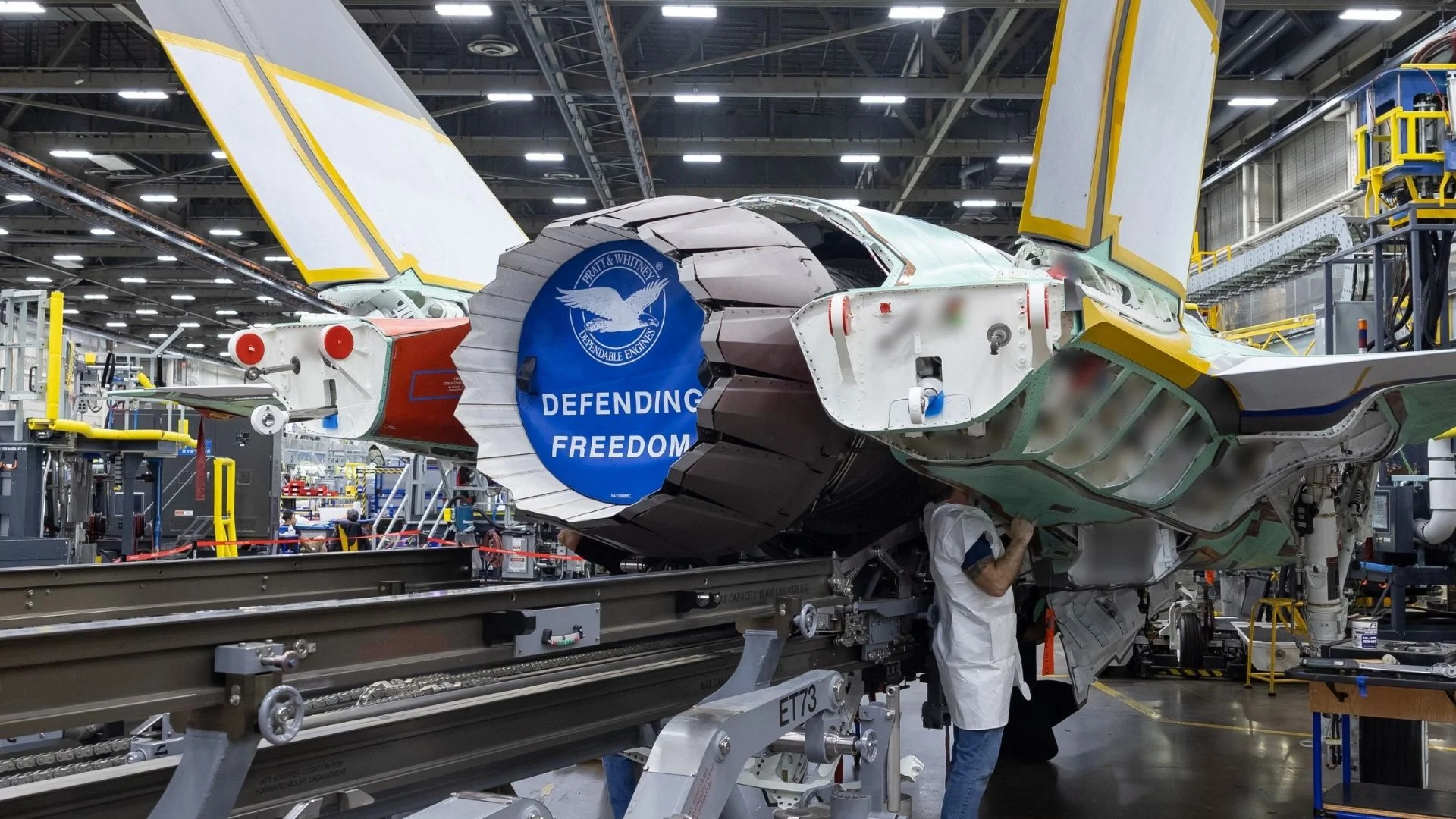
Germany’s first F-35A Lightning II fighter jet has entered a new stage of production after its engine was installed at Lockheed Martin’s assembly facility in Fort Worth, Texas.
The aircraft is the first of 35 F-35A jets ordered by Germany under a major defense modernization program. The installation of the engine marks one of the final steps before testing and eventual delivery.
Lockheed Martin recently released photographs showing technicians fitting the Pratt & Whitney F135-PW-100 engine into the aircraft. The company described the event as another important milestone in the production process. With the engine now in place, the aircraft will move into a series of system checks and flight preparations.
The first German F-35A is scheduled for delivery before the end of 2026. A formal rollout ceremony is expected in the coming weeks as production continues. After final assembly is completed, the aircraft will undergo extensive testing before it is handed over to the German Air Force.
F135 Engine Fuels Final Assembly
The Pratt & Whitney F135 engine is the powerplant used across the entire F-35 fleet. It is currently the most powerful engine installed in any Western fighter aircraft. The engine produces about 43,000 pounds of thrust with afterburner.
The F135 was designed specifically for the F-35 program. It works closely with the aircraft’s advanced software, sensors, and flight control systems. Engineers also designed key engine components to support the aircraft’s low-observable, or stealth, characteristics.
READ ALSO: L3Harris Secures $98M US Navy Contract to Supply Counter-Drone Proximity Fuzes
Installing the engine is a major moment during production. Until that stage, the aircraft is essentially a completed airframe. Once the engine is integrated, technicians begin transforming it into a fully operational combat aircraft.
Engineers will now carry out propulsion system tests and software integration checks. Ground runs and fuel system evaluations will also be conducted. These steps ensure the aircraft performs safely before its first flight.
Germany’s F-35A Program
Germany approved the purchase of 35 F-35A aircraft through the US Foreign Military Sales process. The Letter of Offer and Acceptance for the deal was approved on December 14, 2022. The acquisition came shortly after Russia launched its full-scale invasion of Ukraine earlier that year.
The F-35A was selected to replace Germany’s aging Panavia Tornado IDS fleet. The Tornado aircraft have served the Luftwaffe for decades and currently support Germany’s role in NATO’s nuclear-sharing mission. Many of these aircraft are approaching the end of their operational service lives.
Under NATO’s nuclear-sharing arrangement, several allied nations maintain aircraft capable of delivering US-supplied B61 nuclear gravity bombs if required. Germany plays a key role in that mission. The F-35A has already been certified for this responsibility, making it a natural successor to the Tornado.
German officials also viewed the aircraft as a long-term solution for operating in increasingly complex threat environments. Modern air defense systems have become more capable and widespread. The F-35’s stealth design helps reduce detection by enemy radar and improves survivability during missions.
READ ALSO: Defence Secretary oral statement on Russian Maritime Activity and UK Response – 22 January 2025
Training, Delivery and Future Operations
Deliveries of German F-35A aircraft are scheduled to begin in 2026. The first jets will initially be based at Ebbing Air National Guard Base in Fort Smith, Arkansas. The same training location is also being used for F-35 operators from Poland and Finland.
German pilots and maintenance personnel will train there before the aircraft moves to Europe. This approach allows crews to gain experience with the new platform before it enters frontline service. Training is considered a key part of the overall program.
Following the training phase, the first aircraft are expected to arrive at Büchel Air Base in Germany in 2027. The base is being upgraded to support F-35 operations and related mission requirements. Infrastructure improvements are underway alongside pilot and maintainer preparation.
Germany’s F-35 acquisition is valued at roughly $8.4 billion. The package includes aircraft, training systems, simulators, logistics support, weapons integration, spare parts, and infrastructure upgrades. The investment represents one of Germany’s largest military aviation programs in recent decades.
WATCH ALSO: Lightweight advanced materials are transforming aerospace innovations
Germany is also joining a growing group of European F-35 operators. Countries including the Netherlands, Norway, Denmark, Belgium, Italy, Poland, Finland, and Switzerland have either received or ordered the aircraft. The expanding fleet is improving interoperability across NATO air forces.
The progress of Germany’s first F-35A reflects a broader shift in European defense planning. As more nations adopt fifth-generation aircraft, common training, maintenance, and operational standards are important. The arrival of Germany’s F-35 fleet will strengthen NATO’s collective air power and shape the Luftwaffe’s capabilities for decades to come.