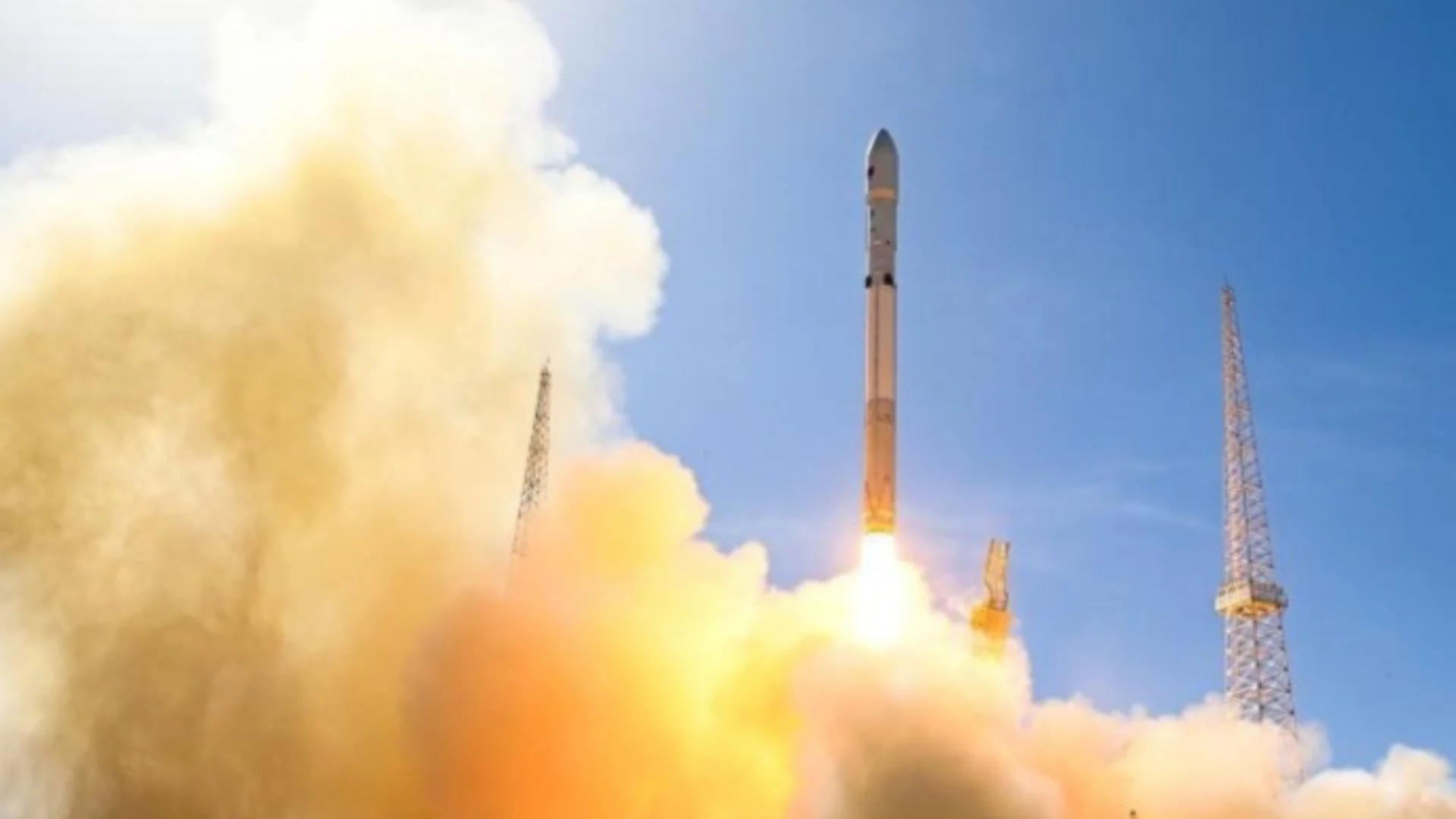
China successfully carried out the maiden flight of its Long March-12B Y1 carrier rocket on Monday.
The rocket lifted off at 4:40 p.m. Beijing time from the Dongfeng commercial space innovation pilot zone in northwest China. It delivered a group of networking satellites for the Qianfan Constellation into their planned orbits.
The launch was declared a complete success. It marked the first mission of the Long March-12B rocket. The flight was also the 647th mission of China’s Long March rocket family.
The satellites launched during the mission are part of the Qianfan Constellation, also known as the Spacesail Constellation.
This large satellite network is being developed to provide space-based communication and internet services. Similar projects are underway in several countries and companies worldwide to improve global connectivity.
READ ALSO: A Breakthrough Technology Set to Revolutionize Ultra-Fast, Eco-Friendly AI
The Long March-12B was developed by a commercial rocket manufacturing company under the China Aerospace Science and Technology Corporation (CASC).
It is a new-generation reusable rocket designed to lower launch costs and improve operational efficiency. Reusable rockets can be recovered and flown again, reducing the need to build entirely new launch vehicles for every mission.
Although this launch did not include a recovery attempt, CASC said a first-stage recovery test will take place in a future mission. The company views reusability as an important step for supporting frequent satellite launches. It also helps meet the growing demand for access to space.
The Long March-12B uses a two-stage, single-core design. It measures about 72 meters in length and has a body diameter of 4.37 meters. Its payload fairing, which protects satellites during launch, has a diameter of 5.2 meters.
WATCH ALSO: United States is considering to conduct air strikes against drug cartels in Venezuela
The rocket’s first stage is powered by nine liquid oxygen and kerosene engines. The second stage uses a single-engine optimized for spaceflight. They enable the rocket to carry up to around 20 tonnes of payload into low Earth orbit.
According to CASC, the successful debut adds another commercial launch option for China’s satellite internet ambitions. The rocket is designed to support a range of orbital missions and large-scale constellation deployments. Future flights are expected to play a key role as China expands its space infrastructure and communication networks.