Firefly Aerospace is expanding its Texas operations with a new headquarters, a larger cleanroom facility, and an advanced innovation lab to increase spacecraft production.
The company is scaling manufacturing for its Blue Ghost lunar landers, Elytra orbital vehicles, and launch systems as demand rises across defense, commercial space, and lunar exploration sectors. The expansion also strengthens Firefly’s role in supporting future NASA lunar missions and the growing space economy.
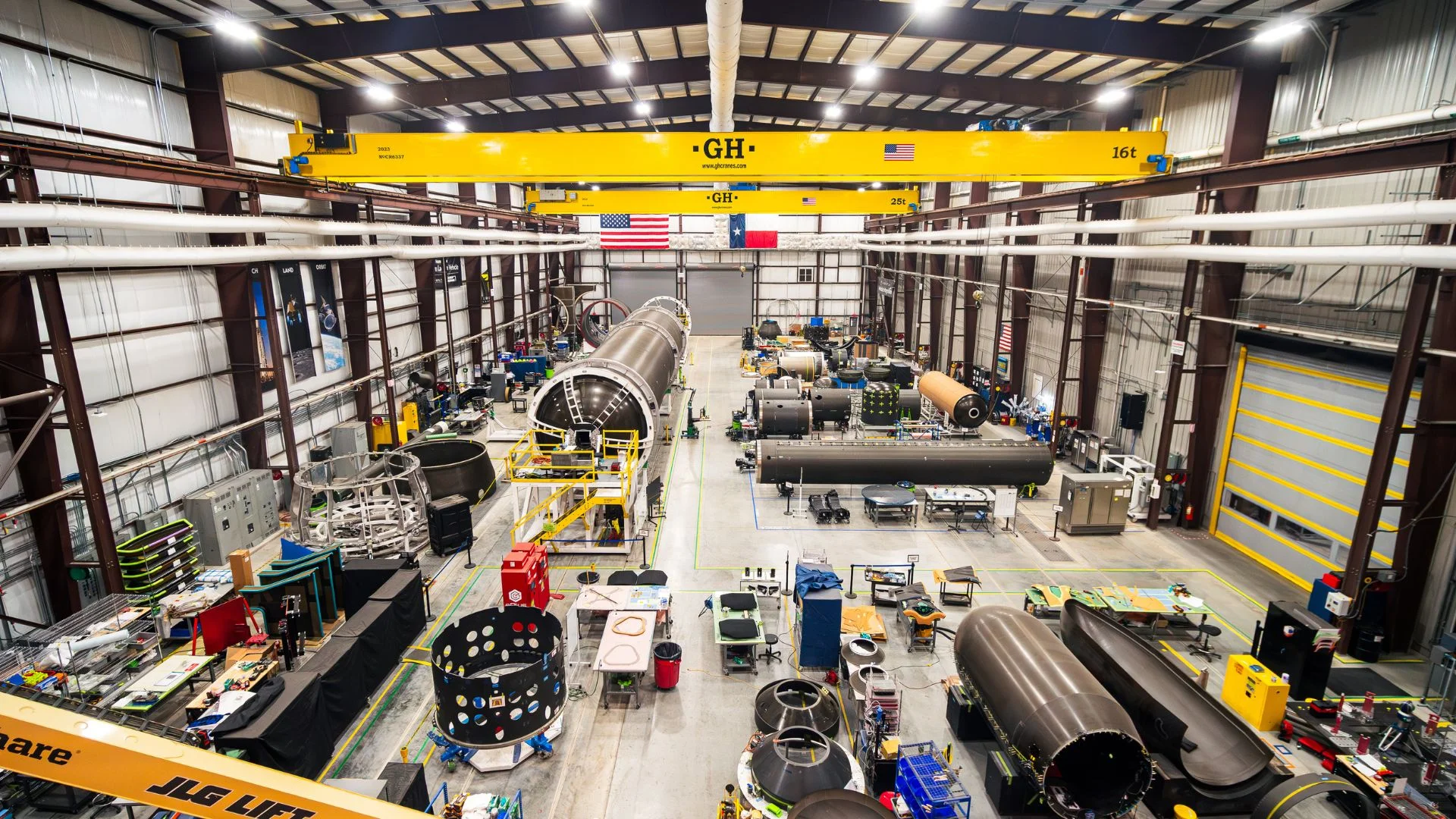
Firefly has expanded its spacecraft production campus in Cedar Park, Texas, by adding new facilities beside its existing operations center.
The upgraded campus combines spacecraft design, assembly, testing, mission control, and engineering activities into one centralized location. With the expansion, Firefly now operates approximately 144,000 square feet dedicated to spacecraft manufacturing and business operations.
The new campus is nearly double the size of the company’s earlier Cedar Park facilities. It includes areas for spacecraft assembly, avionics production, engineering work, and mission support operations under one roof.
READ ALSO: Airbus Helicopters and Spanish Navy Complete Crewed-Uncrewed Maritime Defense Exercise
Company officials say the centralized setup will improve efficiency, streamline workflows, and speed up coordination across multiple space programs.
The Cedar Park site is located less than 30 miles from Firefly’s Rocket Ranch in Briggs, Texas. Rocket Ranch serves as the company’s main launch vehicle manufacturing and testing center. The site spans 200 acres and includes six test stands along with more than 217,000 square feet of engineering and manufacturing facilities.
Firefly Chief Operating Officer Ramon Sanchez said the company is scaling production to meet rising demand in defense, commercial space, and lunar exploration sectors.
He explained that the company’s investments allow Firefly to move from building single lunar landers to running a repeatable production line. The goal is to support multiple Moon missions each year.
The company’s expansion comes as governments and private companies increase investments in lunar exploration. NASA’s Artemis program has encouraged new commercial partnerships to build long-term Moon infrastructure. Firefly’s Blue Ghost lunar lander is part of this broader effort to deliver cargo, science equipment, and future technologies to the lunar surface.
Blue Ghost Cleanroom Built
A major part of the expansion includes a new cleanroom that is four times the size of Firefly’s current facility. Cleanrooms are highly controlled environments that reduce dust and contamination during spacecraft assembly. These facilities are critical for building sensitive space systems that must operate reliably in orbit and on the Moon.
WATCH ALSO: SpaceX is gearing up to conduct 11th flight test of Starship on October 13
The new cleanroom received funding support from the Texas Space Commission. Firefly says the larger space will support dedicated assembly lines for both the Blue Ghost lunar lander and the Elytra orbital vehicle. This setup is designed to improve production speed while maintaining quality standards.
Blue Ghost is one of Firefly’s most important spacecraft programs. The lunar lander is designed to transport payloads and scientific instruments to the Moon. Firefly aims to make the vehicle a repeatable and scalable platform for future lunar transportation services.
The Elytra orbital vehicle is another major part of the company’s growing portfolio. The spacecraft is designed for orbital transportation, satellite support, and extended space operations. Blue Ghost and Elytra represent Firefly’s push beyond launch services into long-term space infrastructure.
The company said the expanded cleanroom will also help support future government and commercial contracts. Demand for reliable spacecraft manufacturing has increased as more nations and companies enter the space sector. Firefly is positioning itself to handle larger mission volumes in the coming years.
Gloworks Advances Firefly Spacecraft
Firefly also launched a new innovation center, Gloworks, as part of the campus expansion. The lab focuses on rapid technology development for propulsion systems, robotics, advanced materials, and spacecraft manufacturing tools. The company said the goal is to develop new technologies without slowing existing production lines.
Gloworks includes advanced equipment such as titanium printers, 3D printers, plasma cutters, welding systems, automated milling machines, and composite fabrication tools. These machines allow engineers to quickly build and test new hardware designs. Faster prototyping can reduce development time for future spacecraft systems.
Firefly Chief Technology Officer Shea Ferring said the lab will help the company address future challenges in space operations.
READ ALSO: GE Vernova Acquires Robotech Automation to Modernize Energy Manufacturing Operations
These include developing systems that survive the extreme cold of lunar nights and improving methods for safely removing old satellites from orbit. Such technologies are becoming increasingly important as lunar missions and satellite traffic continue to grow.
The company is also expanding operations at Rocket Ranch to support higher launch activity. Firefly recently added two new mezzanine levels, creating an additional 30,000 square feet of engineering and manufacturing space. Additional upgrades are also being made to production systems for carbon composites and propulsion hardware.
Firefly is also improving its engine testing capabilities. Upgrades to the Eclipse engine test stand will enable multiple engines to be tested simultaneously, increasing overall testing speed. Enhancements to Alpha rocket stage testing systems are also expected to improve reliability and streamline operations.
Founded in 2017, Firefly Aerospace has rapidly grown into a major player in the commercial space industry. The company became the first commercial firm to successfully land on the Moon and has also demonstrated rapid satellite launch capabilities with short-notice timelines.
By expanding its Texas facilities, Firefly is preparing for a future where regular lunar missions, defense launches, and commercial spacecraft operations become more common across the global space economy.