China has officially put the world’s first standard modular battery-swapping cargo ship into service.
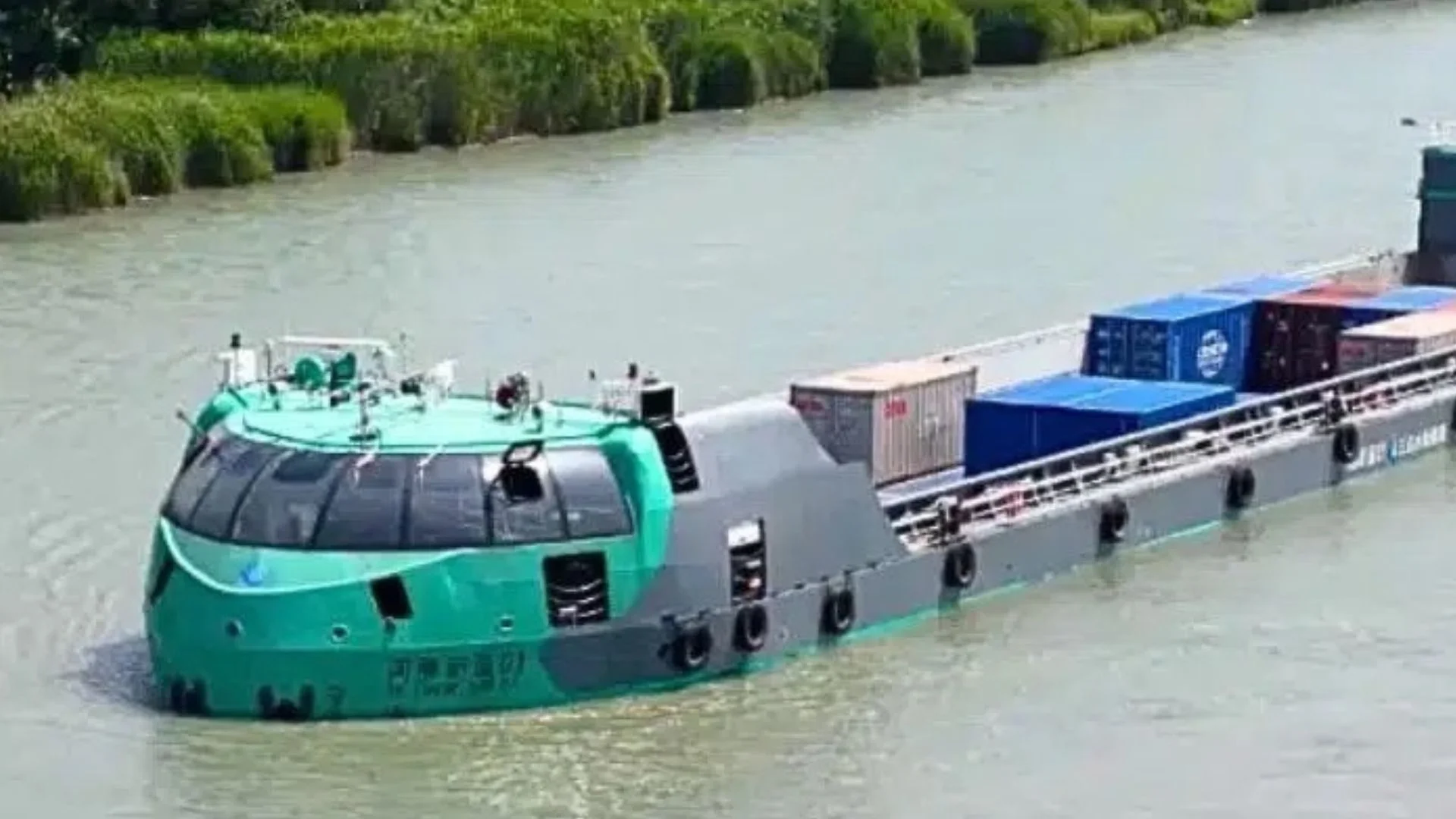
The vessel is named Hefu Weilan 01. It recently completed its first cargo trip between Wuhu Port and Chaohu Port in eastern China’s Anhui Province.
The ship carried 49 standard containers during its maiden voyage. It successfully completed both loading and unloading operations at the two ports. Chinese developers described the operation as an important test for the new transport system.
The vessel was jointly developed by Wuhu Shipyard Co., Ltd. and Sandianshui New Energy Technology Co., Ltd. The ship was designed mainly for inland waterways. It replaces traditional marine fuel systems with modular electric batteries.
READ ALSO: MQ-4C Triton Vanishes Mid-Flight After 50,000 Ft Drop, US Navy Confirms Crash
The cargo vessel has a deadweight capacity of 3,000 tonnes. Its maximum operating speed is 8 knots. The ship uses six modular battery packs, each providing 430 kilowatt-hours of energy.
Developers said the battery-swapping process is one of the ship’s key features. A single battery can be replaced in about five minutes. All six batteries can be swapped in less than 30 minutes.
The ship operates on a shared modular battery platform. The same batteries used onboard can also be transferred to port equipment and heavy-duty vehicles. This includes forklifts, port trucks, and industrial energy storage systems.
According to project officials, the system follows a ship, vehicle, and storage model. The goal is to create one shared energy network across ports and transport sectors. This approach may reduce operating costs and improve battery use efficiency.
The developers said the project supports cleaner inland shipping operations. Inland cargo transport often depends on diesel-powered vessels. Electric systems can help reduce fuel consumption and lower emissions in busy port regions.
The battery-swapping model also reduces charging downtime. Conventional electric ships may need several hours to recharge batteries. Swapping systems allows vessels to return to operations much faster.
Sandianshui New Energy Technology said it has applied for more than 370 patents related to the project. These patents cover battery systems, energy management, and swapping technologies. The company sees the platform as a long-term infrastructure project for ports and logistics networks.
The vessel also includes technologies adapted from China’s electric vehicle industry. Developers used an automotive-grade electric motor sourced from the new energy vehicle supply chain. The design aims to lower weight, reduce costs, and improve energy efficiency.
WATCH ALSO: World’s first motorbike backflip between two moving trucks successfully completed
The ship uses a unified electronic control and engine management system. Officials said the setup is similar to intelligent cockpit systems used in modern electric cars. The system helps manage navigation, battery performance, and onboard operations.
Several safety and automation features were also added to the vessel. These include a 360-degree surround-view collision-avoidance system and visual enhancement features. The ship is also prepared for future automatic berthing and unberthing operations.
The vessel was first launched in April 2025 at Wuhu. Over the past year, it completed testing and certification procedures. The ship received certification for its battery-swapping system and ship inspection approvals from the China Classification Society.
It also obtained Approval in Principle certifications from Bureau Veritas and DNV. Both organizations are internationally recognized maritime classification societies. Officials said the certifications show growing global interest in electric shipping systems.
Battery Cargo Ship Matters
The shipping industry is under pressure to reduce carbon emissions. Many countries and shipping companies are exploring cleaner propulsion systems. Electric ships are becoming one option for short-distance and inland transport routes.
China has rapidly expanded its electric vehicle and battery industries in recent years. The country is now applying similar technologies to marine transport. Battery-swapping systems may offer a faster alternative to traditional charging infrastructure.
The project may also influence future port operations. Shared battery systems can power ships, trucks, and industrial equipment using a single energy infrastructure. This could simplify logistics and improve energy management inside large ports.
READ ALSO: Neanderthals’ Brains Weren’t to Blame for Their Demise 40,000 Years Ago
Inland waterways play a major role in China’s domestic cargo movement. Cleaner cargo vessels may help reduce pollution in heavily used river transport corridors. The government has also been encouraging low-emission transport projects as part of broader environmental goals.
Developers believe the Hefu Weilan 01 will help expand modular electric shipping across more inland routes in the coming years. Future projects might include larger vessels and more automated battery-swapping stations.
The success of the first commercial operations will likely shape how quickly the technology spreads across the global shipping industry.