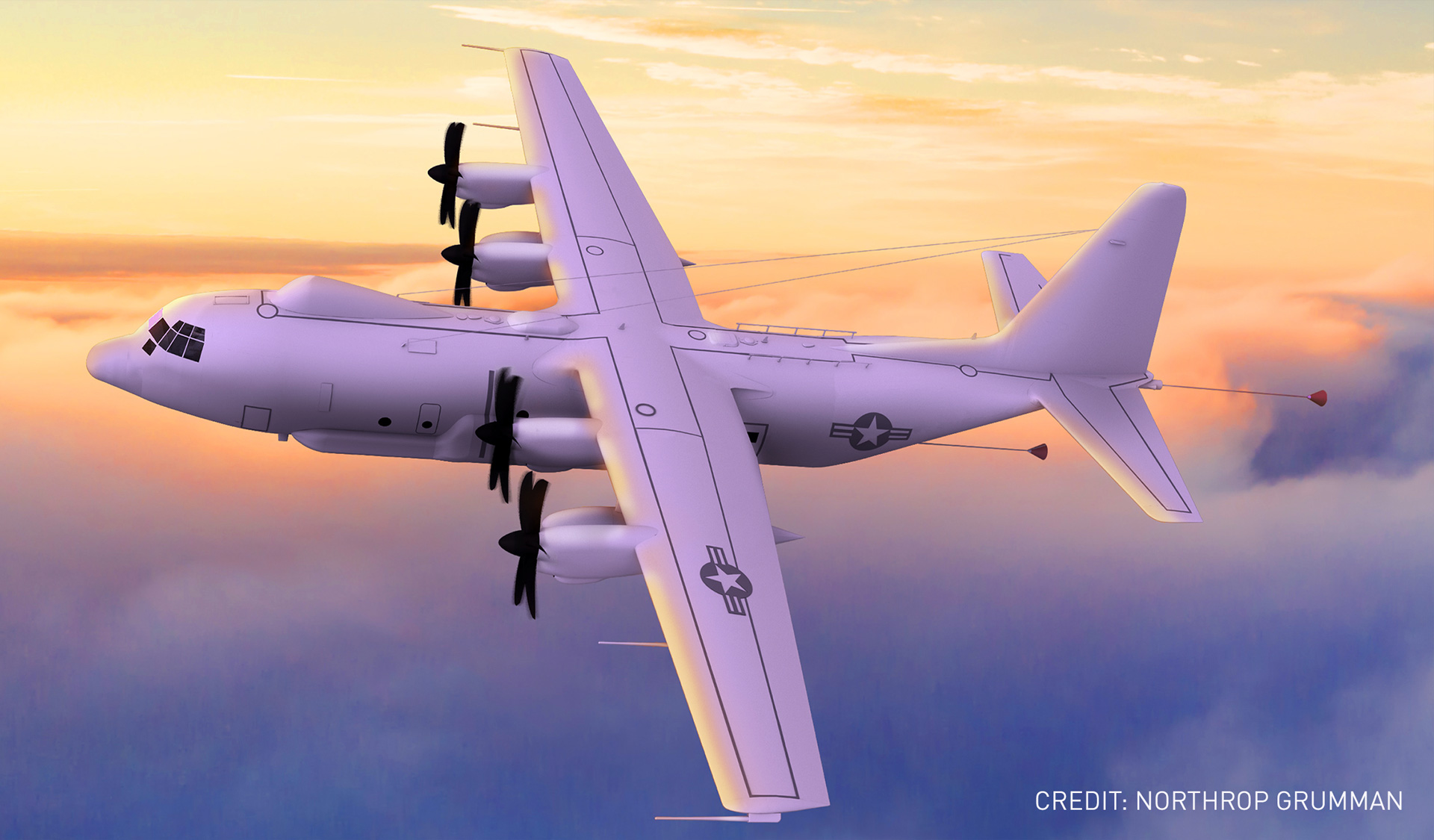
Lockheed Martin has been selected to provide advanced training devices and support services for the E-130J Phoenix II aircraft as part of Northrop Grumman’s industry team supporting the U.S. Navy’s Take Charge And Move Out (TACAMO) mission. This collaboration reflects Lockheed Martin’s continued focus on improving warfighter readiness through next-generation training systems and advanced sustainment solutions.
The initiative is aimed at ensuring that Navy personnel are fully prepared to operate and maintain one of the most critical airborne communication platforms in the U.S. defense network.
E-130J Phoenix II: A Strategic Airborne Communication Platform
The E-130J Phoenix II is based on Lockheed Martin’s C-130J-30 Super Hercules airframe, a widely trusted and highly capable military transport aircraft. In its TACAMO configuration, the aircraft will serve as a secure and resilient airborne communications platform.
READ ALSO: https://modernmechanics24.com/post/rtx-raytheon-space-force-sensor-deliver/
Its primary role is to maintain uninterrupted communication between U.S. national command authorities and the strategic weapons systems, even in situations where ground-based communication networks are disrupted or destroyed. This ensures continuous command-and-control connectivity across the nuclear deterrence structure, strengthening national security resilience.
Lockheed Martin’s Expertise in Training Systems
As the original equipment manufacturer of the C-130J, Lockheed Martin brings deep technical expertise to the E-130J training program. According to Todd Morar, Vice President of Air and Commercial Solutions at Lockheed Martin, this experience allows the company to work closely with Northrop Grumman to meet the U.S. Navy’s training requirements with high precision.
He noted that Lockheed Martin’s understanding of aircraft design, avionics systems, and performance characteristics enables the creation of highly realistic training environments. These simulations replicate real-world operational conditions, including mission-critical communications systems and onboard avionics behavior.
This ensures that aircrews receive training that is not only theoretical but also closely aligned with actual mission scenarios.
High-Fidelity Simulation for Mission Preparedness
Lockheed Martin plays a key role in developing training systems for specialized C-130 aircraft variants. By leveraging the strong design commonality between the C-130J and the E-130J Phoenix II, the company is able to accelerate the development of high-fidelity simulation tools.
WATCH ALSO: https://modernmechanics24.com/post/ai-turns-slides-into-cancer-protein-map/
This approach allows training systems to evolve in parallel with aircraft upgrades and modernization efforts. As a result, simulation environments remain accurate, relevant, and closely aligned with real operational systems.
The use of advanced simulation technology ensures that Navy personnel can train in environments that mirror actual mission conditions, improving both confidence and operational readiness.
Preparing Crews for Advanced Mission Systems
Through the delivery of E-130J training devices and services, Lockheed Martin will enable Navy crews to become proficient in the aircraft’s advanced systems before the platform enters full operational service.
Training will cover key capabilities such as very low frequency (VLF) communications, integrated command-and-control systems, and other specialized mission functions essential to the TACAMO role.
This early exposure to complex systems allows operators to build expertise ahead of deployment, ensuring smoother integration of the E-130J into active service and enhancing overall mission effectiveness.