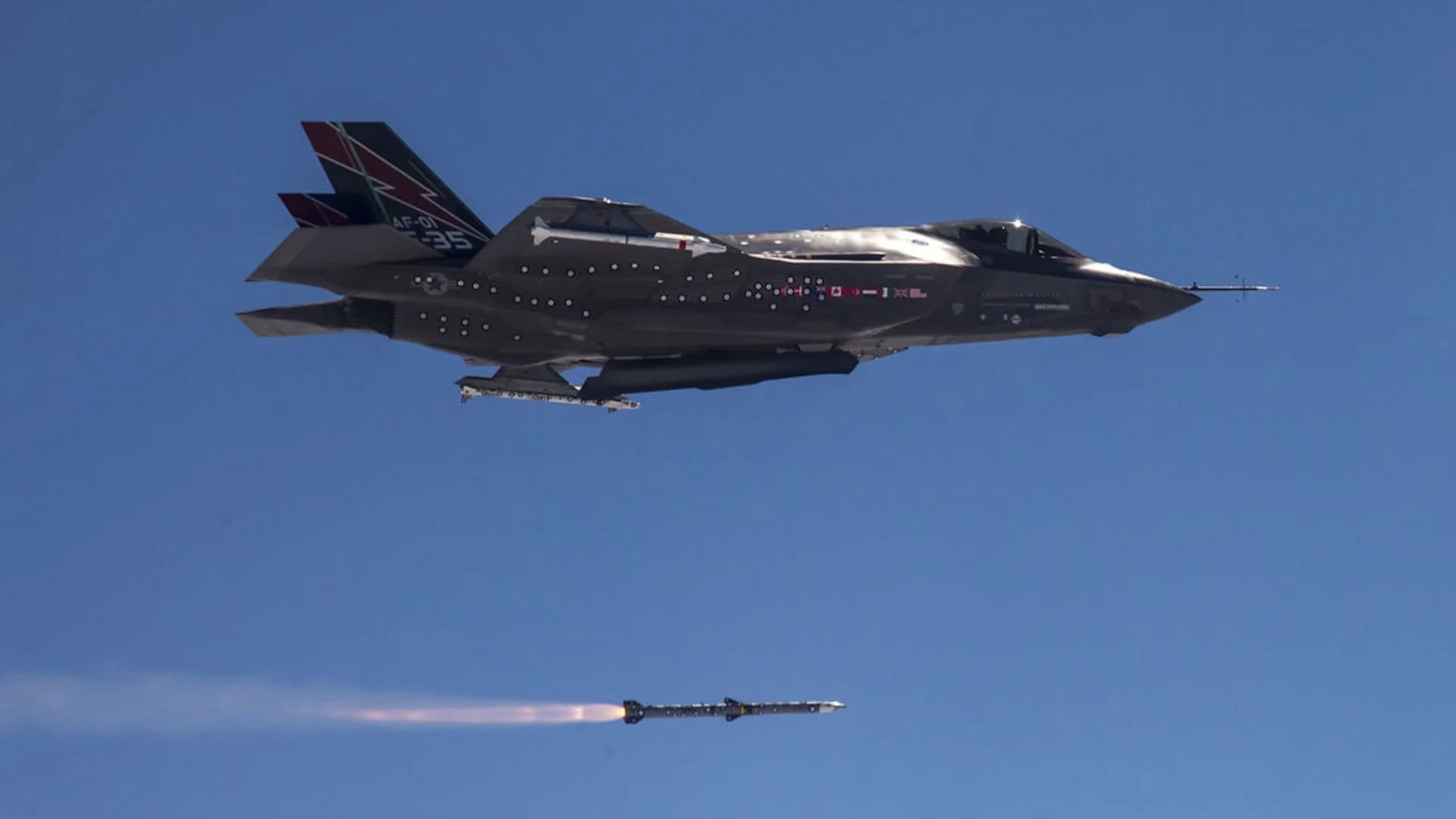
Recent missile wreckage found near Dnipro is offering a rare look at the weapons now in use in Ukraine, with markings pointing to the advanced AIM-120C-8 AMRAAM variant.
The discovery provides the clearest evidence yet that Kyiv is fielding one of the most capable export versions of the missile, signaling a notable boost in its air combat and air defense strength.
The AIM-120 AMRAAM is widely used across modern air forces and is known for its reliability and effectiveness. The AIM-120C-8 sits near the top of the export range, offering improved range, targeting, and resistance to electronic interference.
While exact performance figures remain classified, experts estimate that the missile can hit targets at distances of 75-100 miles under ideal conditions. In real combat, factors such as altitude, speed, and maneuvering of both the launching aircraft and the target influence its effective range.
READ ALSO: US Navy Pushes AARGM-ER Toward Service Despite Strategic Procurement Pause
A key feature of the AMRAAM family is its active radar guidance system. This allows pilots to launch the missile and then disengage, as the missile can guide itself to the target. This ‘fire-and-forget’ capability is critical in modern air combat, as it reduces the time a pilot must remain exposed to enemy threats.
The AIM-120C-8 builds on a series of upgrades introduced over time. Earlier versions brought important changes, including a more powerful warhead, improved propulsion systems, enhanced electronic counter-countermeasures, and better proximity fuzes.
The AIM-120C-7 added further range and targeting improvements. While specific upgrades to the C-8 remain undisclosed, it is widely seen as one of the most capable AMRAAM variants available to countries outside the US’s closest allies.
WATCH ALSO: Rolls-Royce tests world’s first high-speed marine engine powered by methanol
There are still differences between the AIM-120C-8 and the more advanced AIM-120D. The D version is believed to include a two-way datalink, allowing it to receive updates during flight, and may use a more advanced radar seeker. Even so, the C-8 remains a highly capable missile and represents a major boost for Ukraine’s air capabilities.
Ukraine can deploy AMRAAMs in two main ways. They are used by F-16 Fighting Falcon fighter jets for air-to-air combat. They can also be launched from the NASAMS, a ground-based air defense system designed to intercept a wide range of aerial threats. This dual-use capability gives Ukraine flexibility in defending its airspace.
At present, it is unclear whether the AIM-120C-8 wreckage found near Dnipro came from an F-16 or a NASAMS launcher. Both platforms are capable of firing the missile, and both are actively used in Ukraine’s defense against Russian air attacks.
The introduction of AMRAAM missiles has already addressed a long-standing gap for Ukraine’s air force. In 2022, Ukrainian pilot Andrii Pilshchykov pointed out the lack of fire-and-forget missiles as a major challenge.
READ ALSO: Body Heat Runs a Brain Sensor? This Battery-Free EEG Changes the Rules
He said, “The lack of fire-and-forget missiles is the greatest problem for us.” With the arrival of AMRAAMs, Ukrainian pilots can now engage targets more effectively and from safer distances.
However, reports earlier this year indicated that Ukraine faced a shortage of AIM-9 Sidewinder missiles, which are used for close-range engagements. This has forced greater reliance on AMRAAMs and onboard cannons. Using a fighter jet’s gun against small drones is difficult and risky, especially at high speeds.
Although AMRAAMs can be used to shoot down drones and cruise missiles, they are expensive, with each missile costing around one million dollars. To reduce costs, Ukraine has also begun using guided rockets like APKWS II as a more affordable option for certain targets.
The NASAMS system plays a key role in Ukraine’s layered air defense. It can launch the same AMRAAM missiles used by fighter jets without major modifications.
Typically, older AIM-120A and AIM-120B missiles are used in ground-based roles, where they can intercept targets at shorter ranges of up to about 20 miles. If newer AIM-120C-8 missiles are now being used in this role, it may suggest that older stocks are being depleted.
WATCH ALSO: Explore Raytheon’s giant facility where it develops powerful naval radar SPY-6
Global demand for advanced munitions is increasing, and supply is under pressure. Countries supporting Ukraine must balance their own needs with ongoing deliveries. In some cases, newer, more capable systems are being provided as older stock runs low.
The AIM-120C-8 also helps Ukraine counter advanced Russian weapons such as the R-37M missile. This missile is reported to have a range of up to 124 miles under certain conditions, although such figures often represent ideal scenarios. Even so, the presence of AIM-120C-8 narrows the capability gap and strengthens Ukraine’s defensive and offensive options.
The discovery of AIM-120C-8 wreckage highlights how Ukraine’s air warfare capabilities are evolving. It shows a shift toward more advanced systems and greater integration of Western technology. These missiles improve the country’s ability to defend against air attacks, engage enemy aircraft, and build a more effective air defense network.
In the end, a single piece of wreckage has revealed a larger story. It reflects changing battlefield dynamics, growing reliance on advanced weapons, and the increasing importance of air superiority in modern conflict.