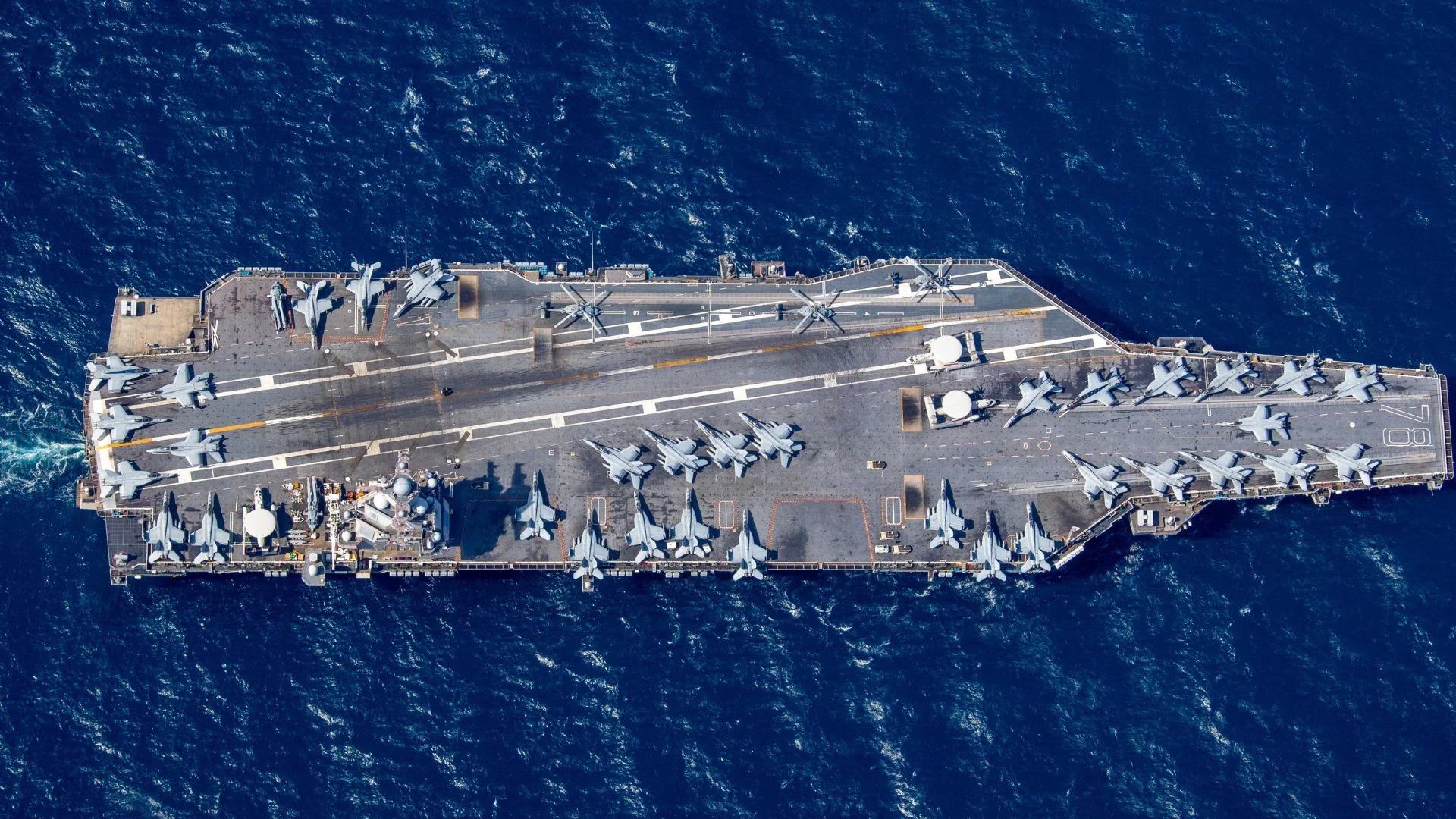
The return of the USS Gerald R. Ford to the Red Sea marks a major shift in the US military posture in the region.
After weeks away for repairs, the world’s most advanced aircraft carrier is back at sea, restoring a powerful strike capability at a time when tensions with Iran remain high.
This deployment signals more than just a routine naval move. It shows the US Navy’s purposeful effort to strengthen deterrence and maintain control in a region where security risks are growing.
The carrier had been stationed at Souda Bay for over a month. It underwent repairs following a fire in a laundry area on board on March 12, 2026. The incident caused injuries and internal damage, but officials confirmed that key systems, including propulsion and combat operations, remained unaffected. The quick repair and redeployment highlight the Navy’s ability to keep critical assets operational even after setbacks.
READ ALSO: HotSat-2 Is Launching: This Satellite Can Expose What Happens Behind Closed Doors
Now back in the Red Sea, the Ford once again serves as a main hub of US naval airpower under the US Central Command. Its presence enables the US to project force across a wide and sensitive area, covering major sea routes and potential conflict zones.
As the lead ship of its class, the Ford is among the largest and most advanced warships ever built. It carries more than 75 aircraft, including fighter jets, electronic warfare planes, and surveillance systems. These aircraft can conduct precision strikes, monitor enemy activity, and protect allied forces in real time.
The carrier is supported by guided-missile destroyers that form a powerful strike group. These ships are equipped with advanced defense systems capable of intercepting missiles, tracking threats, and conducting anti-submarine operations. Together, they create a layered defense system that allows the group to function securely in contested waters.
Positioning the Ford in the Red Sea represents a strategic decision. The location provides quick access to key chokepoints, such as the Bab el Mandeb Strait and the southern approaches to the Suez Canal. These waterways are essential for global trade and energy supplies, making their security a top priority.
WATCH ALSO: United States is considering to conduct air strikes against drug cartels in Venezuela
From this position, the carrier can launch aircraft within minutes. It can respond rapidly to threats, whether they come from land-based missile systems, drones, or fast-moving attack boats. This ability to act quickly gives the US a strong advantage in protecting regional stability.
The Ford’s air wing plays a key role in these operations. Fighter jets can conduct precision strikes against strategic targets, while surveillance aircraft monitor movement on land and at sea. Electronic warfare planes can interfere with enemy systems, lowering their ability to coordinate attacks.
This combination allows the carrier to handle a broad range of missions. It can support maritime security operations, protect commercial shipping, and, if needed, conduct high-intensity combat operations.
The deployment also comes after an unusually long operational cycle for the ship. Since leaving Naval Station Norfolk in June 2025, the Ford has been redirected multiple times. It initially supported missions in the Caribbean linked to Venezuela before moving to the Middle East.
READ ALSO: China Develops Open-Source Control That Solves Bamboo Drone Vibration Problem
This extended deployment has now crossed 295 days, making it one of the longest for a US aircraft carrier in the post-Cold War period. The duration reflects the simultaneous increase in demand for naval power across multiple regions.
The Ford-class carriers bring multiple technological upgrades compared to older ships. One of the most important is the Electromagnetic Aircraft Launch System, which replaces traditional steam catapults. This system enables faster, more efficient aircraft launches. It also reduces stress on the aircraft, enabling a wider range of missions.
Another key feature is the Advanced Arresting Gear, which improves how aircraft land on the carrier. Together, these systems increase the number of sorties the carrier can generate each day. This means more missions can be carried out in less time.
The ship also includes advanced radar and command systems. These tools provide a clearer picture of the battlefield, helping commanders make faster, better-informed decisions. In a high-threat environment, this level of awareness can make a critical difference.
While the carrier itself is not primarily used to intercept ships, it plays an important supporting role inside broader maritime operations. US forces are currently involved in monitoring and pressuring networks linked to Iran across key waterways, including the Gulf of Oman and the Arabian Sea.
WATCH ALSO: This robotic system to pick strawberries automates tough tasks
In these operations, smaller ships and patrol units handle direct interception tasks. However, the presence of a carrier strike group changes the overall balance. It provides air cover, intelligence support, and the capability to conduct long-range strikes if needed.
This added capability strengthens what military planners call escalation dominance. In simple terms, it means having the ability to respond at every level of conflict, from routine patrols to full-scale military action.
Ford’s aircraft can protect naval units from aerial threats and strike land or sea targets. This reduces the risk to smaller ships and allows them to operate more freely. It also sends a strong message to any actor considering aggressive moves in the region.
The deployment highlights the evolution of modern naval strategy. Aircraft carriers are no longer just tools for large-scale wars. They are now central to maintaining daily security, protecting trade routes, and responding quickly to emerging threats.
For the US, the return of the Ford to the Red Sea underscores a long-term commitment to regional stability. It shows that despite operational challenges, the Navy can maintain a strong presence where it matters most.
Since tensions continue to simmer, the carrier’s presence serves both as a shield and a signal. It protects vital interests as reminding rivals that the US remains ready to act at any moment.
In a region where small incidents can quickly escalate, the ability to project power and respond without delay is important. With the USS Gerald R. Ford back in position, that capability has been firmly restored.