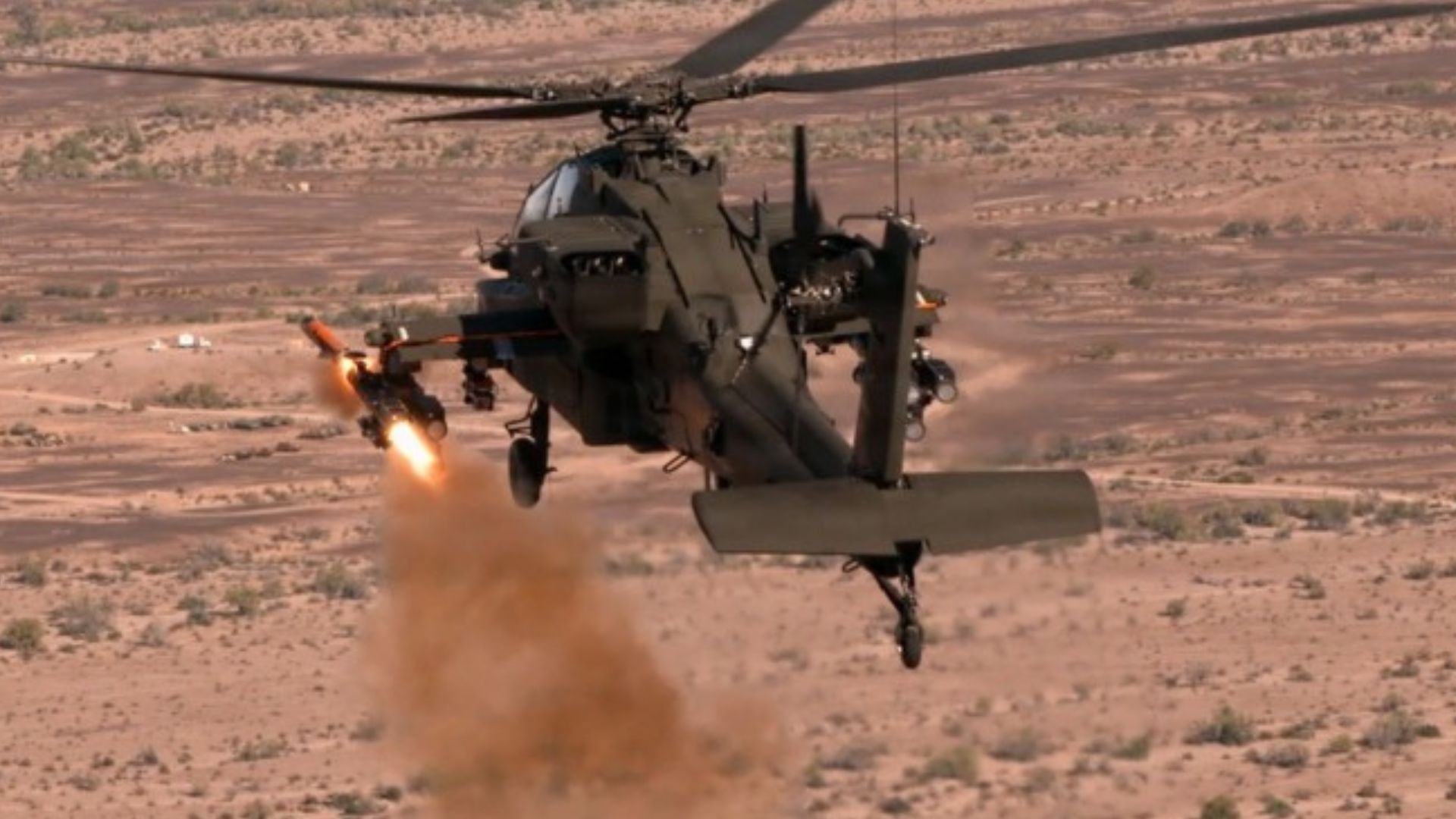
The US Army used its AH-64 Apache helicopters to launch an advanced system known as ALTIUS-700.
The test took place at Yuma Proving Ground, one of the military’s key testing sites.
The ALTIUS-700 is not a traditional missile. It is known as a ‘launched effect.’ This means it can act like a drone after being launched. It can gather information, track targets, and even carry out strikes.
The system supports multiple roles, including intelligence, surveillance, reconnaissance, and electronic warfare. It gives commanders more options on the battlefield.
How the AH-64 Apache Test Was Conducted
During the experiment, the Apache helicopters launched the ALTIUS-700 while hovering and while in motion.
“They accomplished the launches from both a hover and while moving,” said Edgar Castillo. “Hosting this was really good for the Army and us.”
READ ALSO: 183m Atlassian Central Set to Become World’s Tallest Timber Skyscraper in Sydney
The tests showed that the system can operate in different flight conditions. This flexibility is important in real combat situations.
The ALTIUS-700 has impressive capabilities. It can remain in the air for up to 4 hours and travel up to 460 kilometers. This allows it to reach targets far beyond the immediate battlefield.
It can also carry a payload similar to a Hellfire missile. This makes it powerful enough to strike armored vehicles, ships, and other large targets..At the same time, it provides real-time data to commanders.
One of the main goals of this technology is to reduce risk for soldiers. By launching the system from a distance, the Apache helicopter can stay farther away from danger. The ALTIUS-700 can move ahead, gather information, and engage targets if needed.
This approach helps keep troops out of the initial line of fire. It also improves decision-making by providing better battlefield awareness.
The test was part of a greater military effort. It took place during the Cross-Domain Fires Concept-Focused Warfighting Experiment. This initiative is led by the Army’s Aviation Future Capability Directorate.
WATCH ALSO: China commissions world’s largest 80,000-ton aircraft carrier that has electromagnetic catapults
The goal is to improve how different systems work together across land, air, and other domains. The experiment also involved activities at Fort Sill and White Sands Missile Range.
The testing effort brought together multiple groups. These included Army personnel, soldiers from the 1st Armored Division, and industry partners such as Anduril Industries.
Teams worked together over a three-week period, running complex scenarios and evaluating performance. “From the start, Yuma Proving Ground helped us a lot,” said Josh Higgins. “My team had a great experience during this test.”
The Army has been exploring ways to integrate drones and similar systems into its operations. Launched effects like the ALTIUS-700 are part of this effort. They allow for coordinated actions between manned and unmanned systems.
This helps forces move faster, gather better intelligence, and respond more effectively to threats.
READ ALSO: UAE’s University of Sharjah Builds Earthquake Protection Device Using Steel Balls
The successful test marks an important step forward. It shows how traditional platforms like the Apache helicopter can be upgraded with new technologies. This combination of manned aircraft and unmanned systems could define the future of warfare.
As the Army continues its experiments, systems like ALTIUS-700 may soon become a regular part of military operations. For now, the test highlights a clear shift.
Modern warfare is no longer just about firepower; it is about information, speed, and smarter systems working together.