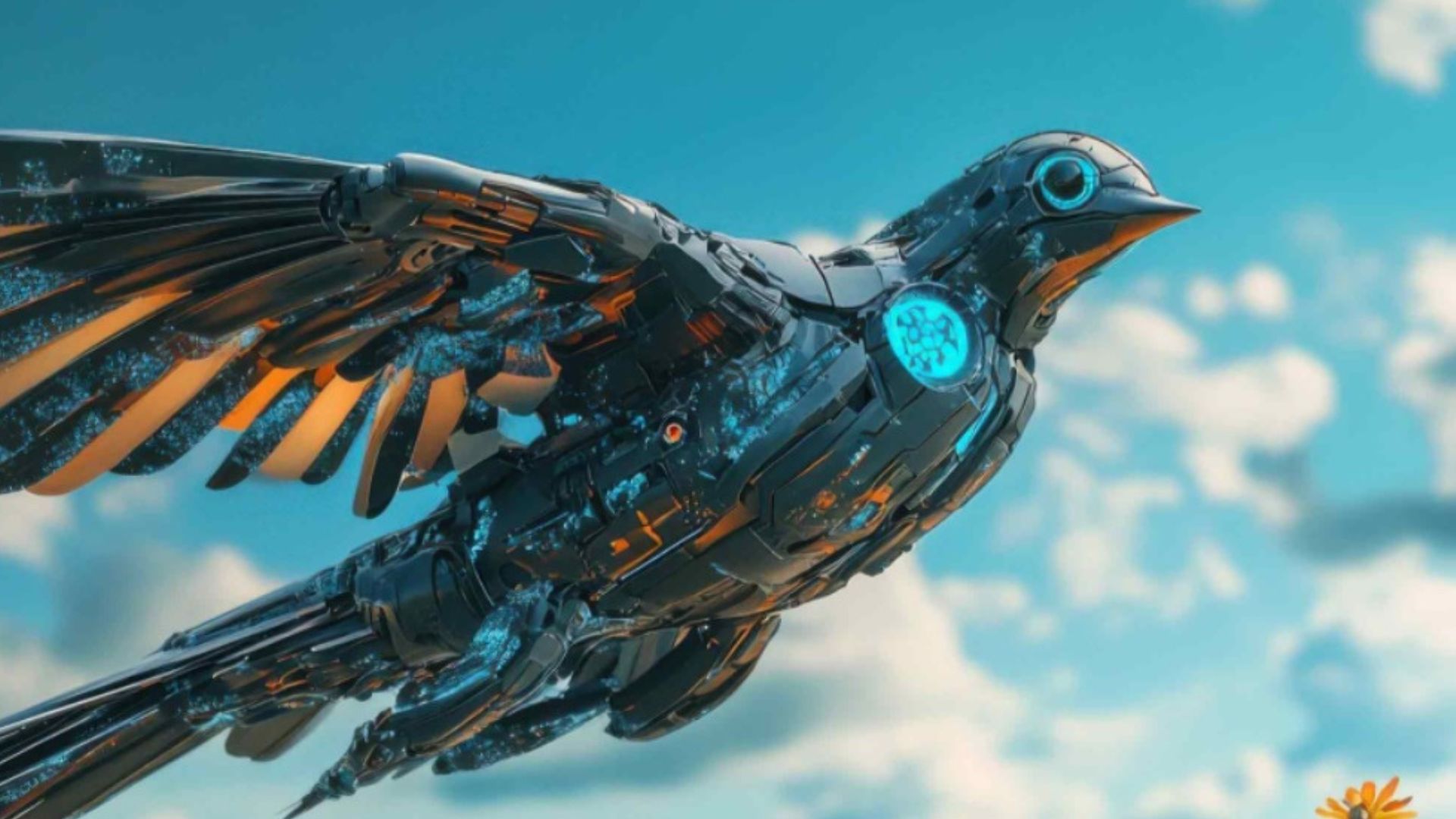
Engineers are developing bird-like robots with flapping wings that could transform drone technology by replacing traditional propellers with more flexible flight systems.
These robots, known as ornithopters, promise greater flexibility and control in the air. Unlike traditional drones, they move more naturally and can adapt quickly to changing conditions.
Researchers at Rutgers University have developed a new design that takes this idea further. Their latest model does not rely on motors, gears, or complex mechanical parts. Instead, it uses advanced materials that respond directly to electricity.
The study, published in Aerospace Science and Technology, explains how this system works. The team describes their invention as a solid-state ornithopter, which means it has no moving mechanical joints.
READ ALSO: What is China Zorrilla? Titanic-sized Electric Ferry Set for Global Records
Professor Onur Bilgen explains the concept in simple terms. “We apply electricity to the material, and it moves the wing directly,” he said. “We don’t need extra parts like motors or linkages.”
The secret lies in something called the piezoelectric effect. This is a property of certain materials that allows them to change shape when voltage is applied.
In this design, the wings are made from a mix of carbon fiber and a special piezoelectric layer. When electricity flows through it, the wing bends, twists, and flaps, just like a real bird’s wing.
Bilgen said, “The material acts like muscles and nerves, while the carbon fiber behaves like bones and feathers.”
WATCH ALSO: US firm’s new giant robot can help tackle wildfires
This simple design offers several advantages. Without heavy motors or gears, the robot becomes lighter. It can also respond faster to the environment, just like birds do when they fly through the wind.
Birds are able to adjust their wings instantly. They can twist, flex, and change shape mid-air. Traditional drones, with rigid propellers, cannot match this level of control.
This makes ornithopters especially useful for complex tasks. They could be used in search-and-rescue missions, where drones must navigate tight spaces. They could also help monitor the environment or inspect hard-to-reach areas, such as bridges or power lines.
In cities, these robots could even deliver packages. Their flexible wings would allow them to navigate around buildings, wires, and people more safely than standard drones.
Another key part of the research is a powerful computer model developed by the team. This model brings together all the physics involved in flight: motion, aerodynamics, electricity, and control systems.
With this tool, engineers can test new designs on a computer before building them. This saves time, reduces costs, and speeds up innovation.
Bilgen said, “We can study designs that are not yet possible to build. The model helps us look into the future.”
However, there is still a challenge. Current piezoelectric materials are not strong enough for full-scale performance.
“Today’s materials are not capable enough,” Bilgen said. “But our model shows what could be possible with better materials.”
The idea of bird-like flying machines is not new. Engineers have been experimenting with ornithopters for years. But most designs still depend on motors and mechanical systems to flap the wings.
WATCH ALSO: China’s new humanoid robot can perform combat moves
These systems often fall short. They cannot fully replicate the smooth and continuous motion of natural wings. The new approach removes that complexity. Using smart materials simplifies and improves the design’s efficiency.
Bilgen emphasized that the goal is not just to copy nature. “We want to learn from nature and go beyond it,” he said.
The same technology could be used outside aviation. The researchers are also exploring its use in wind turbines. A turbine blade works like a rotating wing. If its shape could change in real time, it might capture wind energy more efficiently.
Bilgen explained, “If we can control how air flows over the blade, we can improve performance.” This could lead to better renewable energy systems in the future.
The research is still in its early stages. But it offers a glimpse into a new way of thinking about flight.
Instead of rigid machines powered by motors, future drones may look and move like living creatures, light, flexible, and highly responsive. If these ideas become reality, the skies of the future may be filled with machines that fly not like helicopters, but like birds.