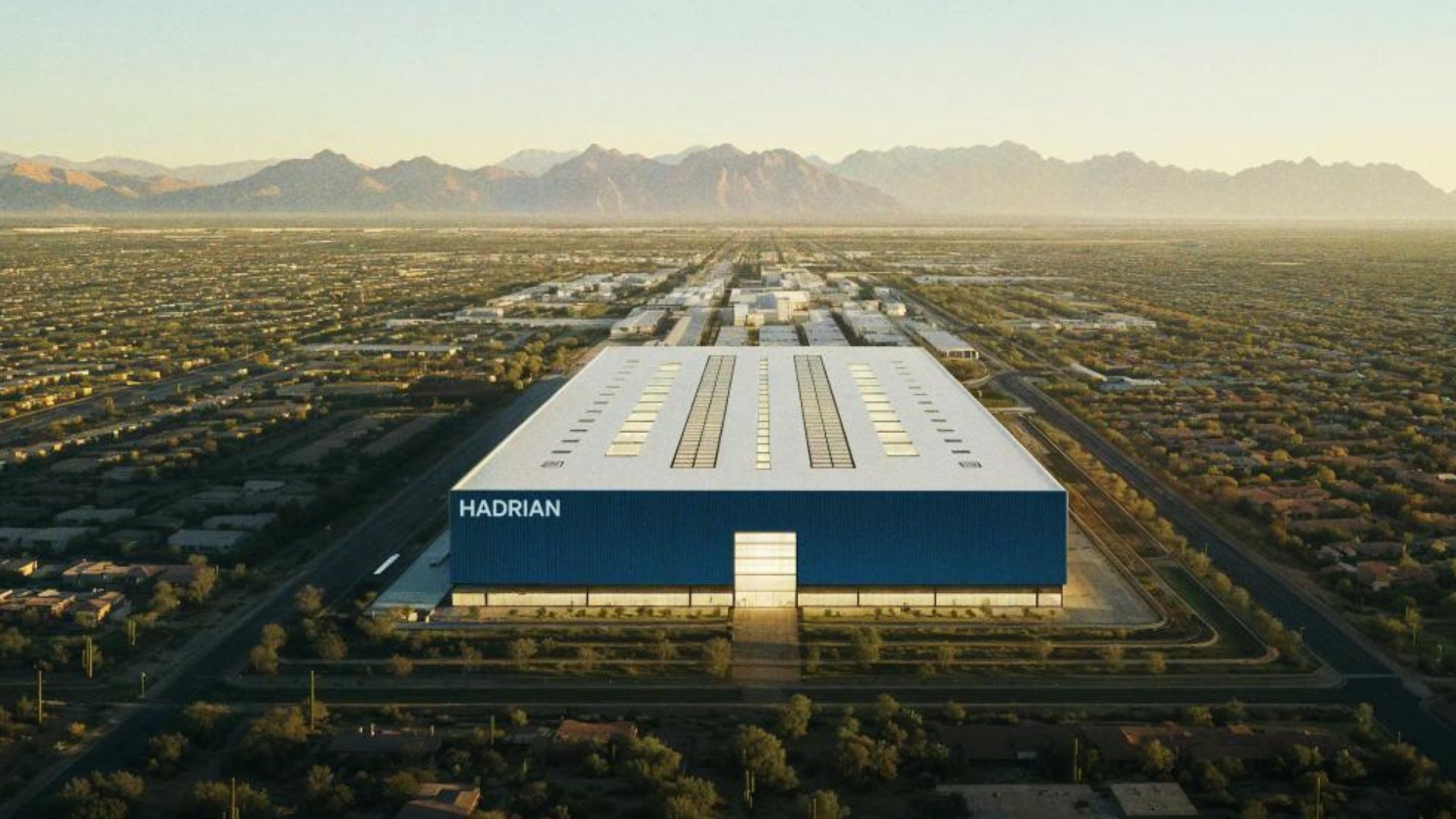
The US Navy is making a bold $900 million investment in highly automated factories to fix its submarine production challenges.
The goal is to increase output while skilled workers are in short supply.
The contract has been awarded to Hadrian, a fast-growing advanced manufacturing company. The funding will support the development of three new facilities to build critical submarine components.
This investment comes as the Navy struggles to meet its submarine construction targets. Delays and workforce shortages have slowed production in recent years.
Navy Secretary John Phelan highlighted the importance of this shift. He said the new factories are not traditional manufacturing sites.
“This is not just another factory,” Phelan said. “Hadrian builds integrated production systems where raw material goes in and test-ready hardware comes out.”
READ ALSO: Lenovo’s 1000Wh Battery Reveal Signals More Than Just Better Battery Life
He explained that a single system can now do the work that once required many suppliers. This approach is expected to simplify the supply chain and improve efficiency.
The factories will operate continuously, helping to speed up production timelines.
Automation to Solve Workforce Shortage
One of the Navy’s biggest challenges is the shortage of skilled workers. Hadrian CEO Chris Power said automation is the only practical solution.
“The number-one problem the Navy identified is that we cannot find enough skilled workers,” Power said. “We have to automate our way out of this problem.”
The new factories will rely heavily on robotics and artificial intelligence. These technologies will handle welding, machining, assembly, inspections, and testing.
WATCH ALSO: Researchers from German have developed a diving robot that can easily collect underwater waste
The goal is to automate up to 80 percent of the work. This will allow fewer workers to manage more tasks more efficiently.
Another key feature of the new system is simplified training. Workers can be trained in as little as 30 days.
Power said the aim is not to replace humans but to help them work alongside machines.
“It is about making factories five to ten times more productive,” he said. “At the same time, we make manufacturing more accessible.”
Workers will supervise and operate multiple robots, eliminating manual labor. This approach could reshape how shipbuilding workforces are trained and deployed.
Focus on Key Submarine Programs
The first facility, known as Factory 4, is being built on a 46-acre site in Alabama. It is expected to employ up to 1,000 workers.
The factory will produce components for Columbia-class and Virginia-class submarines. These are among the most critical programs for the Navy.
The facility will use Hadrian’s AI-powered software platform, called Opus. This system will manage the entire production process.
Power said the system will meet strict safety standards, including those required under the US Navy’s SUBSAFE program.
READ ALSO: UF Builds First Liquid 550-Pound Rocket Engine, Achieves Historic Hot-fire Success
A Larger Expansion Plan
Factory 4 is part of a larger $2.4 billion plan. Hadrian aims to build three facilities in total.
The other two factories will focus on producing castings, forgings, and other essential materials. These are often difficult to source and can delay submarine construction.
The Navy has already invested about $9.8 billion since 2018 to strengthen its submarine industrial base. This includes funding for supplier upgrades and workforce expansion.
The new contract adds to that effort and focuses more on automation and efficiency.
WATCH ALSO: World’s largest nuclear fusion research project ITER has reached a new milestone
Despite these efforts, the Navy still faces a major production gap. Vice Admiral Robert Gaucher recently described the situation as a “math problem.”
He explained that building submarines requires an enormous amount of labor.
A standard Virginia-class submarine needs about 13 million work hours. A more advanced version requires 18 million hours. A Columbia-class submarine takes around 34 million hours.
In total, the Navy needs about 70 million work hours each year to meet its target of building two attack submarines and one missile submarine annually.
Three Key Solutions
Gaucher said there are three ways to solve the problem. The Navy must expand its workforce, improve productivity, and ensure the timely delivery of parts.
However, hiring remains difficult. Even with higher wages and increased recruitment, there are not enough trained workers available.
This is where automation becomes critical. It can help bridge the gap between demand and available labor.
READ ALSO: Targets Weeds, Not Crops: China’s ‘Zero-Pollution’ Breakthrough Can Replace Chemical Herbicide
The Navy has already started using robotics in shipyards. However, Hadrian’s approach is different.
Instead of adding automation to existing systems, these factories are designed around automation from the start.
This allows for greater flexibility and efficiency. It also enables the factories to handle sudden or unexpected orders.
“You need these factories ready at all times,” Power said. “With automation, we do not have to constantly hire or lay off workers.”
READ ALSO: China’s Industrial Robot Surge Hits 31%: What’s Driving This Sudden Factory Shift?
Factory 4 is expected to begin delivering materials within a year. It should reach full production capacity in about two years.
This model can transform how the Navy builds its submarines. It may also influence broader defense manufacturing strategies in the future.
The $900 million investment reflects a clear shift. The US Navy is betting that automation and AI can solve one of its most pressing challenges.