China has started operations at the world’s largest compressed air energy storage (CAES) facility, marking a major step in expanding long-duration energy storage technologies.
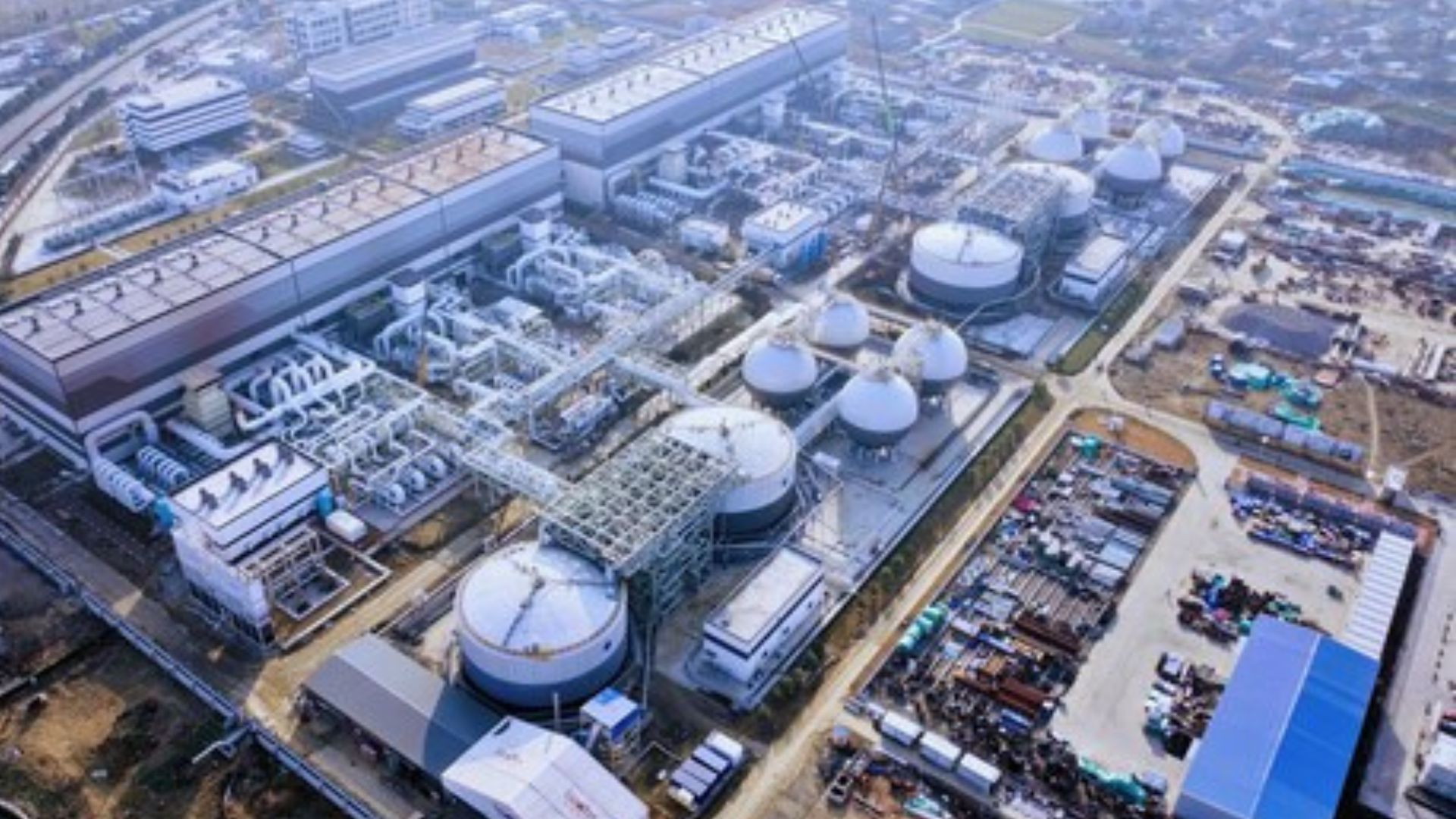
The Huai’an Salt Cavern Compressed Air Energy Storage project, located in Jiangsu Province, has a capacity of 600 megawatts (MW) and 2.4 gigawatt-hours (GWh). With both units now operational, the plant has become the world’s largest CAES facility.
Although compressed air storage still accounts for a small share of China’s total energy storage market, the sector is growing rapidly as larger projects are developed.
The Huai’an project stores energy in large underground salt caverns. These caverns are located 1,150 to 1,500 meters below the ground and have a combined volume of about 980,000 cubic meters.
READ ALSO: https://modernmechanics24.com/post/why-ai-prosthetic-arms-feel-unsettling/
The facility operates two 300 MW units that work together to store and release energy as needed.
During times of low electricity demand, the system compresses air and pumps it deep into the underground caverns. When electricity demand rises, the stored air is released to spin turbines and generate power.
This process helps the power grid by supplying electricity during peak hours. It also stabilizes the grid by supporting frequency regulation and peak load management.
The project uses high-temperature adiabatic compression technology, which does not rely on additional fuel combustion.
The system stores heat using molten salt and pressurized thermal water. It allows the plant to reuse thermal energy during electricity generation. According to project developers, the system achieves an energy conversion efficiency of about 71 percent.
According to experts, this approach makes compressed air storage more efficient and environmentally friendlier than earlier technologies.
The first unit of the facility, with a capacity of 300 MW, reached full-load operation in December 2025. The second unit was commissioned soon after and successfully connected to the power grid.
WATCH ALSO: https://modernmechanics24.com/wp-content/plugins/feeds-for-youtube/img/lightbox-placeholder.png
Project officials said the second unit achieved grid connection and full power output on its first attempt.
“The successful operation of the second unit provides valuable engineering experience for China’s evolving power system,” project developers said.
China has rapidly expanded its energy storage sector to support the increasing share of renewable power, such as solar and wind.
Compressed air energy storage is gaining attention because it can store electricity for long periods and deliver large amounts of power when needed.
Earlier in January 2026, the world’s largest CAES facility was a 300 MW / 1.5 GWh plant in Hubei Province, also in China. The Huai’an project has now doubled that capacity.
However, another project is already under development in Sanmenxia’s Shanzhou district. The planned facility will have a capacity of 700 MW and 4,200 MWh, potentially becoming the largest in the world once completed.
The Huai’an CAES station required an investment of approximately $520 million.
READ ALSO: https://modernmechanics24.com/post/bizarre-worlds-first-floating-hotel/
Major Chinese manufacturers supplied key components for the project. Harbin Electric Corporation and Shanghai Electric provided essential equipment, including air turbine units, generators, electric motors, and molten-salt storage tanks.
Once fully operational, the plant is expected to generate about 792 gigawatt-hours of electricity every year.
Projects like this will play an important role in building a more flexible and reliable energy system as renewable power continues to grow.