Scientists at the University of Oxford have resolved a decades-long debate about the moon’s ancient magnetic field. The team discovered that the moon experienced short bursts of strong magnetism billions of years ago, but for most of its history the field was weak. The finding explains why Apollo mission samples showed conflicting evidence.
Researchers led by Claire Nichols, an associate professor at Oxford, revisited rock samples collected during NASA’s Apollo program. The study was published Feb. 26 in the journal Nature Geoscience.
For years, planetary scientists disagreed about the moon’s magnetic past. Some Apollo samples showed strong signs of magnetism, suggesting the moon once had a field comparable to Earth’s. But theory suggested the small moon could not sustain such a powerful field for long periods.
READ ALSO: https://modernmechanics24.com/post/iran-building-nuclear-weapon/
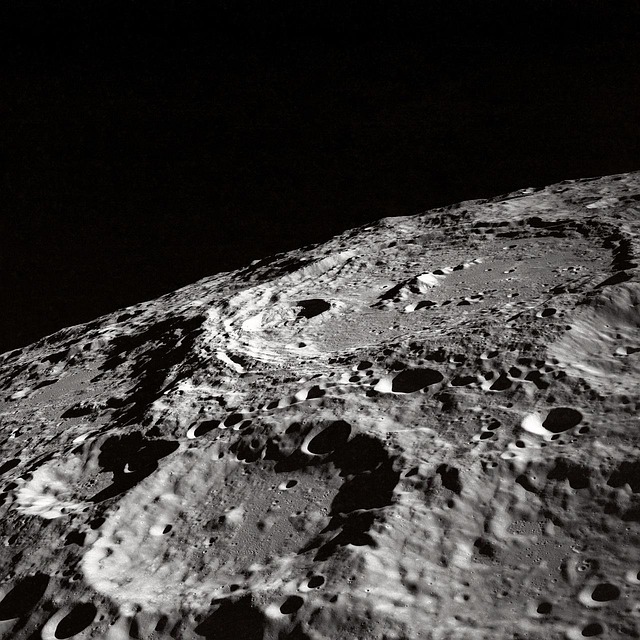
The Oxford team found the disagreement came from a sampling bias. The six Apollo missions landed in flat, dark plains called mare regions, which are rich in volcanic rocks that recorded magnetic events. These rocks told only part of the story.
The researchers discovered a link between titanium-rich rocks and strong magnetic fields. Samples with high titanium levels recorded strong magnetism, while low-titanium samples showed weak fields. This suggests that melting of titanium-rich rocks deep inside the moon created brief but intense magnetic bursts.
Computer models confirmed that random sampling of the lunar surface would rarely capture these short magnetic events. Nichols explained that the Apollo samples represent extremely rare episodes lasting a few thousand years, but scientists had interpreted them as representing half a billion years of lunar history.
For most of the moon’s early history, between 3.5 and 4 billion years ago, the magnetic field was weak. Strong episodes lasted no more than 5,000 years and possibly as short as a few decades. This matches what dynamo theory predicts for a small body like the moon.
Understanding the moon’s magnetic past matters because magnetic fields shield planets from solar wind. It also helps scientists learn how planetary interiors evolve, how cores cool, and why geologic activity fades. The moon’s shutdown offers a comparison to why Earth’s magnetic field persists.
WATCH ALSO: https://modernmechanics24.com/post/drdo-akhash-ng-missile-trials-success/
NASA’s upcoming Artemis program will explore new regions of the moon. Researchers hope to test their predictions and further unravel the history of the moon’s vanished magnetic field.