Collaboration can be a beautiful thing, especially when people work together to create something new. Take, for example, a longstanding

Trinity College Dublin researchers analyzing NASA Galileo data propose that a spider-like scar on Jupiter’s moon Europa formed from a salty brine eruption, similar to “lake stars” on Earth. The finding hints at shallow liquid water reservoirs, a key target for the upcoming Europa Clipper mission.

Atomic Canyon and Diablo Canyon Power Plant leveraged the world-leading Frontier supercomputer at Oak Ridge National Laboratory to create the first AI models trained specifically on nuclear industry data. This breakthrough aims to save 15,000 hours a year in document search time, accelerating licensing and safety operations.

Firefly Aerospace will host Volta Space Technologies’ wireless power receiver on its Blue Ghost Mission 2 to the Moon’s far side. This key test for Volta’s LightGrid system aims to prove the viability of a laser-based power network, a critical utility for future permanent lunar operations.

A team led by Dr. Josep M. Trigo-Rodríguez at Spain’s Institute of Space Sciences (ICE-CSIC) has published a landmark study in the Monthly Notices of the Royal Astronomical Society, using meteorite analysis to assess the real-world feasibility of asteroid mining, shifting the focus from precious metals to vital resources like water.

Cambridge University historian Dr. Krisztina Ilko has uncovered the Augustinian order’s forgotten history of “green-fingered” miracles—from dragon-slaying that restored fertility to multiplying cabbages. Her research, published by Oxford University Press, re-frames the medieval Church’s deep ties to the rural landscape and eco-conscious spirituality.

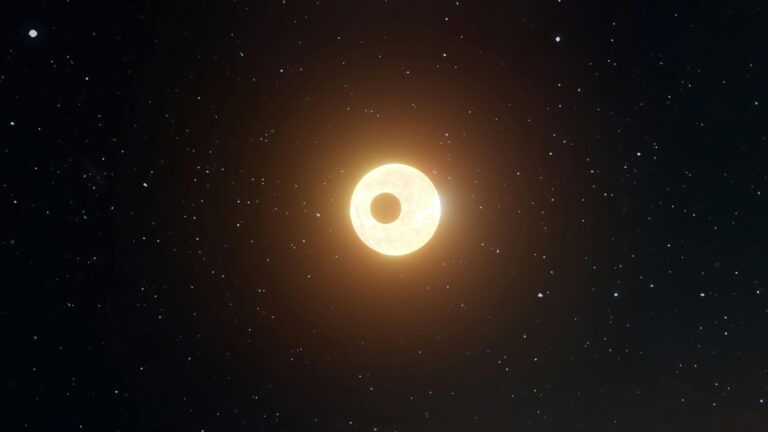
An international team led by University of Turku researchers has determined the doomed binary star system V Sagittae is spiraling toward a collision. Their merger will produce a type Ia supernova so bright it could be visible to the naked eye during the day, possibly within the next 100 years.

In a paper published today in the journal PeerJ, researchers at the Smithsonian’s National Museum of Natural History worked with

A soft, skin-like patch from Stanford University can send and receive 128 ASCII characters—the complete English alphabet, digits, and punctuation—using
We uphold the highest standards of journalistic integrity and ethical reporting, ensuring that truth and transparency prevail in all our content.
contact@modernmechanics24.com