

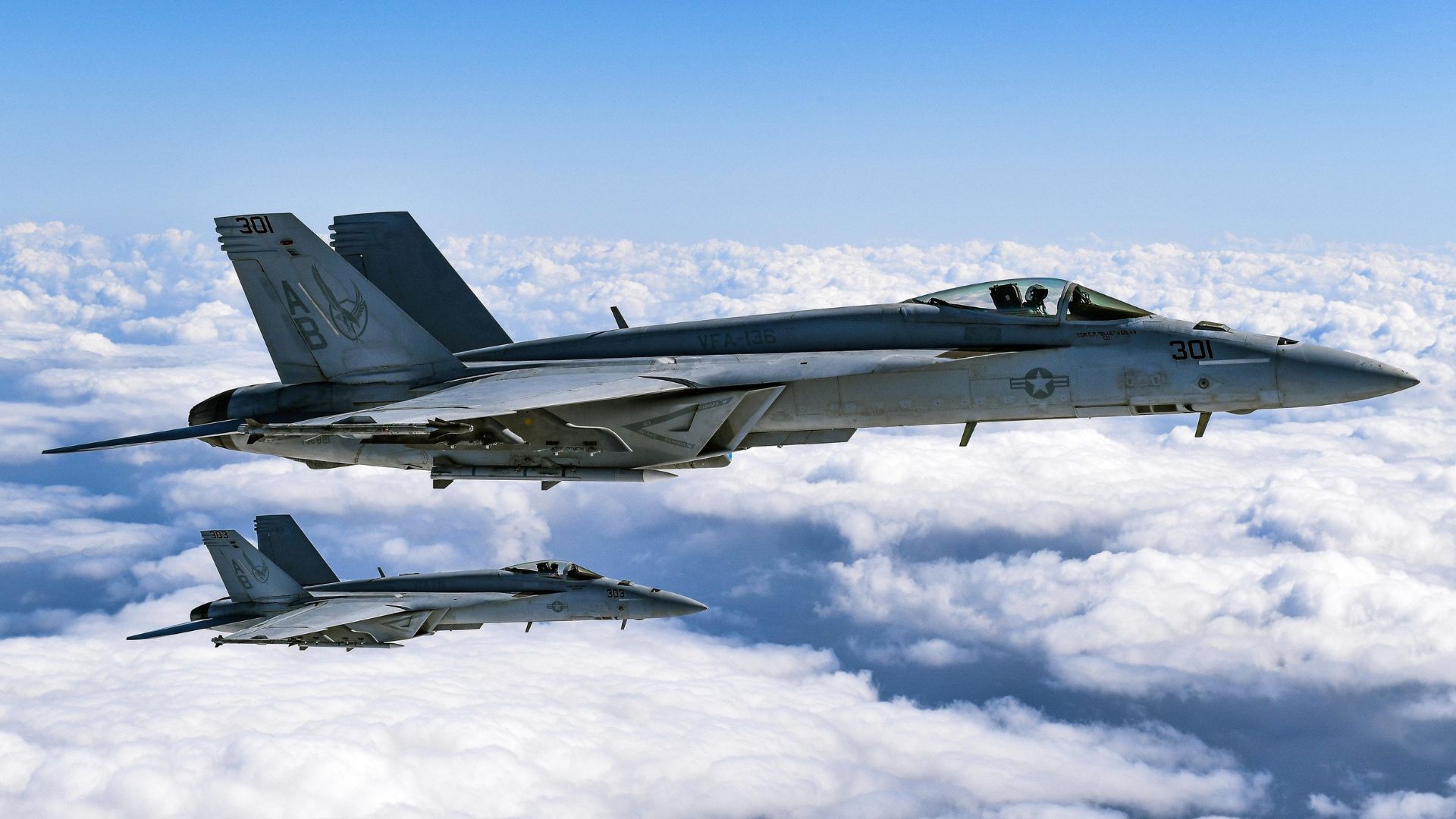
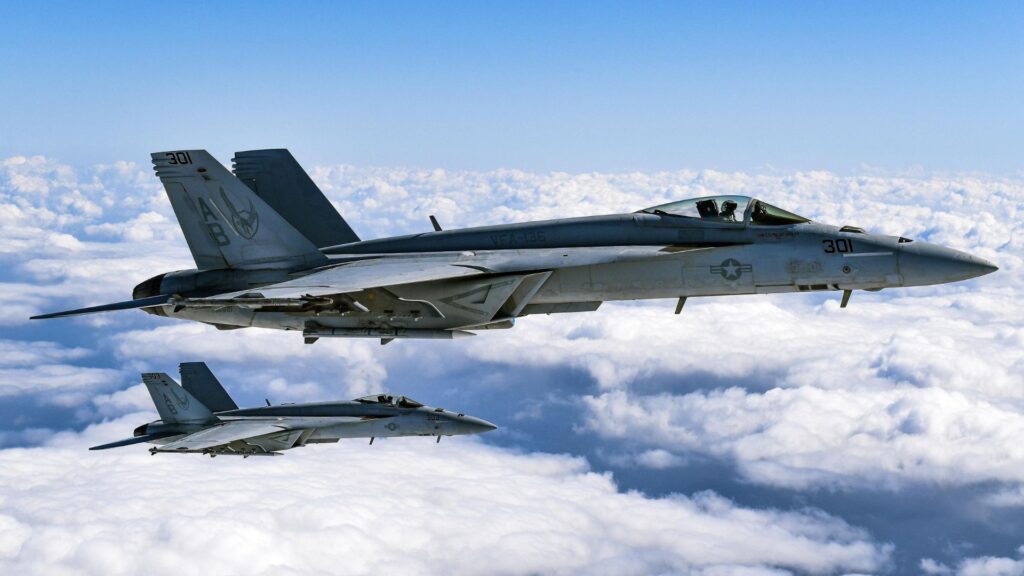
The US Navy has completed a flight test of Castelion’s Blackbeard hypersonic strike missile aboard an F/A-18E/F Super Hornet.
The aircraft carried two Blackbeard test articles during the flight at Naval Air Station Patuxent River in Maryland. Neither test article was released or live-fired during the event, but the flight marks another step toward future operational testing.
The US Navy said the aircraft and both test articles returned safely to the airfield. The service described the flight as a developmental milestone on the path toward Early Operational Capability (EOC). Additional flight testing will take place before Blackbeard reaches planned live-fire stages.
Blackbeard Moves Toward Testing
Blackbeard is being developed as a high-speed strike weapon for carrier-based aircraft. It is intended to give Navy strike fighters a long-range option against targets protected by anti-access and area-denial systems. These systems are designed to make it harder for military aircraft and ships to operate inside a contested area.
Hypersonic weapons generally travel above Mach 5, reaching speeds over 3,800 mph (about 6,175 km/h), using aerodynamic designs and flight controls suited to high-speed operations.
Blackbeard is also being developed with maneuverability in mind, allowing the missile to adjust its flight path rather than follow a simple ballistic trajectory. The Navy describes the weapon as a lower-cost hypersonic option designed for mass production.
READ ALSO: https://modernmechanics24.com/post/azersilah-orbiter-1km-uav-range/
The missile is part of the US Navy’s effort to increase the number of weapons available across a theater. A lower unit cost can allow forces to maintain larger weapon stocks than would be possible with a smaller inventory of more expensive systems.
The approach is linked to the US Navy’s Hedge Strategy, which emphasizes weapons that can be produced and fielded rapidly.
Super Hornet Provides Test Platform
The F/A-18E/F Super Hornet is the US Navy’s main carrier-based multirole fighter and provides the aircraft platform for Blackbeard’s development flights.
During the latest test, the fighter carried two Blackbeard test articles without releasing either one. This allowed engineers and test teams to gather flight data while assessing the missile-and-aircraft combination.
The test took place at Naval Air Station Patuxent River, a major US Navy location for naval aviation development and testing. Safe recovery of the aircraft and both test articles allowed the program to move forward with additional developmental flights. The next stages are expected to provide more information before the missile enters live-fire testing.
Vice Adm. John “Doc” Dougherty IV, commander of the Portfolio Acquisition Executive Aviation and Naval Air Systems Command, said the flight represents another milestone toward EOC.
He also linked the effort to acquisition reforms included in the 2026 National Defense Authorization Act and the Department of War’s Acquisition Transformation Strategy.
Industry Model Supports Production
Castelion is developing Blackbeard through a partnership led by the Future Capability Development and Integration Aviation Rapid Capabilities Cell within the Portfolio Acquisition Executive Aviation. The Naval Air Warfare Centers and the Department of the Navy Rapid Capabilities Office are also supporting the program. This structure brings together Navy organizations involved in technology development, testing and rapid acquisition.
The program also draws on Small Business Innovation Research initiatives and private venture capital. That model is intended to share early research and development costs beyond traditional government funding channels. The Navy says this approach can help nontraditional defense companies move promising technologies from development toward procurement.
Production planning is another part of the Blackbeard effort. The Navy is pursuing a manufacturing approach that can support faster production at scale if the weapon progresses through testing and meets its required standards. This focus ties to broader US efforts to expand industrial capacity and improve readiness.
Long-Range Carrier Strike Role
For the carrier fleet, Blackbeard is intended to add a high-speed strike option that existing fighter aircraft can carry. Its planned combination of speed, maneuverability and lower-cost production is aimed at supporting larger weapon inventories. The concept also gives carrier aviation another way to strike targets in heavily defended environments.
The weapon is being developed at a time when long-range strike systems are receiving greater attention across modern military forces. Carrier aircraft normally need to operate within a complex threat environment, where air defenses, long-range missiles and other systems can restrict access to target areas. A weapon that extends the reach of a carrier-based fighter can reduce the need for the aircraft itself to approach every target.
READ ALSO: https://modernmechanics24.com/post/us-marines-regent-electric-seaglider/
Blackbeard is still a developmental system, so its final performance and operational configuration remain subject to testing. The latest flight did not include a missile release or live firing, meaning the program has not yet completed the stages needed to demonstrate the weapon in an actual launch sequence. Further tests at Patuxent River will provide additional data as the Navy works toward future live-fire events and EOC.
The US Navy’s immediate focus is now on continued developmental flight testing and preparation for those later milestones.
If Blackbeard completes the required test program, it is intended to provide the carrier fleet with a rapidly produced hypersonic strike weapon. The coming flight and live-fire campaigns will determine how the missile progresses from a development project toward operational service.







One Response