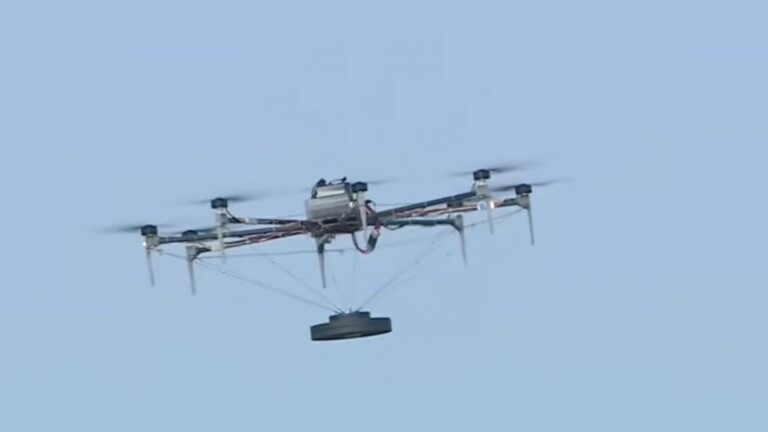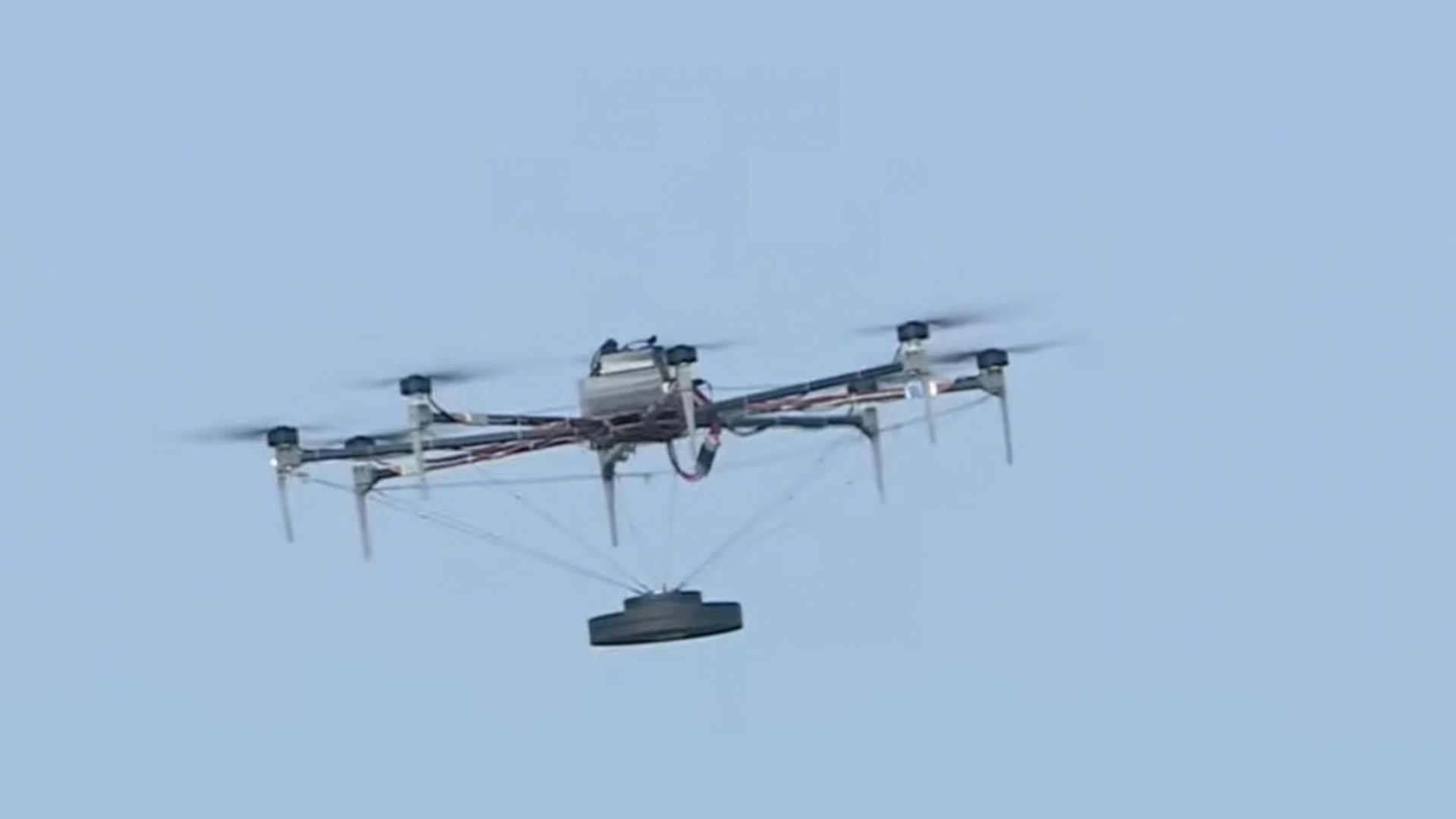
A team of aerospace engineering students at Texas A&M University has demonstrated a drone capable of carrying more than twice its own weight.
The 50-pound aircraft transported 110 pounds of barbell weights across four nautical miles in 12 minutes during the first DARPA Lift Challenge. The result placed the team among only six of 87 competitors that completed the full course.
The US Defense Advanced Research Projects Agency (DARPA) organized the competition to test heavy-lift unmanned aircraft designs.
Teams were required to carry as much weight as possible across a four-nautical-mile course at the National Museum of the US Air Force in Dayton, Ohio. The event was held on August 9 after months of development by teams from across the US.
The competition attracted hundreds of concepts during its initial phase. Around 480 teams submitted concept papers in early 2026, with 110 later invited to the flight stage. Of those, 87 teams ultimately competed at the field event, making completion of the full course a major technical hurdle for participants.
Lightweight Frame Supports Heavy Payload
The Texas A&M aircraft was developed by the university’s Advanced Vertical Flight Laboratory.
Aerospace engineering professor Dr. Moble Benedict led the project with five graduate students who worked through multiple designs before producing the final aircraft. Their main engineering challenge was reducing the drone’s weight while maintaining enough strength to carry a much heavier payload.
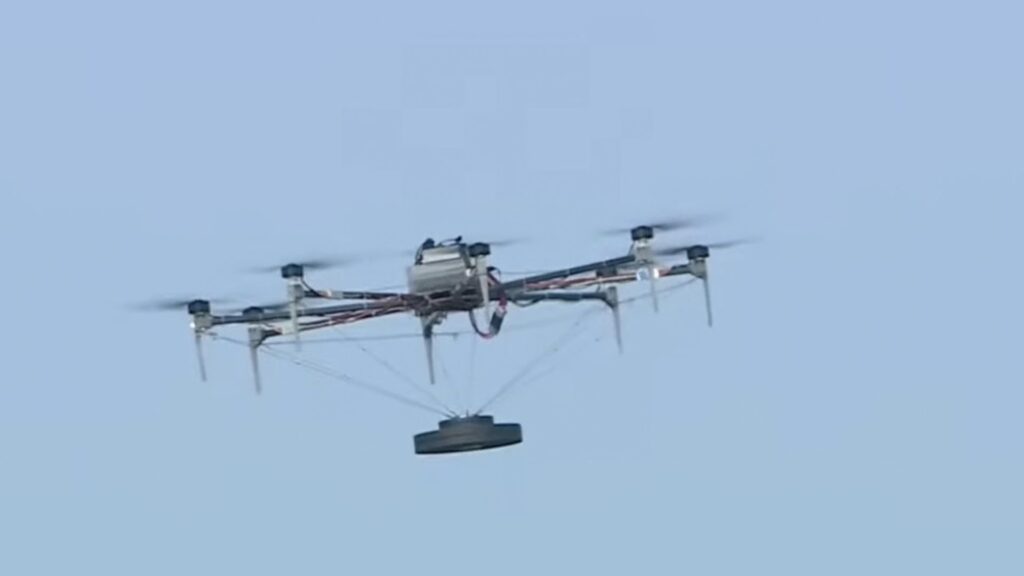
The final design weighed 50 pounds and used a carbon-fiber frame with a battery mounted at its center. Eight arms extended from the frame and supported the motors and propellers that provided the aircraft’s lift. The arrangement allowed the drone to carry 110 pounds while completing the required four-nautical-mile flight.
The frame itself weighed only six pounds. Instead of relying heavily on nuts and bolts, the team bonded parts of the structure together to reduce unnecessary hardware and structural mass. Testing showed that the frame could withstand payloads of up to 180 pounds, giving the researchers a way to assess the design beyond the competition’s required load.
READ ALSO: https://modernmechanics24.com/post/us-navy-tests-blackbeard-hypersonic/
Eight Months From Concept To Flight
The team developed the aircraft through several prototype stages. An earlier 26-pound version carried a 100-pound payload and remained airborne for five minutes. The team used the results from that aircraft to refine the structure, propulsion system and overall configuration before producing the final competition model.
The entire development process took eight months. Benedict said a project of this complexity would normally take a couple of years, but the team relied heavily on design studies and computer simulations to shorten the development cycle. Physical construction took only a few weeks after much of the design work had been completed virtually.
The choice of battery power created another engineering constraint. Team member Cayden Brown explained that a battery retains almost the same weight throughout a flight, unlike fuel, which becomes lighter as it is consumed. More than half of the drone’s weight came from its battery, forcing the team to account for that mass throughout the entire mission.
Potential For Practical Missions
The aircraft’s performance also stands out because of its payload-to-weight ratio. Benedict said many drones currently available on the market are designed around a roughly one-to-one ratio, meaning the aircraft carries a payload comparable to its own weight. The Texas A&M prototype carried 110 pounds while weighing just 50 pounds itself.
Cost was another part of the team’s design approach. The materials used to build the prototype cost about $10,000, according to Benedict. A relatively low material cost gives the project room for further development and testing without requiring the budget associated with some specialised heavy-lift aircraft.
The researchers see several possible applications for the technology. Heavy-lift electric drones may help move supplies and equipment during disaster response, when damaged roads or difficult terrain can restrict access. Similar aircraft may also be used for package delivery, logistics, and surveillance.
The Texas A&M aircraft remains a prototype, and it will need further development before it becomes an operational system.
The team plans to continue refining the design, with improvements in efficiency, reliability, payload capacity and flight performance likely to shape future versions. The DARPA challenge has given the students a working platform to develop a compact electric aircraft designed to carry unusually heavy loads.