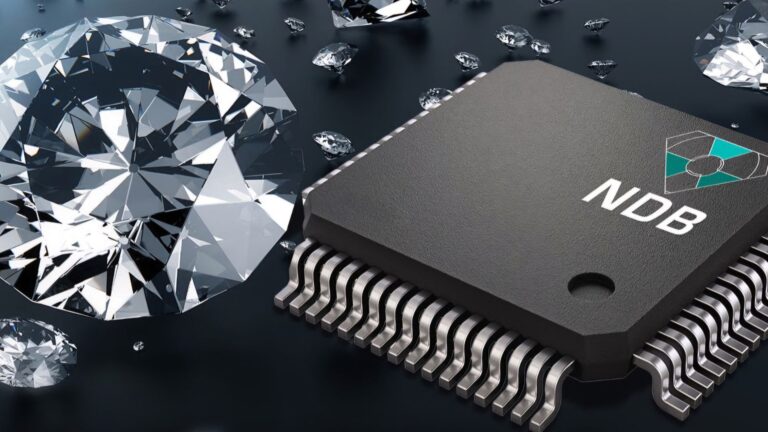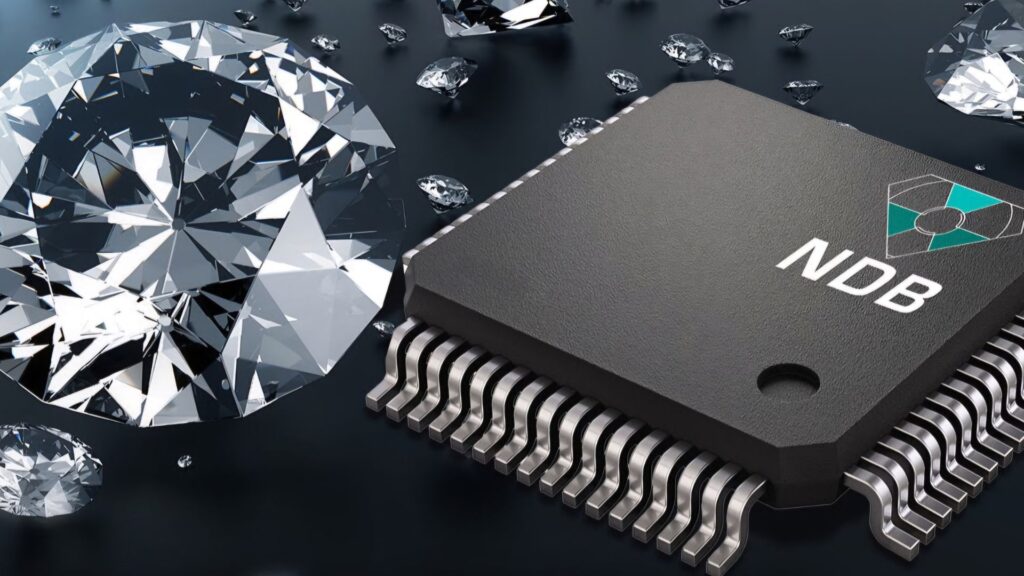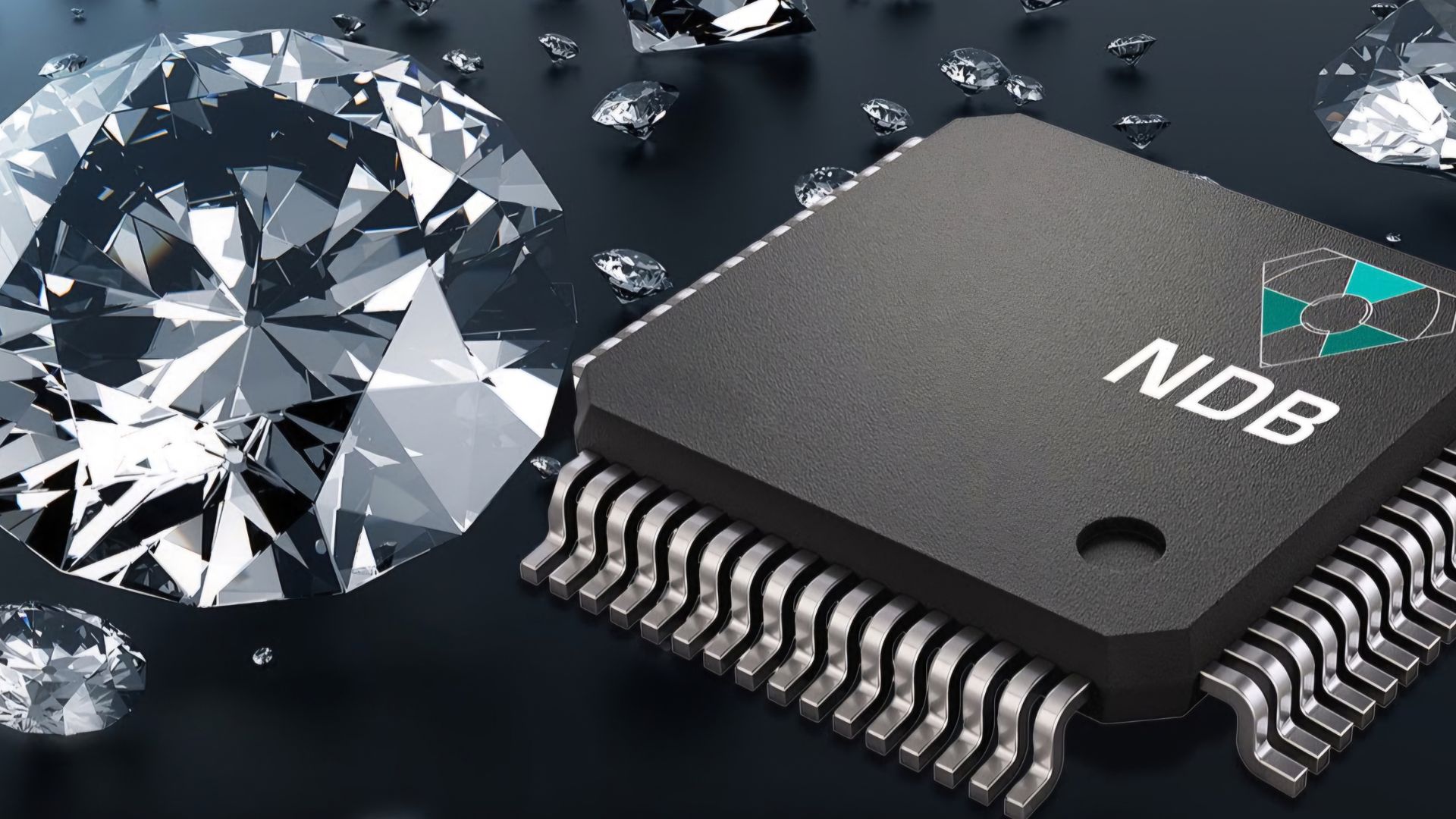
Nuclear Diamond Batteries Inc. is examining a new way to power long-life wireless sensors as the global LoRaWAN ecosystem reaches 150 million connected devices.
Through its majority-owned subsidiary AtomiQ Inc., the company has published a white paper on combining betavoltaic nuclear micropower with LoRaWAN connectivity.
The proposed “Perpetual Sensor” architecture targets deployments where replacing conventional batteries is expensive, difficult, hazardous, or impractical.
The paper, titled The Perpetual Sensor: Nuclear Diamond Batteries for LoRaWAN and the Next Generation of Long-Life IoT, examines the technical and commercial case for nuclear-powered wireless sensors.
It focuses on low-power devices that collect information and send it over long distances without requiring frequent physical maintenance. The company is presenting the work as an engineering and commercialization pathway rather than a description of an existing commercial product.
The proposal is based on betavoltaic power generation. A betavoltaic device converts energy released by radioactive decay into electrical power, providing a continuous low level of output instead of storing energy as a conventional chemical battery. The amount of usable power depends on factors such as the radioisotope, device design and operating requirements.
This operating model suits sensors that spend most of their time using very little power. A nuclear micropower source can continuously charge an energy-storage component such as a low-leakage capacitor or supercapacitor. When the sensor needs to measure a condition, process information or transmit a signal, the stored energy can provide the short power pulse required for that activity.
The white paper identifies LoRaWAN Class A devices as a relevant architecture for this approach. These devices generally remain in low-power states between sensing and communication events. That operating pattern allows a continuous low-power source to build an energy reserve between transmission cycles.
Greg Rubin, CEO of AtomiQ, said the company is not targeting every battery-powered sensor.
He said the focus is on locations where servicing a battery can become more difficult and costly than maintaining the sensor itself. Examples cited by the company include buried infrastructure, pipelines, bridges, mines, remote environmental stations and defense installations.
READ ALSO: https://modernmechanics24.com/post/us-navy-tests-blackbeard-hypersonic/
A 150 Million Device Ecosystem
The proposal’s timing follows rapid expansion in the LoRaWAN market. The LoRa Alliance reported on September 22, 2026, that the number of LoRaWAN-connected devices worldwide had reached 150 million. The organization said the ecosystem was growing at about 25% annually on a compound basis.
The LoRa Alliance also reported more than 695 certified devices and nearly 1,000 products available through its marketplace. More than 340 organizations were members of the alliance at the time of the announcement. Those figures point to an established hardware and connectivity ecosystem for low-power wide-area networks.
Several large deployments illustrate the scale of the existing network. ZENNER Connect reported more than 11.6 million sensors, while Netmore reported 11.2 million active devices. The Things Industries reported about 6 million connected devices, and Veolia reported more than 4 million active smart meters in France.
These systems cover applications such as utilities, industrial monitoring, agriculture, asset tracking and safety. For many deployments, maintaining the sensor itself can cost more when equipment is installed in difficult locations. A long-duration power source therefore addresses a specific operational issue rather than replacing the wider LoRaWAN technology stack.
The company calls its proposed architecture a “Perpetual Sensor.” The term describes the objective of extending unattended operating life and reducing routine battery replacement, rather than claiming that a physical sensor will operate forever. The useful operating period would still depend on the power source, electronics, environmental conditions and other components.
Applications And Energy Needs
NDBI’s white paper examines 19 potential application sectors. These include utility infrastructure, pipelines and oil and gas facilities, structural health monitoring, unattended defense sensors, environmental science, agriculture, mining, remote industrial monitoring, satellite-connected IoT and high-value asset monitoring.
Each application’s energy requirements can vary substantially. A sensor may consume more energy during measurement or transmission than it uses while waiting between operating cycles. This makes the relationship between continuous power generation, stored energy and reporting frequency an important part of the proposed design.
The paper, therefore, examines different energy budgets for sensor operation and communications. Its analysis considers how reporting intervals change with the continuous power source output, the sensor’s consumption, environmental conditions, and the energy needed for each transmission.
The approach aims to show how a small, steady energy supply can support periodic, higher-power activities.
This distinction is important for LoRaWAN sensors. A radio may operate only briefly during a communication event, while the sensor itself may require energy for measurements, processing, and other functions. In some applications, those sensing functions can account for a significant share of total energy use.
The proposed system is designed around four basic elements. These are continuous nuclear micropower generation, intermediate energy storage, low-power electronics and intermittent wireless communication. The architecture separates energy generation from the brief periods when the device requires more power.
NDBI identifies applications where access and servicing costs are major considerations as potential early markets. A buried sensor may require excavation for battery replacement, while an industrial installation may require workers and equipment to enter a hazardous area. Remote infrastructure may also require travel, equipment shutdowns, or other maintenance.
The company’s development roadmap starts with laboratory testing of energy budgets. It then proposes a bench-scale demonstrator, an environmental beacon, field trials, ruggedized modules and satellite-capable configurations. Application-specific products would follow only after validating the underlying system.
From Concept To Testing
NDBI has stressed that its proposed LoRaWAN system remains in development. The company has not yet built, certified or commercialized a nuclear-powered LoRaWAN sensor. The next step is to replace theoretical energy calculations with measured performance data.
Initial testing is expected to examine continuous source output and energy-storage efficiency. Researchers would also need to measure sensor consumption and the energy required for LoRaWAN transmissions. Those measurements would establish how often a complete system can collect and send data while maintaining its energy balance.
Rubin said the immediate objective is measurement, not another projection. He described the required demonstration as a complete energy balance showing how much power is generated, how efficiently that power is stored, how much energy the sensor and radio consume, and how often the system can transmit reliably.
The white paper also includes 12 figures and infographics. These cover device-class suitability, energy architecture, application priorities, development stages and potential market positioning. The material is intended to connect the proposed power technology with specific IoT operating requirements.
The commercial opportunity is also being assessed against wider market forecasts. Global Market Insights estimates the LoRaWAN market at about $3.7 billion in 2024 and projects it to reach about $75.8 billion by 2034, based on a 41.1% compound annual growth rate.
Mordor Intelligence uses a different market definition and estimates the LoRa and LoRaWAN IoT connectivity market at about $10.71 billion in 2025. It projects the market to reach about $44.76 billion by 2030, representing a 33.1% compound annual growth rate. These figures differ because of differences in market scope, definitions, and research methods.
Separate market estimates also cover the nuclear-battery sector. Mordor Intelligence forecasts a compound annual growth rate of about 15.8% for the betavoltaic segment of the broader nuclear-battery market through 2030.
Valuates Reports estimated the global betavoltaic battery market at about $3.4 million in 2023 and projected it at about $11.4 million by 2030, with an estimated 18.7% compound annual growth rate.
These forecasts are independent third-party estimates. They do not represent NDBI revenue forecasts, market-share projections or guarantees of commercial performance. Their differing estimates also show why market figures for emerging technologies must be considered within each research firm’s methodology.
Patent Platform And Next Steps
NDBI holds and manages its nuclear-battery technology portfolio through AtomiQ. The portfolio includes intellectual property covering nuclear-voltaic power generation, electrode structures and carbon nanomaterials. It forms part of the company’s broader effort to develop long-duration nuclear micropower systems.
The portfolio includes US Patent No. 12,394,534 B2, titled “Nuclear Voltaic Power-Source.” The patent covers a diamond-based nuclear-voltaic architecture designed to convert energy from radioisotope decay into electrical power.
The US Patent and Trademark Office has also issued Notices of Allowance for applications involving a high-porosity metal-organic framework electrode with carbon nano-onion structures. Other patent applications covering nuclear-battery technologies, materials and related architectures remain pending.
For the LoRaWAN concept, the immediate challenge is practical validation. The system needs to show that continuous low-level generation, energy storage, sensing and wireless communication can operate together within a useful energy budget. Field testing would then determine how the architecture performs under real environmental and operating conditions.
If laboratory testing meets the proposed targets, NDBI plans to move toward integrated prototypes and field demonstrations. Later stages outlined in the white paper include ruggedized designs, remote deployments and satellite-capable configurations. The results of those stages will determine whether the “Perpetual Sensor” concept advances from an engineering proposal into a commercial product line.