Ukraine has announced the world’s first combat mission in which an armed ground robot was transported to shore by an uncrewed surface vessel before carrying out an attack.
The operation reportedly took place on the Russian-occupied Kinburn Spit in the southern Mykolaiv region. Ukrainian officials say the mission demonstrates a new way to combine sea and land robotics in military operations.
The mission was conducted by Ukraine’s 123rd Separate Territorial Defense Brigade on an unspecified date in recent times. According to the brigade, the operation involved its 1st Unmanned Systems Battalion, commanded by Major Denys Gipik. Brigade commander Colonel Oleg Makukha supervised the mission.
A video released by the brigade shows the operation from several viewpoints. Footage captured by an aerial drone, the surface vessel, and the ground robot documents each stage of the mission. The recording provides a detailed look at how the robotic systems worked together.
The uncrewed surface vessel approached the shoreline under the cover of darkness before deliberately running onto the beach. It then lowered a front ramp, allowing a wheeled ground robot to drive directly onto land. After deploying the robot, the vessel turned around and left the area.
Armed Ground Robot Begins Combat
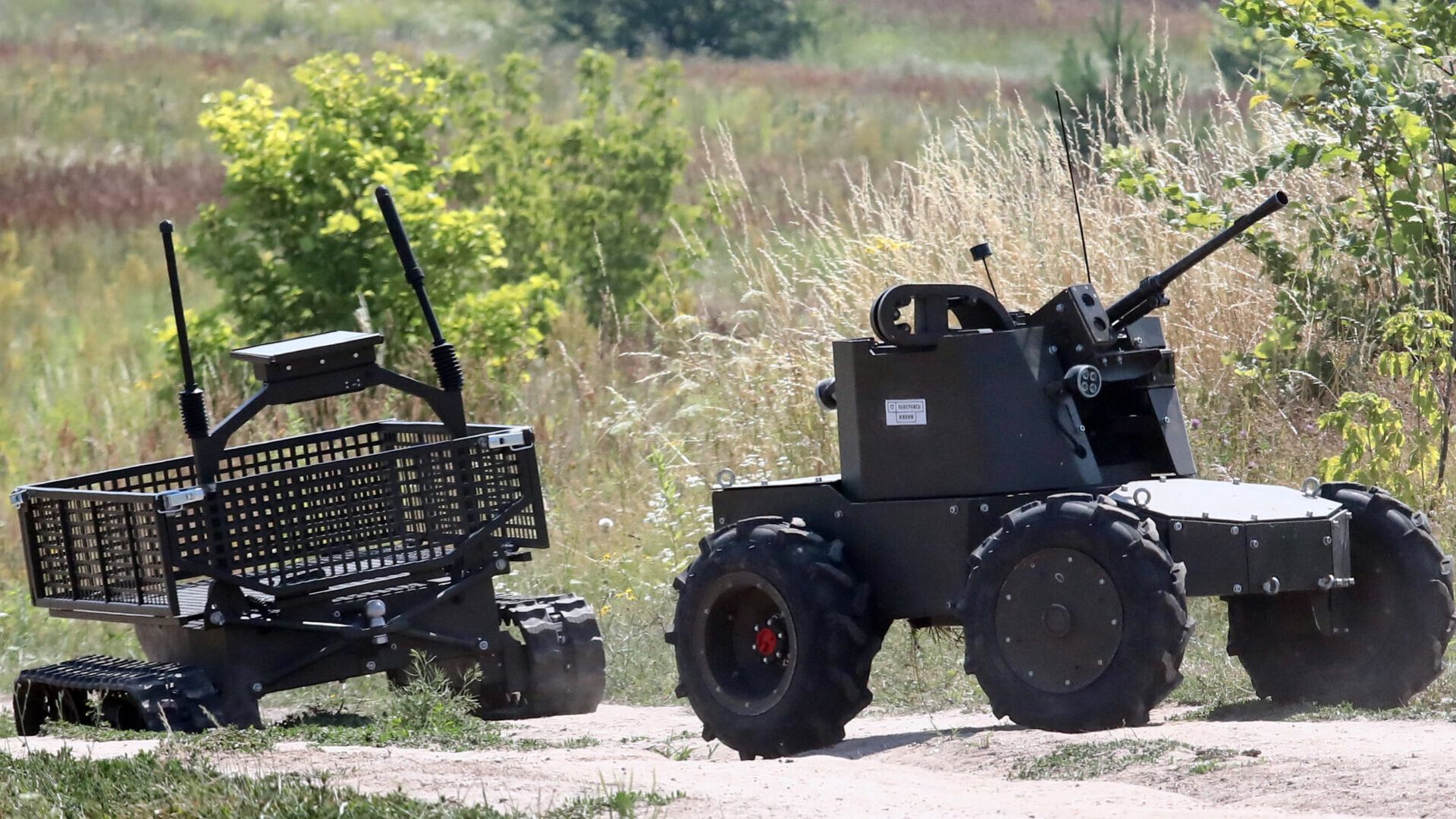
The armed ground vehicle moved inland immediately after reaching the beach. Equipped with a 7.62 mm machine gun, it engaged a target located beyond the shoreline. Ukraine has not confirmed whether the robot was recovered after completing its mission.
The vehicle appears to be part of the Rys family of robotic platforms developed by Roboneers. These systems use onboard computers to improve aiming accuracy while artificial intelligence assists with detecting, tracking, and engaging targets. Human operators still oversee missions, but automation helps reduce workload during combat.
The Rys platform is already used for several military tasks beyond direct combat. Different versions transport supplies, evacuate wounded soldiers, support engineering work, and assist with battlefield logistics. Other variants can also lay or remove mines depending on operational requirements.
Ukraine has steadily expanded its use of ground robots throughout the conflict. Earlier this year, officials reported that a Droid TW-7.62 robot destroyed two Russian drones before opening fire on enemy infantry during another engagement. The machine reportedly remained operational despite coming under artillery fire.
Strategic Coastal Location
The Kinburn Spit has remained one of the most contested coastal areas in southern Ukraine since Russia captured it during the summer of 2022. The narrow stretch of land overlooks the mouth of the Dnipro River, giving it significant military value. Russian forces used the location for electronic warfare systems, missile launches, artillery positions, and drone operations.
READ ALSO: US Drone Boats Hit Iran Naval Base in Historic Autonomous Strike That Changes Naval Warfare
Russia also built defensive positions, including concrete bunkers, to strengthen its control over the area. Ukraine has repeatedly launched reconnaissance missions, precision strikes, and small-scale raids against these positions over the past several years. These attacks aimed to weaken Russia’s ability to operate from the spit.
In June, the Institute for the Study of War reported that Russian troops had withdrawn from the area after facing sustained Ukrainian pressure. Ukraine’s Southern Defense Forces also stated that Russian forces evacuated surviving personnel while under heavy fire. Ukrainian marines later raised the national flag over the spit using a drone.
It remains uncertain whether Russian troops have returned to the location since those reports. As a result, the latest mission may have served both as a reconnaissance operation and as a demonstration of new military technology. Ukraine has not provided additional details about the mission’s final objectives.
Future Warfare Takes
The Kinburn Spit offers an ideal environment for testing robotic systems because traditional amphibious landings there remain extremely dangerous. Constant surveillance, artillery fire, and drone activity expose soldiers to high levels of risk before they even reach the shore. Uncrewed systems allow military forces to gather information and conduct combat tasks without placing personnel directly in harm’s way.
Ukraine has become one of the leading users of uncrewed surface vessels during the war. These boats have carried out strike missions, gathered intelligence, delivered supplies, and supported naval operations in the Black Sea. The latest mission expands their role by using them to transport combat robots directly onto hostile coastlines.
The operation also reflects a wider shift toward integrating different types of autonomous systems on the battlefield. Instead of operating independently, aerial drones, surface vessels, and ground robots increasingly work together to complete complex missions. This layered approach improves flexibility while reducing the exposure of frontline troops.
Military planners around the world are closely watching how these technologies perform in real combat. The Kinburn Spit mission suggests that robotic systems are taking on increasingly complex roles during modern military operations. As autonomous technologies continue to evolve, similar tactics may become more common in future amphibious and coastal warfare.